Love and Sexuality in Non-standard Bulgarian Language Varieties
DOI:
https://doi.org/10.18778/1505-9065.16.09Keywords:
standard language, slang, dialects, colloquial speechAbstract
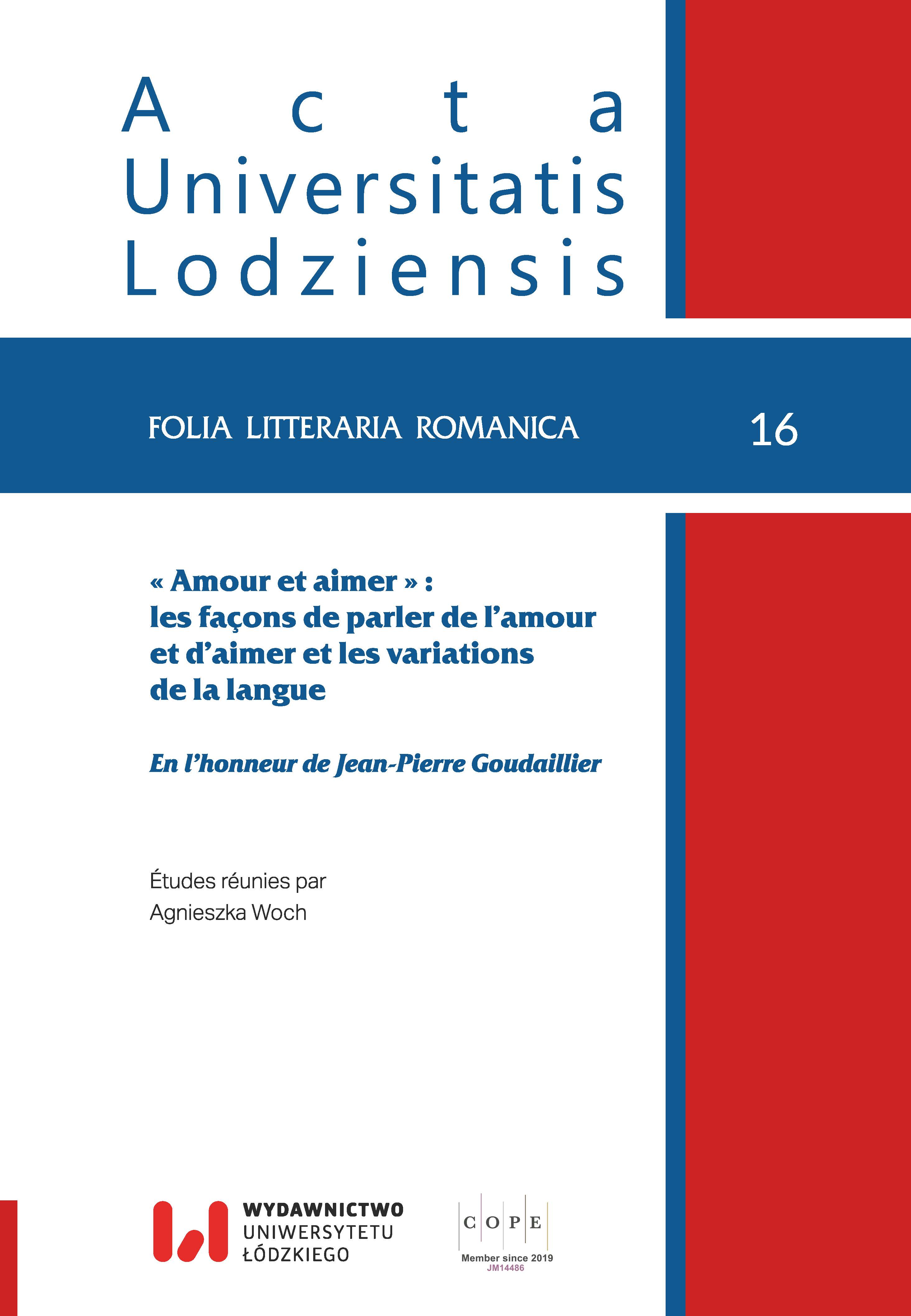
This article offers a critical view at the vocabulary related to love, sex, people involved in romantic relationships and their roles in love-play. The analysis covers a period of more than hundred years – from the end of the nineteenth century, through the years of the communist regime to the present day. During this period, the specific slang and colloquial vocabularies related to love and to sex have undergone significant changes, both in terms of the abundance of words and their meanings, as well as in terms of origin, diffusion and use of the lexical units. Their function in cinema, literature, popular songs, the media and even in the official political discourse is also analysed. Particular attention is paid to the “unslangisation” of a number of lexemes and their gradual integration into colloquial speech and into the language practice of people of all ages, professions and social statuses.
References
ANDREJCHIN, Lubomir et al. (2012), Bălgarski tălkoven rеčnik (4e éd.), Sofia, Nauka i izkustvo
ARMIANOV, Gueorgui (1989), Zargonăt, bez kojto (ne) možem, Sofia, Nauka i izkustvo
ARMIANOV, Gueorgui (2012), Rečnik na bălgarskija žargon, Sofia, Figura
KARASTOÏČEVA, Tsvetana (1988), Bălgarskijat mladežki govor, Sofia, Nauka i izkustvo
ROMANSKI, Stoyan et al. (1955), Rеčnik na bălgarskija knižoven ezik, Sofia, Académie bulgare des sciences.
TCHOLAKOVA, Kristalina et al. (éds) (1977-2015), Rečnik na bălgarskija ezik, vol. 1-15, Sofia, Académie bulgare de sciences.
Downloads
Published
Issue
Section
License

This work is licensed under a Creative Commons Attribution-NonCommercial-NoDerivatives 4.0 International License.
How to Cite