Call for Papers for ESR&P No. 1/2027
“The Geopolitics and Governance of European Borderlands”
The Planned Special Issue addresses the complex and evolving landscape of cross-border cooperation and spatial development within the European borderlands, a region profoundly shaped by historical shifts, geopolitical tensions, and ongoing European integration efforts. Following democratic transitions, European Union (EU) development, and the establishment of the Schengen Area, these border regions have embarked on a trajectory of transformation and Europeanisation (Kolosov and Więckowski, 2018; Scott, 2015). Today, this process is subject to periodic de- and rebordering processes, focusing on the institutional, economic, and socio-cultural dimensions of cooperation, particularly in the face of disruptive events and structural challenges (Böhm, 2021; Opiłowska, 2021).
The core thematic focus of the issue is on the multi-scalar challenges and strategic potential of border regions, with a strong emphasis on empirical evidence from European countries diverse frontiers, including the EU’s internal and external borders with non-EU countries. A significant segment explores governance frameworks and instruments that facilitate cross-border spatial planning and collaboration. Contributions can review the effectiveness of EU instruments such as the European Grouping of Territorial Cooperation (EGTC) and Euroregions, issues related to the governance of cross-border functional areas (Jakubowski et al. 2022), spatial planning in border urban regions of divided cities, or the role of transnational spatial development visions such as the Common Future Vision 2050 for the Polish–German interaction area. This ties into the broader concept of peripheral integration and the role of Euroregions as ‘laboratories of Europeanisation’ supporting candidate countries’ integration under structural transformation. This ties into the broader concept of peripheral integration and the role of Euroregions as ‘laboratories of Europeanisation’ supporting candidate countries’ integration under structural transformation.
Studies can reveal how differences in administrative tiers and competencies influence cooperation capacity, highlighting the legal and procedural obstacles to fully realising the potential of cooperative structures. Expected papers can also underscore the investment attractiveness of EU external border regions for post-conflict reconstruction and socioeconomic equalisation, driven by EU cohesion policy and new defence strategies. Case studies of border cooperation can illustrate the need for cooperative approaches to shared municipal services, such as reducing air pollution exposure and harmonising waste management.
Furthermore, the issue intends to delve into the economic and geopolitical significance of border regions (Bufon, 2011) and management of border projects (Kurowska-Pysz, Medeiros and Bӧhm, 2023), particularly in a time of crisis related to the COVID-19 pandemic, illegal migration pressure, and war conflict (for example, the Ukrainian defensive war against the Russian invasion). A recurring theme is the possible fragility of cross-border cooperation and integration resulting from the impact of sociopolitical dynamics (Cai et al., 2025). The papers can investigate how disruptive events—from the "migration crisis" discourse to COVID-19 border restrictions—have reinforced the perception of borders as barriers, despite the facilitation of "everyday Europeanism" by the Schengen Agreement.
This issue also offers a unique perspective on research on human mobility and environmental stewardship, examining how people’s movements across boundaries influence their sense of place and potential to act as environmental stewards in managing shared social-ecological systems such as cross-border rivers, lakes, and other ecological ecosystems. This is particularly relevant in the context of limited formal planning instruments that often fail to address environmental issues. Taking the example of a specific transboundary case of disruption within a riverine social-ecological system, for example, the massive fish die-off in the Odra River on the border between Germany and Poland during the summer of 2022 (Gottwald et al., 2024), we argue about the relationship between senses of place and mobilities and their role in the era of environmental crisis (Kołodyńska et al., 2024). What forms of cooperation can improve the resilience of cross-border regions facing environmental changes and ecological catastrophes? What are the roles of community, place attachment, and bottom-up initiatives in cross-border management? How can cross-border people-place relations be managed in the current era of ‘changing places’?
Importantly, the Special Issue aims to address ‘border obstacles’ (Medeiros, 2018), including technical and methodological barriers to practical cross-border hard and soft project delivery (Raczyk and Dołzbłasz, 2022). This includes a comprehensive assessment of cross-border cooperation projects, identification of patterns in consortia formation, thematic scope, and rationales for sustained activity. It also focuses on the need for technical standardisation to overcome data exchange difficulties in cross-border areas. Finally, the issue aims to discuss forms of cross-border cooperation that go beyond legal and administrative instruments.
In sum, this Special Issue provides a timely and multifaceted analysis of the European borderlands, synthesising academic research and practitioner insights to argue that resilient cross-border cooperation necessitates an alignment of hard governance tools (such as common planning frameworks and financial instruments) with soft capacities, including intercultural communication, trust-building, and long-term institutional and social network development. We focus on phenomena from the last 25 years but are open to reviewing works covering longer historical periods. We focus on relations and issues related to border regions, not long-distance transnational relations.
Potential topics:
- Problems of cross-border bilateral and regional cooperation supported by EU programmes, such as INTERREG and others
- Managing the development of border areas, including economic and spatial planning, and solving socio-economic, organizational, and natural barriers to borderland development (border obstacles);
- Internal and external EU borders in times of crisis, such as the COVID-19 pandemic, illegal migration pressure, and war conflicts in EU neighbouring countries
- Issues addressing ecological catastrophes, environmental pollution, and environmental changes of a cross-border nature (for instance, in natural ecosystems crossing the border, border rivers, etc.) from the perspective of political and social sciences.
We do not close the list of topics, but individual proposals will be discussed by the editors to see how well they fit into the special issue.
This special issue will be edited by:
- Marek Furmankiewicz (Wrocław University of Environmental and Life Sciences),
- Iga Kołodyńska (Wrocław University of Environmental and Life Sciences)
- Hynek Böhm (Technical University of Liberec, Liberec, Czech Republic)
Key deadlines:
- Abstract submission (300-500 words): March 5, 2026
- Full paper submission: May 31, 2026
- Issue to be published: by the end of June 2027.
Additional information:
If you are interested in submitting a paper to this special issue of ESR&P, please send your abstract (300-500 words) by the indicated deadline to March 5, 2026
Abstract submissions should contain the title of the paper, contact person and email address, authors, and their affiliations. The abstract should describe the goal of the paper, methods (obligatory for empirical articles only), findings, and the originality/value of the paper.
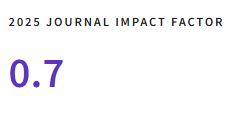
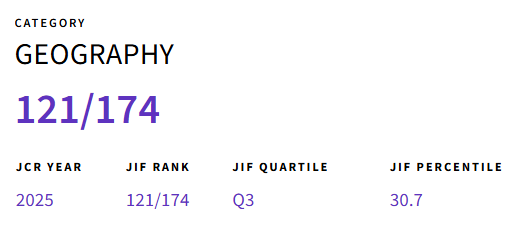
ESR&P follows a double-blind peer-review process and upholds high standards. Once your paper is assessed as acceptable by the editors, it is subjected to a double-blind peer review by independent, anonymous referees. The licence for the journal European Spatial Research and Policy (ESRaP) is primarily Creative Commons Attribution-NonCommercial-NoDerivatives (CC BY-NC-ND 4.0), but authors can request CC BY 4.0 (Attribution), allowing commercial use and sharing with credit, which aligns with Open Access principles. Published by Lodz University Press, it is an open-access journal with no article processing charges (no APCs) and is indexed in SCOPUS and Web of Science databases.
Preparing article Authors should use ESR&P „template for authors” and ESR&P Author Guidelines: https://czasopisma.uni.lodz.pl/esrap/about/submissions
When submitting an article manuscript to the journal via its online submission system, please include a note to the Editorial Office with the information that the article is being submitted to a special issue.
References:
BÖHM, H. (2021), The influence of the Covid-19 pandemic on Czech-Polish cross-border cooperation: From debordering to re-bordering? Moravian Geographical Reports, 29 (2), pp. 137–148.
BUFON, M. (2011), Cross-Border Policies and Spatial and Social Integration: Between Challenges and Problems, European Spatial Research and Policy, 18 (2), pp. 29–45.
CAI, J., YIN, Y., PENG, Y., XIE, Y., HU, H., JIN, H. and WANG, C. (2025), Why cooperation fails? An analysis of mechanisms and models in cross-border governance: a systematic literature review, Frontiers in Political Science, 7, 1713710.
GOTTWALD, S., KOŁODYŃSKA, I., BUCHECKER, M., et al. (2024), Bridging senses of place and mobilities scholarships to inform social-ecological systems governance: A research agenda. Applied Geography, 167. https://doi.org/10.1016/j.apgeog.2024.103286
JAKUBOWSKI, A., TRYKACZ, K., STUDZIENIECKI, T. and SKIBIŃSKI, J. (2022), Identifying cross-border functional areas: conceptual background and empirical findings from Polish borderlands. European Planning Studies, 30 (12), pp. 2433–2455. https://doi.org/10.1080/09654313.2021.1958760
KOLOSOV, V. and WIĘCKOWSKI, M. (2018), Border changes in Central and Eastern Europe: an introduction, Geographia Polonica, 91 (1), pp. 5–16.
KOŁODYŃSKA, I., GOTTWALD, S., JAKÓBIAK, A., OTTO, J., MORAWSKA, W. and RAYMOND, C. M. (2025), Senses of place and mobilities nexus-a scoping literature review, Journal of Environmental Psychology, 102658.
KUROWSKA-PYSZ, J., MEDEIROS, E. and BӦHM, H. (2023), Managing Cross-Border Projects Towards More Resilient Cooperation in Borderlands, The Post-Pandemic Perspective. Berlin: Logos Verlag.
MEDEIROS, E. (2018), Should EU cross-border cooperation programmes focus mainly on reducing border obstacles? Documents d’Anàlisi Geogràfica, 64 (3), pp. 467–491.
OPIŁOWSKA, E. (2021), The Covid-19 crisis: the end of a borderless Europe? European Societies, 23 (S1), pp. S589–S600.
RACZYK, A. and DOŁZBŁASZ, S. (2022), Premises and barriers associated with cross-border cooperation – evidence from border regions of Poland. Europa XXI, 43 (4), pp. 69–86.
SCOTT, J. W. (2015), Bordering, Border Politics and Cross-Border Cooperation in Europe. In F. Celata and R. Coletti (eds.), Neighbourhood Policy and the Construction of the European External Borders, pp. 27-36, Cham, Switzerland: Springer Nature Switzerland AG.