
Revitalisation committee as a participation tool in urban regeneration processes in Poland: case study of the Lodzkie Voivodeship
Edyta MASIEREK  *
*
Marta BOROWSKA-STEFAŃSKA *
Dorota SIKORA-FERNANDEZ *
Magdalena ŚLEBOCKA *
Abstract. The article analyses one of the tools for public participation in urban regeneration processes in Poland, specifically the Revitalisation Committee. The study evaluates the practical implementation of this tool based on an analysis of 20 municipalities in the Łódzkie Voivodeship. The results indicate that this tool is often used in a largely symbolic or superficial manner, with considerable arbitrariness in the selection of committee members and limited influence on actual revitalisation activities at the municipal level. They can be a valuable basis for further research in this field. The conclusions may be useful for municipalities implementing revitalisation, where community involvement is considered crucial.
Key words: urban regeneration, Revitalisation Committee, public participation.
1. Introduction
In Poland, approximately 20% of urbanised areas are classified as degraded, meaning they concentrate adverse phenomena across social, economic, functional-spatial, and environmental dimensions (Jarczewski and Kuryło, 2010). These areas are inhabited by a significant share of the population, who should be meaningfully involved in shaping the changes affecting their living environment. For local governments, such areas pose a complex challenge, both financially and institutionally. Among the statutory responsibilities of municipalities is the formulation of effective intervention policies that address the multi-dimensional problems concentrated in these zones. The process of city creation is burdened with two opposing approaches, i.e., the top-down and bottom-up dichotomy, related to profit-oriented logic in relation to the urban environment and urban goods. The management of degraded areas involves a balance between two visions. On the one hand, these areas are intended to serve the creation of common goods for the local community. On the other, they can be places that generate income for public budgets (Camerin, 2021). Currently, there is growing interest in more sustainable forms of urban planning involving local communities. When stakeholders participate in transforming spaces according to their own experiences, they create places tailored to their needs (Hunziker et al., 2007). The term ‘placemaking’ is used to refer to the creation of attractive physical locations as part of the backdrop to a successful social space and, more importantly, as a synonym for place branding (Pendlebury and Porfyriou, 2017). Although active stakeholder participation is legally required at every stage of the regeneration process, an obligation that may appear self-evident, it often proves difficult to implement in practice (Masierek, 2021).
Contemporary discourse on urban regeneration increasingly underscores that the effectiveness of revitalisation efforts largely hinges on the degree of community engagement and the extent to which these initiatives are integrated with broader urban policy frameworks. Chahardowli and Sajadzadeh (2022) argue that successful revitalisation requires an integrated management approach, multi-stakeholder collaboration, and the adoption of contemporary urban strategies. Conversely, insufficient involvement of local communities often results in interventions that fail to address residents’ actual needs. A lack of participatory mechanisms may even lead to community resistance toward the changes being implemented (Navas-Carrillo and Rodriguez-Lola, 2024).
Grabkowska and Frankowski (2016) have argued that the active involvement of diverse stakeholder groups in decision-making processes enhances both the sustainability of implemented changes and their acceptance by the local community. Moreover, adopting an integrated approach that aligns revitalisation efforts with broader urban policy agendas contributes to more coherent and effective urban development. By creating resilient cities (Ige-Elegbede et al., 2020; Camerin and Longato, 2024) able to cope not only with the COVID-19 pandemic but also with other disruptions, considering innovative solutions in urban planning and management introducing comprehensive and transformative change (Camerin, 2023). A change in which the main emphasis should be placed on the integration of the environment, economy, and society because each vision of a sustainable future for cities, including revitalisation, must focus directly on nature and on the presence and preservation of existing greenery elements and natural lifestyles, as well as residents’ preferences (Córdoba Hernández and Camerin, 2023). Absence of robust cooperation mechanisms and organisational capacity can undermine participatory processes, ultimately leading to the failure to achieve the intended goals of revitalisation.
To ensure the effectiveness and long-term impact of these initiatives, it is, therefore, essential to develop institutional mechanisms that facilitate stakeholder collaboration and to strengthen the organisational capacity of all actors involved. Public participation is a cornerstone of successful urban regeneration; without it, even the most well-intentioned interventions in the social, economic, or spatial realms are unlikely to be sustainable or respected by residents. Meaningful engagement of local communities throughout the entire regeneration process fosters a sense of ownership, encourages stewardship of outcomes, and supports the longevity of positive change (Arbab et al., 2020; Schroeter et al., 2016).
Since 2015, the Revitalisation Act (RA) has been in force in Poland. Under its provisions, municipalities intending to undertake revitalisation efforts must first identify degraded and revitalisation areas based on objective criteria. For the designated revitalisation area, which may not exceed 20% of the municipality’s total area nor be inhabited by more than 30% of its population, a long-term strategic policy must be developed in the form of a Communal Revitalisation Program (CRP). However, in order for the CRP to serve as the basis for obtaining European Union funding, it must be included in the List of Positively Verified Municipal Revitalisation Programs, maintained by the Managing Authority of the regional operational program European Funds for Lodz 2021–2027[1] (List).
The entire second chapter of the RA is dedicated to public participation, underscoring its fundamental role in the coordination of revitalisation processes by municipal authorities. The act obliges municipalities to design, implement, and evaluate revitalisation efforts in a manner that ensures the active involvement of a broad range of stakeholders.
The legislator emphasises that activities undertaken by municipalities in the field of public participation should include the following (Article 5 of the Revitalisation Act, 2015):
- identifying the needs and expectations of stakeholders in order to plan actions that align with them,
- conducting educational and informational activities,
- initiating and supporting efforts aimed at increasing stakeholder involvement in the preparation and implementation of the CRP,
- enabling stakeholders to express their views at every stage of the revitalisation process, including planning, implementation, and monitoring.
Prior to the adoption of the CRP, municipalities are required to establish the rules governing the appointment and operation of the Revitalisation Committee (RC). As stipulated in Article 7 of the RA (2015), the RC is a mandatory instrument of public participation, serving as an advisory and consultative body composed of representatives from diverse stakeholder groups. Its primary function is to support municipal decision-making processes and to facilitate the systematic consultation of revitalisation initiatives with representatives of various social sectors, including residents, entrepreneurs, NGOs, and subject-matter experts.
While the legislation mandates the establishment of the RC, its actual functioning and influence on local government decision-making often vary considerably. These differences are largely shaped by local conditions and the extent of engagement from individual stakeholders (Sagan and Grabkowska, 2012). This article seeks to assess whether RCs function as an effective tool for public participation. It examines the practices of 20 municipalities located in Poland’s Łódzkie Voivodeship in three key areas: the formulation of the RC rules, the recruitment process for RC members, and the operational functioning of the committees. In the article, the authors analyse specific case studies in detail to address the following research questions:
- When were the rules for the establishment and operation of the RC adopted, and when were the committees appointed in the analysed municipalities?
- What are the key principles governing the appointment and functioning of the RC in the studied cases?
- Which stakeholder groups are represented within the RC?
- How frequently do RC members meet, what topics are addressed, and what issues are subject to their review or opinion?
- How are decisions made within the RC?
- What procedures are in place for the dismissal or removal of an RC member?
Based on the analysis of official documents and in-depth interviews with active members of the RC, the study evaluates how the principles of public participation are implemented through this participatory mechanism. Examining the functioning of RCs across various municipalities in the Łódzkie Voivodeship allowed for the identification of both enabling factors and barriers affecting their effective operation.
The conclusions presented in this article contribute to ongoing scholarly discussions on public participation, with particular emphasis on its role in revitalising degraded urban areas. They serve as a point of departure for further exploration and the deepening of research on participatory governance in urban regeneration. The study’s findings are relevant not only to academics investigating revitalisation processes, but also to practitioners and decision-makers responsible for their design and implementation. The background for the analyses presented in this study includes a review of the relevant literature and current research on the subject, the statutory procedure for establishing RCs, as well as a description of the specific characteristics of the studied municipalities and their designated revitalisation areas.
2. Theoretical background
One key objective of sustainable development is the creation of safe, inclusive, and resilient cities and human settlements. This goal reflects the evolution of civil society, the decentralisation of state structures, and the growing influence of participatory planning approaches, an idea that began gaining traction in Western Europe in the 1960s (McClendon, 1993; Hajduk, 2021; Długosz and Wygnański, 2005).
To meet the sine qua non conditions of effective revitalisation, comprehensiveness, appropriateness, and integration, interventions should be implemented through coordinated efforts involving local partners and stakeholders across the public, private, and non-governmental sectors. This approach facilitates the development of strategies that are responsive to local conditions, thereby increasing the likelihood of long-term success in revitalisation processes. Cross-sectoral collaboration enables more effective resource allocation, streamlines interventions, and enhances the flexibility of projects in addressing the evolving needs of the community. A participatory framework should foster continuous information and knowledge exchange, promote decentralised decision-making, and support dialogue among the various institutions operating in degraded urban areas (Woolrych and Sixsmith, 2013).
Public participation serves both as a mechanism for engaging citizens in public life and as a means of redistributing power across various levels of governance. It enhances the sustainability and social acceptance of the actions undertaken. Involving residents in decision-making processes not only strengthens the legitimacy of revitalisation efforts, but also promotes the more effective utilisation of local resources. Research indicates that programs with active resident participation are more likely to succeed, as they tend to be more closely aligned with the actual needs of the community (Bobbio, 2019). Steering democracy towards participation largely consists in giving citizens equal power exclusively within adversarial institutions (Mansbridge, 1983). The main reason for involving citizens in decision-making processes, regardless of their form, should be to properly problematise the issues submitted for public discussion (Huk, 2024). Public participation is often equated with civic power (Wójcicki, 2013), and thus with assuming responsibility for decision-making. In S. Arstein’s (1969) ladder of participation, the highest levels are delegation of power and resident control. Social participation is also a procedural mechanism through which decision-makers can involve new actors – namely citizens – in policy-making processes and assign them specific roles (e.g., Bobbio, 2019; Chan et al., 2022; Miśkowiec and Masierek, 2023). It is, therefore, not a one-sided process; it requires active engagement from both public administration and citizens. The theoretical expectations surrounding public participation can only be met if both parties are genuinely committed to collaboration and prepared to engage meaningfully (Masierek and Pazder, 2024).
As Creighton (2005) argued, participation should not be viewed merely as a procedural requirement, but rather as a fundamental element of social dialogue. Accordingly, the organisation of participatory activities should not be treated as an end in itself or simply as a formal compliance exercise.
Effective public participation requires the application of diverse and context-sensitive engagement methods. These may range from traditional forms such as public consultations to modern digital platforms, which have the potential to engage social groups that are often excluded from mainstream public discourse. Social participation is considered a fundamental pillar of contemporary democracy (Siemiński, 2007), reflecting citizens’ voluntary involvement in shaping and managing public affairs (Noworól et al., 2012). Crucially, the more inclusive and well-designed the participatory mechanisms, the greater the potential for achieving durable and impactful transformation (Fors et al., 2021). Participation is intended to initiate meaningful interaction between public authorities and citizens, establishing a platform for potential collaboration between the two sides (Creighton, 2005). It not only reinforces democratic governance, but also enhances the effectiveness of public policies, including urban revitalisation, by incorporating diverse perspectives and local knowledge into the decision-making process (Yadav, 2024). Participation is widely recognised as a critical component across all stages of the revitalisation cycle, from needs assessment and planning, through implementation, to monitoring and evaluation (Roberts, 2016). In Poland, this approach has been shaped by European Union guidelines on the use of European Funds for revitalisation, which came into force in 2004, as well as by national legislation requiring local authorities to implement participatory mechanisms, including the establishment of RCs (Ciesiółka, 2018). Polish scholarly literature highlights the important role of RCs in promoting the social dimension of revitalisation (e.g., Przywojska, 2019; Legutko-Kobus and Nowak, 2020). Within the revitalisation process, the RC is expected to help manage revitalisation activities in a socially responsive direction, embedding participatory values into both planning and implementation. As an advisory and integrative body, the RC serves as a key link in both the design and monitoring of revitalisation processes. It acts as a platform for constructive dialogue among stakeholders, often representing divergent perspectives and interests, helping to reconcile competing visions in the pursuit of more inclusive and effective urban transformation (Hajdys and Ślebocka, 2021). A review of the activities of selected RCs in the Greater Poland Voivodeship (Wielkopolskie Voivodeship) was conducted by Kaczmarek (2021). This research was further expanded by Dziarmakowska (2023), who conducted a survey among municipalities whose CRPs were included in the official List in the Greater Poland region. Public participation should be a continuous and integral component of revitalisation processes, rather than a set of isolated or incidental activities. The scope and forms of engagement must be carefully selected to ensure that participatory objectives are fulfilled to the greatest possible extent (Hołuj and Legutko-Kobus, 2018). Despite the widely acknowledged importance of participation, research consistently shows that the involvement of local communities in revitalisation processes remains insufficient, a finding also confirmed by the 2021 report of the Supreme Audit Office (Ciesiółka et al., 2016; Hołuj and Legutko-Kobus, 2018). In this context, the study of public participation and the effective use of statutory participatory tools, such as the RC, represents both a relevant research direction and a meaningful contribution to the broader discourse on the development of civil society.
3. Methodology
3.1. Research Procedure and Data Sources
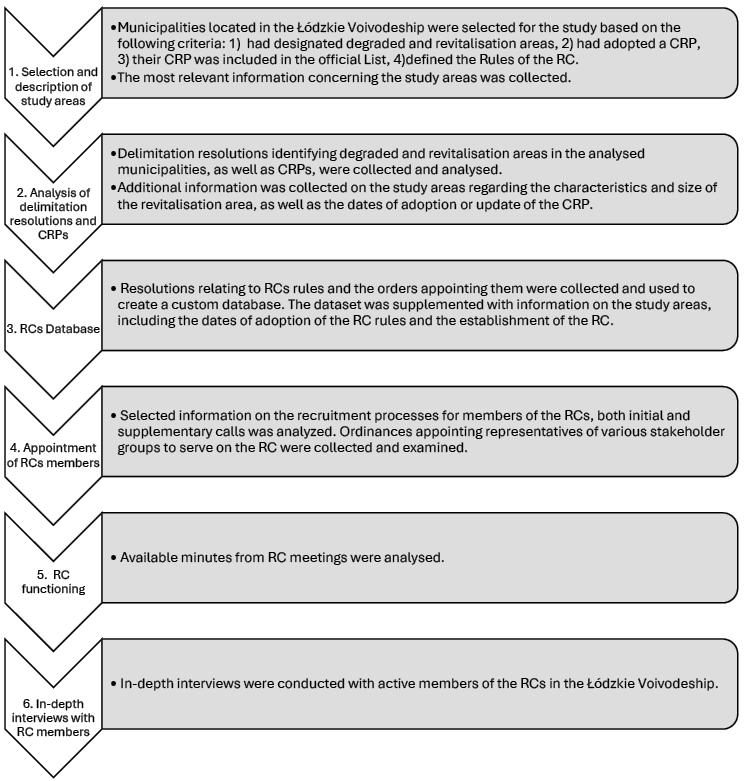
This article focuses on analysing the functioning of the RC as a tool of public participation within revitalisation processes implemented in municipalities across the Łódzkie Voivodeship in central Poland. The research was designed using a methodological triangulation model, allowing for a comprehensive analysis and evaluation of both the formal and practical dimensions of RC operations. Methodological triangulation is particularly valuable in studies that require the validation of findings through both qualitative and quantitative methods, as it helps minimise potential biases and enhances the reliability and robustness of the results (e.g., Vivek et al., 2023; Arias, 2022; Dźwigoł and Dźwigoł-Barosz, 2020). To evaluate the functioning of the mandatory participatory instrument (the RC) in the Lodz Voivodeship, a six-stage research process was conducted between March 2024 and February 2025. The process is presented in Fig. 1.
Source: own work.
In the first stage (1), 20 municipalities located in the Łódzkie Voivodeship were selected based on the following criteria:
- they designated revitalisation areas in accordance with the Revitalisation Act;
- they adopted a communal revitalisation program (CRP), which was subsequently positively verified by the managing authority of the regional program European Funds for Łódzkie 2021–2027 and included in the official List;
- they adopted a municipal council resolution defining the rules for the recruitment and operation of the RC.
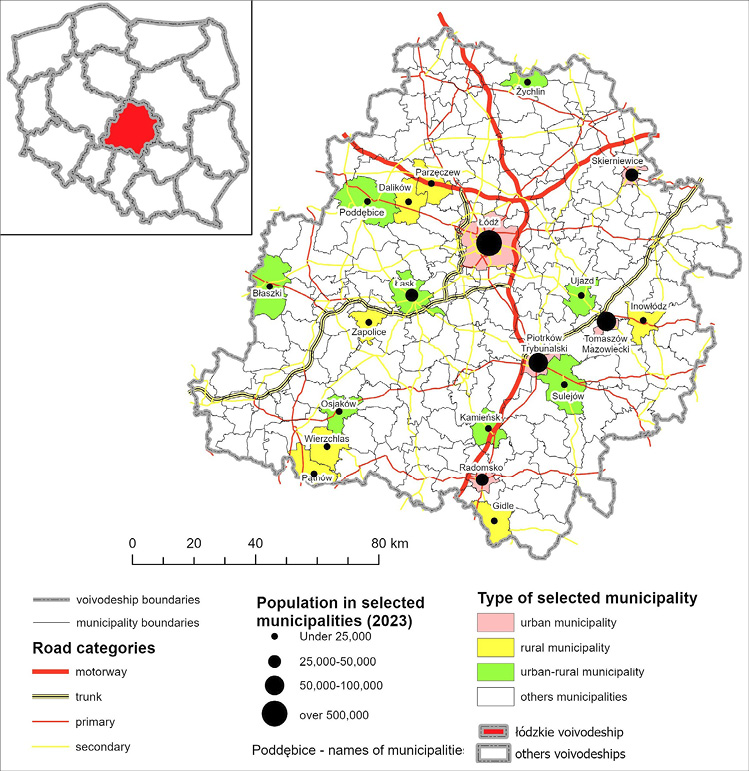
Basic information on the study areas was also collected, including the administrative status of each municipality, population size, and land area. The selected municipalities represent various types of administrative units − urban, urban-rural, and rural (Fig. 2), which allows for an analysis of RC functioning under diverse socio-economic conditions.
In the second stage (2), legal and planning documents were analysed (60 resolutions) using the desk research method. This included:
- delimitation resolutions (designating degraded and revitalisation areas);
- resolutions adopting the CRP.
As a result, data on the characteristics, size, and spatial extent of the revitalisation areas in the analysed municipalities, as well as the dates of CRP adoption, were completed. In the next stage (3), resolutions concerning RCs rules and the orders establishing them were collected (20 resolutions, 11 orders). Based on these documents, a custom database was created, and information on the dates of adoption of the principles and the establishment of the revitalisation committees (RCs) was supplemented.
Subsequently (4), information was gathered on the recruitment processes for RC members, including both initial and supplementary recruitment rounds. Ordinances appointing representatives of various stakeholder groups to serve on the RC were collected and analysed, along with available minutes from RC meetings (5). At this stage, data was also verified or obtained, among other means, directly from staff at municipal offices. All of the above research steps (1–5) enabled the systematisation of data and the development of a scenario for individual in-depth interviews (IDIs) with persons appointed to serve on the RC. The interview guide consisted of three thematic sections: (1) background information on the RC member, (2) information about the functioning of the RC, and (3) general opinions, including views on the Revitalisation Act, residents’ interest in revitalisation, and the perceived future of the RC. The insights gathered during the interviews (6) helped further explore selected issues, providing a deeper understanding of how the RC operates in practice, the challenges and barriers it faces, the level of engagement among various stakeholder groups, and its overall impact on the quality of revitalisation processes.
The desk research method and foundational data analysis employed in this study covered both the local legal frameworks governing revitalisation in municipalities and a review of reports and studies on revitalisation processes implemented across Poland. This included information available on municipal websites as well as statistical data on the study areas. The analysis of documents enabled an assessment of the extent to which statutory provisions have been implemented and translated into practical actions by local authorities (Ciesiółka, 2018). This approach aligns with the methodology of exploratory qualitative research, allowing for the identification of challenges and barriers in the functioning of RCs. Additional data was obtained directly from municipal staff responsible for revitalisation policy. Additionally, three in-depth interviews were conducted with active members of RCs from the Łódzkie Voivodeship. However, due to their small number, they are only exploratory in character. The methodology adopted in this article applies a multidimensional approach to analysing the functioning of RCs, combining both qualitative methods (document analysis, in-depth interviews) and quantitative methods (statistical data analysis). This mixed-methods design made it possible to gain a more comprehensive understanding of how RCs operate and to assess their role in urban revitalisation processes.
3.2. Characteristics of the study areas
The study included 20 municipalities from the Łódzkie Voivodeship, selected based on the criteria outlined in section 3.1. The group consists of five urban municipalities, eight urban-rural municipalities, and seven rural municipalities (Fig. 2, Table 1). As of 31 December 2023, the population of these municipalities ranged from 3652 in the rural municipality of Inowłódz to 652015 in Łódź, the regional capital (GUS 2023). Łódź is also the largest municipality in terms of area (293 sq. km), while the smallest are rural municipalities: Inowłódz (36.52 sq. km), Dalików (40.18 sq. km), and Osjaków (46.37 sq. km). All of the analysed municipalities designated degraded and revitalisation areas within their territories. The percentage of residents living in the revitalisation areas, relative to the total population of the municipality, ranges from approximately 10.94% to 29.86% across the study areas[2].
In the analysed municipalities, the designated revitalisation areas cover between 0.67% and 19% of the total municipal area[3]. Half of the study areas identified a single, continuous revitalisation zone with a unified boundary. Forty percent designated two separate revitalisation sub-areas (not sharing a common border); for example, the municipality of Poddębice designated one sub-area in a rural part of the municipality and another in the urban part. The municipality of Zapolice identified as many as five separate revitalisation sub-areas.
Łódź has had a CRP in force the longest, since 2016, with the most recent update in January 2024. The majority (60%) of the analysed municipalities adopted their CRPs in 2024, while the remaining ones did so in 2025. Three of the municipalities developed only draft versions of the rules for appointing and operating their RCs − two in 2024 and one in 2025, which were subject to public consultation (Inowłódz, Gidle, and Dalików).
In most of the municipalities, the adoption of the rules for appointing and operating the RC was processed on the same day or up to one month before the adoption of the CRP (Skierniewice, Ujazd, Osjaków, Tomaszów Mazowiecki, Sulejów, Zapolice, and Parzęczew). This suggests that RC members were unlikely to have been involved in the development of the CRP.
The Revitalisation Act stipulates that the RC should be established without undue delay following the adoption of the RC rules. However, this requirement of “without delay” is interpreted inconsistently by municipalities. As a result, some have yet to announce recruitment procedures, for example, Piotrków Trybunalski, despite more than a year having passed since the adoption of the RC rules. RC members are appointed through open calls for candidates, based on previously defined rules. In many cases, however, supplementary recruitment is necessary, as the initial call does not result in a sufficiently representative pool of candidates. This often extends the overall timeline of the procedure. As of 31 March 2025, 11 out of the 20 study areas had successfully established their RCs (Table 1).
Source: own work.
| No. Commune | Commune type | Population (GUS 2023) |
Commune area (sq. km) |
Revitalisation area [% of commune population] |
Revitalisation area [% commune area] |
Number of revitalisation sub-areas | Date of CRP adoption/update | Rules for appointing the RC | Appointing the RC |
|---|---|---|---|---|---|---|---|---|---|
| 1. Łódź | urban | 652 015 | 292.85 | 17.87 | 4.53 | 1 | 28.09.2016/ 17.01.2024 |
2.06.2021 | 31.12.2021 |
| 2. Skierniewice | urban | 45,184 | 34.56 | 29 | 19 | 1 | 21.03.2024 | 21.03.2024 | 23.12.2024 |
| 3. Pątnów | rural | 6,191 | 114.47 | 12.1 | 19.2 | 1 | 27.03.2024 | 27.06.2024 | 23.08.2024 |
| 4. Ujazd | urban-rural | 7,349 | 96.61 | 28.5 | 3.8 | 2 | 30.04.2024 | 28.03.2024 | 10.01.2025 |
| 5. Osjaków | urban-rural | 4,637 | 100.96 | 26.6 | 13.9 | 2 | 28.05.2024 | 28.05.2024 | - |
| 6. Piotrków Trybunalski | urban | 66,519 | 67.15 | 27.83 | 18.83 | 3 | 27.06.2024 | 24.01.2024 | - |
| 7. Radomsko | urban | 42,973 | 51.36 | 16.66 | 6.28 | 1 | 24.11.2023/ 28.06.2024 | 23.02.2024 | 19.11.2024 |
| 8. Inowłódz | rural | 3,652 | 97.41 | 20.3 | 2.3 | 2 | 29.08.2024 | 14.05.2024 project | - |
| 9. Tomaszów Mazowiecki | urban | 57,438 | 41.24 | 29.8 | 7.6 | 1 | 26.09.2024 | 26.09.2024 | 13.09.2023 |
| 10. Gidle | rural | 5,737 | 115.85 | 17.3 19.8 |
1.48 1.73 |
2 | 29.10.2024 | 16.01.2025 project | - |
| 11. Błaszki | urban-rural | 13,938 | 201.1 | 13.6 | 0.8 | 1 | 21.11.2024 | 24.10.2024 | 25.11.2024 |
| 12. Łask | urban-rural | 26,898 | 145.14 | 29.47 | 3.44 | 2 | 27.11.2024 | 28.06.2024 | - |
| 13. Dalików | rural | 4,018 | 114.47 | <10.94 | 1.38 | 1 | 30.12.2024 | 20.08.2024 project | - |
| 14. Sulejów | urban-rural | 16,582 | 188.25 | 29.82 | 13.96 | 1 | 15.01.2025 | 27.01.2025 | - |
| 15. Parzęczew | rural | 5,284 | 103.74 | 28.4 | 8.22 | 2 | 20.01.2025 | 30.12.2024 | - |
| 16. Żychlin | urban-rural | 10,876 | 76.54 | 21.45 | 0.67 | 1 | 22.01.2025 | 10.10.2024 | 4.11.2024 |
| 17. Kamieńsk | urban-rural | 5,539 | 96.3 | less than 29% | 12.44 | 1 | 22.01.2025 | 17.10.2024 | 28.01.2025 |
| 18. Wierzchlas | rural | 6,403 | 118.71 | 24.04 | 18.58 | 2 | 27.01.2025 | 29.11.2024 | 30.12.2024 |
| 19. Zapolice | rural | 5,508 | 81.37 | 29.86 | 4.41 | 5 | 28.01.2025 | 28.01.2025 | 10.02.2025 |
| 20. Poddębice | urban-rural | 14,524 | 224.22 | 29.09 | 4.09 | 2 | 29.01.2025 | 20.01.2025 | - |
Source: own work on the basis of delimitation resolutions, resolutions adopting CRP, resolutions adopting principles for the appointment and operation of RCs, orders of communal authorities appointing the composition of the RC (as of 31.03.2025).
4. The revitalisation committee as a obligatory tool for public participation
Local governments in Poland develop and implement CRPs for designated revitalisation areas. In order to ensure public participation at every stage of the revitalisation process, municipalities are legally required to establish a RC, an advisory and consultative body to local authorities. Its purpose is to serve as “a forum for cooperation and dialogue between stakeholders and municipal bodies on matters related to the preparation, implementation, and evaluation of revitalisation” (Article 7(1) of the Revitalisation Act, 2015).
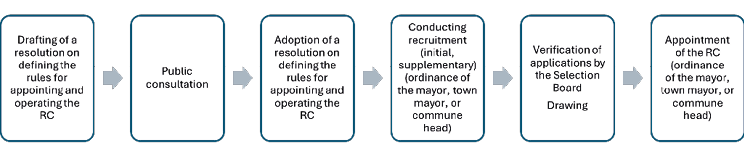
The RC is composed of representatives of various stakeholder groups who are expected to support local authorities in decision-making processes related to revitalisation. If a municipality has designated multiple revitalisation sub-areas, it may establish separate RCs for each of them, considering the specific local context. The process of forming an RC begins with the development of the RC rules (Fig. 3), which are subject to public consultation. The RC rules should be adopted by a resolution of the municipal council prior to the adoption of the communal revitalisation program (CRP). These rules typically specify:
- the term length of RC members;
- the recruitment procedure and required documents for candidates;
- the stakeholder groups to be represented in the recruitment process;
- the composition and responsibilities of the selection committee recommending candidates for RC membership;
- the conditions under which RC membership expires;
- how to organise the first meeting and elect the presidium;
- the duties and responsibilities of the presidium;
- procedures for voting;
- procedures for convening and organising meetings;
- how the RC’s opinions and positions are developed and adopted;
- which municipal unit is responsible for the administrative support of the RC.
Subsequently, an open call for members of the RC is announced based on the adopted RC rules. Some members are appointed by institutions due to their official roles, such as municipal councilpeople, staff from departments responsible for revitalisation, employees of social welfare centres, or representatives of academic institutions. Others apply as representatives of specific stakeholder groups. These candidates must provide proof of affiliation with the group they represent, for example, by indicating their place of residence, business activity, or involvement in local social initiatives. In some cases, applicants representing groups such as residents of the revitalisation area are also required to submit a list of supporting signatures from a specified number of individuals, as defined in the RC rules. Candidates are often also expected to have prior experience with revitalisation, which must be described in their application. In practice, it is almost always necessary to conduct a supplementary recruitment process following the initial call. This results from the lack of representation or an insufficient number of candidates from the stakeholder groups outlined in the RC rules. A selection board is typically appointed to review the applications and recommend the composition of the RC to the mayor. If the number of candidates in a given category exceeds the number of available seats, the final selection is made by drawing lots. The procedure for this draw is defined in the previously adopted RC rules. The composition of the RC is formally appointed by ordinance of the mayor, town mayor, or commune head, for the term specified in the RC rules. If vacancies arise during the RC’s term, for example, due to resignation or withdrawal, the committee may request that a supplementary recruitment process be conducted. Participation in the RC is voluntary and unpaid. Members are not entitled to remuneration, per diem allowances, reimbursement of travel expenses, or compensation for lost income resulting from their involvement in RC meetings and activities.
Source: own work based on the Revitalisation Act (2015).
5. Rules for appointing and operating revitalisation committees in the Lodzkie Voivodeship
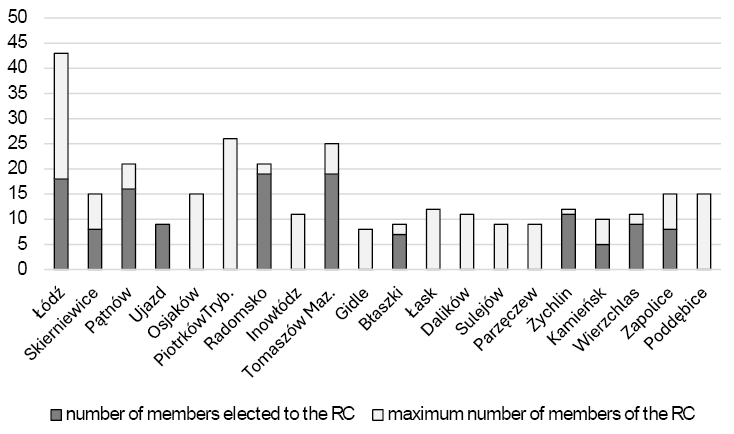
The rules of the RC define the maximum number of members to be appointed. In the analysed municipalities, the planned composition of the RCs varies significantly, from 8 to 43 members. In three-quarters of the cases, the maximum number of members planned ranges from 8 to 15. Four municipalities (Pątnów, Piotrków Trybunalski, Radomsko, and Tomaszów Mazowiecki) have aimed to appoint between 21 and 26 members. The largest number was proposed in Łódź, with a range from 15 to 43 members (Fig. 4). This is understandable, given the city’s size, importance, and the scale of its ongoing revitalisation efforts. Similar flexibility and differentiation in the size and structure of revitalisation committees have been observed in Polish municipalities of the Wielkopolskie Voivodeship and is linked to the absence of detailed statutory guidelines on optimal committee size (Kaczmarek, 2021).
In practice, however, following supplementary recruitment for the RC’s second term in 2021, the minimum threshold was exceeded, and ultimately only 18 members were appointed to the committee (Ordinance No. 9204/VIII/21 of the Mayor of Łódź, dated December 30, 2021, on the appointment of the Revitalisation Committee). Clearly, the size of the municipality influences the proposed number of RC members. The recruitment process itself is generally assessed positively and is not considered particularly complicated (according to in-depth interview data). Nonetheless, despite both initial and supplementary recruitment efforts, municipalities often struggle to fill the composition of the RC as defined in the official rules. This confirms earlier findings that, although the legal framework encourages participatory bodies, practical implementation frequently encounters limits of interest, capacity and mobilisation (Masierek, 2021; Kaczmarek, 2021). The difficulties in attracting and maintaining members also resonate with international research stressing that participatory structures remain fragile when they are not clearly empowered and when their influence on decision-making is uncertain (Arbab et al., 2020; Chan et al., 2022).
Municipalities often fail to introduce the RC tool early enough and rarely conduct intensive information and promotional activities to raise awareness about its role. In most cases, stakeholders only learn about the existence of the RC when calls for membership are announced. Among the analysed municipalities, only Ujazd appointed exactly the number of RC members specified in its rules. Żychlin appointed 10 out of 11 planned members, and Radomsko appointed 19 out of 21. Several municipalities have set numerical limits in their RC rules but are still in the process of recruitment (Piotrków Trybunalski and the municipalities of Osjaków, Inowłódz, Gidle, Łask, Dalików, Parzęczew, and Poddębice). As a result, the exact number of appointed RC members cannot yet be determined. This suggests that municipalities are experiencing difficulties in recruiting members for their Revitalisation Committees. These difficulties result from a low level of interest in this tool among stakeholders, which may be due, among other things, to the symbolic nature of their participation in it. This dynamic can be interpreted through Arnstein’s classic insight that participation limited to consultative or advisory roles, without visible impact on decisions, is easily perceived as tokenistic (Arnstein, 1969). The empirical pattern observed here thus supports concerns that, despite formal openness, RCs may in practice operate on the middle rungs of the participation ladder. Data from in-depth interviews indicates that the number of appointed RC members often does not correspond to actual attendance at meetings. Unfortunately, member participation tends to decline over time, with only a few individuals regularly and actively taking part in the committee’s work. Similar problems of maintaining long-term engagement and preventing formal bodies from becoming passive or symbolic are reported in studies of revitalisation committees in the Greater Poland Voivodeship (Kaczmarek, 2021) and in international evaluations of participatory arrangements (Arbab et al., 2020; Chan et al., 2022). These findings underline the fact that the existence of an RC as such is insufficient and that sustaining participation requires continuity and responsiveness of authorities and a clear sense of purpose.
Source: own work.
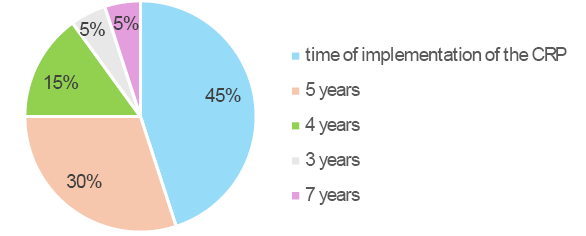
The majority of the analysed areas (45%) stipulated that the term of the RC should correspond to the duration of the CRP. In 30% of the cases, the RC term was set at five years, while 15% adopted a four-year term (Fig. 5). Typically, the start of the term is counted from the date of the RC’s first meeting. The shortest term was set by Łódź (three years), which has resulted in the need for frequent recruitment of new RC members. The most recent term in Łódź expired on 30 December 2024, and as of 31 March 2025, a new RC had not yet been appointed. This reflects a lack of continuity and suggests a rather symbolic approach to the use of this participatory tool by local authorities. By contrast, the municipality of Gidle opted for a seven-year term. In two of the study areas, Łódź and Tomaszów Mazowiecki, rules specify that members may serve a maximum of two terms. Linking the RC’s mandate to the CRP cycle is in line with the integrated, long-term approach to regeneration promoted in the Polish framework (Masierek, 2021), yet the case of Łódź illustrates that short mandates and gaps between terms weaken institutional memory and reduce the committee’s ability to influence strategic decisions in a sustained way.
Source: own work.
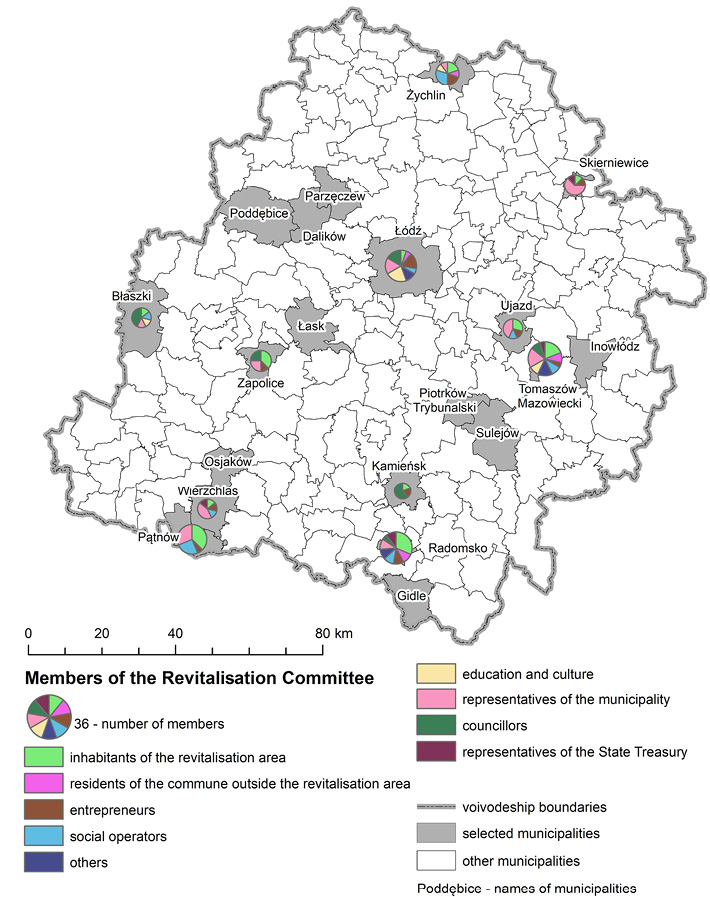
Each of the analysed municipalities developed rules for appointing and operating the Revitalisation Committee. Unfortunately, only half of the municipalities successfully completed the recruitment process and formally appointed an RC. Deficiencies in recruitment may result from stakeholders’ unwillingness to engage in social activities, their lack of knowledge about the functioning of the Revitalisation Committee or the recruitment process, i.e., poor promotion of this tool in the municipality. They may also be due to negative experiences with social participation to date. Evidence from other Polish RCs shows that incomplete staffing, infrequent meetings and limited visibility are common and linked to the weak positioning of RCs within local power structures (Kaczmarek, 2021). These observations converge with broader critiques that advisory bodies risk remaining marginal unless they are clearly embedded in governance arrangements and their outputs are systematically used (Chan et al., 2022; Bartoletti and Faccioli, 2020). The individuals selected to serve on the RCs represent a variety of stakeholder groups (Fig. 6). For the purpose of the analysis, stakeholders were categorised into the following groups:
- residents of the revitalisation area (including property owners and managers, and neighbourhood council representatives),
- residents of the municipality from outside the revitalisation area,
- entrepreneurs (including business associations),
- organisations engaged in social activities in the revitalisation area (e.g., NGOs, social welfare centres),
- educational and cultural institutions (e.g., representatives of schools, universities, and cultural organisations),
- municipal officials (appointed by city or municipal leaders, representing various departments),
- councilpeople (selected by the local community or appointed by the chairperson of the municipal council),
- representatives of entities exercising the rights of the National Treasury in the revitalisation area.
An additional category labelled “others” was created to include cases not covered by the main stakeholder groups, such as utility network managers, independent experts, and consultants. In all analysed cases, municipal staff and their organisational units, as well as council people, submitted applications to join the RC. The involvement of administrative institutions as key stakeholders in the process is unquestionable, and their participation in RC meetings is essential. However, it is equally important to ensure a proper balance between representatives of public institutions and those from the private sector and local communities. The core idea behind establishing the RC is to enable stakeholders “from outside the administration” to actively participate in all stages of the revitalisation process and contribute to decision-making related to its planning and implementation.
In the case of Łódź (a regional capital), the composition of the RC included two university representatives and one independent expert, reflecting the city’s institutional capacity and specificity. However, the representation of residents from the revitalisation area was limited to just one member of a neighbourhood council, an underwhelming figure for a city of this size and with such an extensive history of revitalisation efforts. In Skierniewice, five out of the eight RC members are representatives of the municipal office, indicating a dominance of the administrative sector. By contrast, in the municipality of Pątnów, a more balanced composition was achieved, with 11 out of 16 members representing the “non-institutional” side. These differences mirror broader dilemmas highlighted in the literature: whether participatory bodies function as spaces for co-production and urban commons (Bartoletti and Faccioli, 2020; Camerin, 2021), or remain dominated by institutional actors reproducing existing power relations.
In Radomsko, where the revitalisation area is composed of three adjoining sub-areas, each sub-area is represented by two individuals, residents and property owners, ensuring more geographically distributed representation within the RC. In the case of Tomaszów Mazowiecki, a representative of a higher education institution was appointed to the RC, as was also the case in Łódź. This reflects the presence of a branch of the University of Lodz operating within the municipality. Notably, although the CRP focuses on the downtown area, a representative from the surrounding rural municipality was also invited to join the RC. Unusually, the committee included two city council representatives appointed by the mayor, as well as two additional members designated directly by the city council. In the municipality of Błaszki, the ordinance appointing RC members listed individuals by name only, without indicating the stakeholder group they represent, an approach that limits transparency. In the municipality of Kamińsk, only five RC members were appointed, including three council people, which indicates a strong dominance of political representation. In the rural municipality of Zapolice, a total of eight members were appointed to the RC. These included three representatives of residents from the revitalisation area and one entrepreneur; the remaining members were councilpeople and municipal officials. These examples show that, while the formal framework allows for pluralistic representation, the actual composition of RCs often leans towards administrative and political elites. This echoes concerns from studies of citizen advisory bodies that insufficiently diverse membership and ambiguous selection criteria reduce perceived legitimacy and limit the breadth of perspectives included (Chan et al., 2022).
Source: own work.
In all the analysed municipalities, the RC rules require the election of a chairperson and a deputy chairperson from among the committee members. In three cases Łódź, the municipality of Osjaków, and Tomaszów Mazowiecki two deputy chairpersons were appointed, and in the case of Łódź, a secretary was also designated. These roles are typically filled by members who receive the highest number of votes during internal elections. An exception was observed in the municipality of Łask, where the chairperson of the RC was appointed directly by the mayor, while the deputy was elected by vote. RC opinions are generally adopted through open voting, by a simple majority. In some cases, a quorum of at least 50% of the members is required for the vote to be valid. In the event of a tie, the chairperson’s vote is decisive. Such internal procedures are consistent with the advisory nature of these bodies but also underline their dependence on political leadership, which may constrain autonomy and reinforces the risk of operating at consultative rather than co-decisional levels (Arnstein, 1969; Chan et al., 2022).
In addition, many RC rules include a provision requiring the exclusion of municipal office representatives from voting when the subject concerns documents they have authored or co-developed. This clarification is important in practice, as it facilitates smoother proceedings and the fair adoption of positions during meetings. The topics discussed during RC meetings largely depend on the current stage of revitalisation efforts in the municipality, as well as the level of engagement of RC members. It is mandatory for the RC to issue opinions on key matters such as updates to the CRP and its monitoring report. Other topics commonly addressed include ongoing investments and programs within the municipality, heritage preservation, and community-based initiatives (based on meeting minutes and in-depth interviews). These functions correspond to the role of revitalisation committees described in previous Polish research (Kaczmarek, 2021) and show that, at least formally, RCs are designed as platforms for continuous dialogue throughout the regeneration cycle rather than one-off consultations.
More than half of the analysed municipalities included in their RC rules the requirement to hold committee meetings at least once a year, while 20% stipulated a minimum frequency of once per quarter. Others specified that meetings should take place every six months or only “when important matters arise.” One municipality did not mention the frequency of RC meetings in its adopted rules at all. Insights from in-depth interviews highlight that meeting frequency plays a key role in maintaining the activity and engagement of RC members. Respondents emphasized that regular meetings are essential for ensuring the committee’s effectiveness. A frequency of “once a month” or “every two months” was most often indicated as optimal. This is in line with comparative findings that stable, periodic interactions are crucial for building trust, continuity and shared responsibility in participatory governance (Bartoletti and Faccioli, 2020; Arbab et al., 2020). Municipalities that choose minimal or undefined meeting frequencies therefore risk reinforcing a purely symbolic function of the RC.
The RC rules also define the conditions under which an RC member may be dismissed. These typically include situations such as the:
- individual ceases to hold the position on the basis of which they were appointed to the RC (e.g., a council person) or their employment relationship ends (e.g., an official),
- individual is convicted by a final court judgment, nominating entity submits a written request for the member’s dismissal,
- member is removed following a motion submitted by two-thirds of the RC members,
- member engages in activities that conflict with the scope of the RC’s responsibilities,
- member voluntarily resigns from the position.
More than half of the study areas include provisions in their RC rules allowing for the removal of a committee member due to repeated unexcused absences. Typically, if a member fails to attend three consecutive RC meetings without justification, the remaining members may request their dismissal and initiate a supplementary recruitment process to fill the vacancy.
Attendance tends to be higher at the beginning of the RC’s term but often declines over time. Some members attend the first few meetings and then gradually disengage from participation altogether. Several factors contribute to this pattern. One key issue is the perceived tokenistic treatment of the RC by the municipality particularly the lack of interest shown by local authorities in the positions developed by the committee, as well as their limited presence at RC meetings. According to in-depth interviews, this leads to frustration among members and a sense that their involvement lacks meaningful impact on the revitalisation efforts, which ultimately discourages continued engagement. This trajectory is consistent with Arnstein’s critique of symbolic participation (Arnstein, 1969) and with empirical evidence showing that citizen bodies remain active where their recommendations are visibly considered and where cooperation resembles genuine co-governance rather than a procedural requirement (Bartoletti and Faccioli, 2020; Chan et al., 2022; Kaczmarek, 2021). In this light, the findings indicate that, despite the formal diffusion of revitalisation committees as a tool promoted in Polish regeneration policy (Masierek, 2021), their practical functioning in the studied municipalities still oscillates between meaningful engagement and a largely formalised and symbolic approach to participation.
6. Conclusion and recommendations
In local governments where broader forms of participation are implemented, residents tend to be more engaged in community affairs and demonstrate a stronger sense of responsibility for their surroundings (Kreusslein and Günther, 2024; Bartoletti and Faccioli, 2020). Public participation is crucial not only for public authorities involved in the reconstruction of degraded urban spaces, but especially for the stakeholders directly affected by these processes. Their involvement should be integrated at every stage from planning, through implementation, to monitoring the changes introduced (Masierek, 2021). Revitalisation Committees in Poland represent a legally mandated public participation tool designed to ensure the continuous involvement of stakeholders in the revitalisation process, particularly as it progresses into the phases of developing and implementing the CRP.
Although the statutory framework appears well-designed, in practice, this tool is often not adequately utilised by municipalities. The principles for establishing and operating Revitalisation Committees were adopted by most of the surveyed municipalities within a few months before or simultaneously with the adoption of the CRPs, and the regulations were established even before the formal adoption of the main revitalisation documents, this proves their key role as tools supporting the process of rebuilding the degraded urban fabric. This detailed analysis reveals that none of the surveyed RCs were involved in the development of the foundational document for revitalisation, the CRP. Yet this initial stage is crucial for meaningful engagement, as it offers various stakeholder groups the opportunity to gain a deep understanding of the problems and potential of the designated revitalisation area, contribute to solutions for identified deficits, and develop a sense of ownership over the proposed intervention strategy. Early involvement of the RC would also facilitate the appointment of its full composition in accordance with the provisions set out in the RC rules. Recruitment processes could then be conducted by individuals who had already contributed to the development of the CRP and had a solid understanding of the revitalisation context. However, municipalities generally fail to undertake information and promotion activities concerning the RC early enough. In most cases, stakeholders only become aware of the committee’s existence when recruitment announcements are published. For this reason, it is essential that the RC be established at the very beginning of the CRP development process and that this is preceded by targeted informational and educational efforts aimed at building awareness and legitimacy around the role of the RC as a participatory governance tool.
The composition of the RC is crucial and should reflect a balance of stakeholder groups, including public institutions, the private sector, and residents. In the surveyed municipalities, the RC, as defined in the Revitalisation Act, is composed primarily of representatives of residents of revitalisation areas (including property owners and representatives of neighbourhood councils), city officials, council people, representatives of the business sector, non-governmental organisations, cultural and educational institutions, and representatives of entities exercising State Treasury authority. In some municipalities, additional experts from outside the public sector, such as independent consultants or academics, were appointed. Involving universities can also add valuable expertise. Equally important are regular meetings, participation by municipal authorities (whom the RC advises), and the meaningful use of the committee’s input in decision-making. This helps ensure that members, who work on a voluntary basis, feel effective and see the outcomes of their engagement reflected in revitalisation efforts. In most municipalities, the frequency of meetings ranges from monthly to quarterly, although meetings are sometimes scheduled every six months. Topics discussed at these meetings focus on updating and assessing the implementation of the CRP, analysing the progress of revitalisation investments, social issues, heritage protection, and local initiatives. The RC reviews key documents such as monitoring reports, proposed changes, and investment projects, and decision-making is typically based on voting with direct participation of members. Decisions in the RC are usually made by a majority vote in open ballots. In most municipalities, voting is unanimous, although in some cases a quorum is required (e.g., at least 50% of members), and in the event of a tie, the chairperson decides. In practice, recommendations, opinions, and positions are primarily adopted, which then serve as guidelines for the municipal authorities for further revitalisation work.
Consistent interaction between public authorities and stakeholders through the RC should promote greater social ownership of the process and lead to projects better aligned with actual community needs. Finally, municipalities would benefit from targeted educational activities to better understand the purpose of the RC and fully harness its potential in practice.
The analysis presented in this article enables an assessment of how this tool works in practice and indicates areas for improvement in order to better exploit its potential. It focuses on a specific participatory tool used in revitalisation activities in Poland, which may serve as a basis for further research and comparisons with other regions in the country. It can also serve as a starting point for comparative analyses of social participation tools used in different countries, particularly in degraded areas. The conclusions may be valuable for municipalities engaged in complex, long-term revitalisation processes, where active involvement of the local community at every stage, though widely advocated, is often difficult to implement effectively.
Acknowledgment. The project received funding from internal research competitions of the University of Lodz funded by a grant increased by 2% for universities that entered the Excellence Initiative − Research University competition.
Autorzy
REFERENCES
ARBAB, P., TAGHIZADEH, K. and FADAEI NEZHAD, S. (2020), ‘Toward participation-based urban planning and development: evaluating participatory revitalization in middle Oudlajan neighborhood of Tehran’, Journal of Urban Planning and Development, 146 (4), 05020022. https://doi.org/10.1061/(ASCE)UP.1943-5444.0000611
ARIAS VALENCIA, M. M. (2022), ‘Principles, Scope, and Limitations of the Methodological Triangulation’, The Journal Investigación y Educación en Enfermería, 40 (2). https://doi.org/10.17533/udea.iee.v40n2e03
ARNSTEIN, S. R. (1969), ‘A ladder of citizen participation’, Journal of the American planning association Institute of planners, 35 (4), pp. 216−224. https://doi.org/10.1080/01944363.2018.1559388
BARTOLETTI, R. and FACCIOLI, F. (2020), ‘Civic Collaboration and Urban Commons. Citizen’s Voices on a Public Engagement Experience in an Italian City’, Partecipazione e conflitto, 13 (2), pp. 1132−1152. https://dx.doi.org/10.1285/i20356609v13i2p1132
BOBBIO, L. (2019), ‘Designing effective public participation’, Policy and Society, 38 (1), pp. 41−57. https://doi.org/10.1080/14494035.2018.1511193
CAMERIN, F. (2021), ‘Regenerating Former Military Sites in Italy. The Dichotomy between «Profit-Driven Spaces» and «Urban Commons»’, Global Jurist, 21 (3), pp. 497−523. https://doi.org/10.1515/gj-2021-0075
CAMERIN, F. (2023), ‘Urban Governance in Post-pandemic Barcelona: A Superblock-Based New Normal?’, [in:] LISSANDRELLO, E., SØRENSEN, J., OLESEN, K. and STEFFANSEN, R. N. (eds), The ‘New Normal’ in Planning, Governance and Participation. The Urban Book Series, Cham: Springer. https://doi.org/10.1007/978-3-031-32664-6_22
CAMERIN, F. (2024), ‘Former military barracks as places for informal placemaking in Italy. An inventory for new insights’, Journal of Urbanism: International Research on Placemaking and Urban Sustainability, 17 (2), pp. 190–213. https://doi.org/10.1080/17549175.2024.2327588
CAMERIN, F. and LONGATO, D. (2024), ‘Designing healthier cities to improve quality of life: An analysis of challenges and outcomes in two Spanish cases’, Journal of Urban Design, 30 (1), pp. 1–30. https://doi.org/10.1080/13574809.2024.2351925
CHAHARDOWLI, M. and SAJADZADEH, H. (2022), ‘A strategic development model for regeneration of urban historical cores: A case study of the historical fabric of Hamedan City’, Land Use Policy, 114. https://doi.org/10.1016/j.landusepol.2022.105993
CHAN, Y. E., KRISHNAMURTHY, R., MANN, J. and SABHERWAL, R. (2022), ‘Public Participation in Policy Making: Evidence from a Citizen Advisory Panel’, Public Performance & Management Review, 45 (6), pp. 1308–1345. https://doi.org/10.1080/15309576.2022.2062398
CIESIÓŁKA, P. (2018), ‘Urban Regeneration as a New Trend in the Development Policy in Poland’, Quaestiones Geographicae, 37 (2), pp. 109–123. https://doi.org/10.2478/quageo-2018-0015
CIESIÓŁKA, P., KUDŁAK, R. and KOSŁUT, B. (2016), ‘Programowanie rewitalizacji w miastach województwa wielkopolskiego w latach 1999–2015’, Rozwój Regionalny i Polityka Regionalna, 36, pp. 57–71.
CÓRDOBA HERNÁNDEZ, R. and CAMERIN, F. (2023), ‘Assessment of ecological capacity for urban planning and improving resilience in the European framework: An approach based on the Spanish case’, Cuadernos de Investigación Geográfica, 49 (2), pp. 119−142, https://publicaciones.unirioja.es/ojs/index.php/cig/article/view/5638 [accessed on: 5.04.2025].
CREIGHTON, J. L. (2005), The Public Participation Handbook. Making Better Decisions Through Citizen Involvement, San Francisco: Jossey-Bass A Wiley Imprint.
DŁUGOSZ, D. and WYGNAŃSKI, J. J. (2005), Obywatele współdecydują. Przewodnik po partycypacji społecznej, Warszawa: Stowarzyszenie na rzecz Forum Inicjatyw Pozarządowych.
DŹWIGOŁ, H. and DŹWIGOŁ-BAROSZ, M. (2020), ‘Research process and methodological triangulation, Scientific Papers of Silesian University of Technology’, Organization and Management Series, 148. http://dx.doi.org/10.29119/1641-3466.2020.148.12
DZIARMAKOWSKA, N. (2023), ‘Rola komitetów rewitalizacji w procesie rewitalizacji na przykładzie województwa wielkopolskiego’, Rozwój Regionalny i Polityka Regionalna, 66, pp. 129−148. https://doi.org/10.14746/rrpr.2023.66.09
FORS, H., HAGEMANN, F., SANG, A. and RANDRUP, T. (2021), ‘Striving for Inclusion—A Systematic Review of Long-Term Participation in Strategic Management of Urban Green Spaces’, Frontiers in Sustainable Cities, 3, 572423. https://doi.org/10.3389/frsc.2021.572423
GRABOWSKA, M. and FRANKOWSKI, J. (2016), ‘Close to the city centre, close to the university’. Are there symptoms of studentification in Gdańsk, Poland?’, Bulletin of Geography. Socio-economic Series, 32, pp. 73–83. http://dx.doi.org/10.1515/bog-2016-0016
HAJDUK, S. (2021), Partycypacja społeczna w zarządzaniu przestrzennym w kontekście planistycznym, Białystok: Oficyna Wydawnicza Politechniki Białostockiej.
HAJDYS, D. and ŚLEBOCKA, M. (2021), Rewitalizacja miast we współpracy z podmiotem prywatnym w formule partnerstwa publiczno-prywatnego, Kraków-Legionowo: edu-Libri.
HOŁUJ, D. and LEGUTKO-KOBUS, P. (2018), ‘A participatory model of creating revitalisation programmes in Poland–challenges and barriers’, Mazowsze Studia Regionalne, 26, pp. 33−59. https://doi.org/10.21858/msr.26.02
HUNZIKER, M., BUCHECKER, M. and HARTIG, T. (2007), ‘Space and Place - Two Aspects of the Human-landscape Relationship’, [in]: KIENAST, F., WILDI, O. and GOSH, S. (eds), A Changing World - Challenges for Landscape Research, pp. 47–62, Dordrecht: Springer Netherlands. https://doi.org/10.1007/978-1-4020-4436-6
HUK, M. Z. (2024), Teoria demokracji deliberatywnej Jane Mansbridge, doctoral thesis, Uniwersytet im. Adama Mickiewicza w Poznaniu, Poznań, https://bip.amu.edu.pl/__data/assets/pdf_file/0023/583061/Huk-Marta-Z._rozprawa-doktorska.pdf [accessed on: 10.04.2025].
IGE-ELEGBEDE, J., PILKINGTON, P., ORME, J., WILLIAMS, B., PRESTWOOD, E., BLACK, D. and CARMICHAEL, L. (2020), ‘Designing healthier neighborhoods: a systematic review of the impact of the neighborhood design on health and well-being’, Cities & Health, 6 (5), pp. 1004–1019. https://doi.org/10.1080/23748834.2020.1799173
JARCZEWSKI, W. and KURYŁO, M. (2010), ‘Rewitalizacja w liczbach’, [in:] ZIOBROWSKI, Z. and JARCZEWSKI, W. (eds), Rewitalizacja miast polskich – diagnoza, Rewitalizacja miast polskich, tom 8, Instytut Rozwoju Miast, Kraków, pp. 253–266.
KACZMAREK, P. (2021), ‘Przegląd działalności wybranych komitetów rewitalizacji w województwie wielkopolskim’, Rozwój Regionalny i Polityka Regionalna, (53), pp. 65−76. https://doi.org/10.14746/rrpr.2021.53.05
KREUSSLEIN, M. and GÜNTER, M. (2024), ‘Power to the citizens: Factors fostering satisfaction with citizen participation in urban planning’, [in:] MACIEJKO, A. (ed.), Human Factors in Architecture, Sustainable Urban Planning and Infrastructure, AHFE (2024) International Conference. AHFE Open Access, 153, AHFE International, USA. http://doi.org/10.54941/ahfe1005342
LEGUTKO-KOBUS, P. and NOWAK, M. J. (2020), ‘Niesprawność władz publicznych w świetle prawno-przestrzennych i partycypacyjnych narzędzi rewitalizacji’, Studia z Polityki Publicznej, 3 (27), pp. 117−135.
The List of Positively Verified Municipal Revitalisation Programs, maintained by the Managing Authority of the regional operational program European Funds for Lodz 2021–2027, https://funduszeue.lodzkie.pl/rewitalizacja/wykaz-gpr [accessed on: 20.02.2025].
MASIEREK, E. (2021), ‘Urban regeneration programming in Poland in the years 2014-2020’, European Spatial Research and Policy, 28 (1), pp. 225−247. https://doi.org/10.18778/1231-1952.28.1.12
MASIEREK, E. and PAZDER, D. (2024), ‘Partycypacja w rewitalizacji–przykład ulicy św. Marcin w Poznaniu’, Rozwój Regionalny i Polityka Regionalna, (72), pp. 111−129. https://doi.org/10.14746/rrpr.2024.72.07
MANSBRIDGE, J. (1983). Beyond Adversary Democracy, Chicago: University of Chicago Press.
McCLENDON, B. W. (1993), ‘The paradigm of empowerment’, Journal of the American Planning Association, 59 (2), pp. 145−147. https://doi.org/10.1080/01944369308975861
MIŚKOWIEC, M. and MASIEREK, E. (2023). ‘Factors and levels of community participation using the example of small-scale regeneration interventions in selected neighbourhood spaces in Polish cities.’ Urban Research and Practice, 16, pp. 797–821. https://doi.org/10.1080/17535069.2022.2099758
NAVAS-CARRILLO, P. and RODRIGUEZ-LORA, J. (2024), ‘Perspectivas innovadoras sobre el patrimonio urbano. Hacia la regeneración integral de los barrios de vivienda colectiva’, European Public & Social Innovation Review, 9. https://doi.org/10.31637/epsir-2024-647
ORDINANCE No. 9204/VIII/21 of the Mayor of Lodz, dated 30 December 2021, ZARZĄDZENIE Nr 9204/VIII/2021 PREZYDENTA MIASTA ŁODZI z dnia 30 grudnia 2021 r. w sprawie powołania Komitetu Rewitalizacji.
NOWORÓL, A., NOWORÓL, K. and HAŁAT, P. (2012), ‘Partycypacja społeczna w zarządzaniu procesami rewitalizacji’, Problemy Rozwoju Miast, 1, pp. 26−39.
PASIKOWSKI, S. (2015), ‘The Triangulation. From Geodesy to Attempt at Overcoming of Conceptual Limitations in Social Research Methodology’, Transdyscyplinarne Studia o Kulturze (i) Edukacji, 10, pp. 224−246.
PENDLEBURY, J. and PORFYRIOU, H. (2017), ‘Heritage, urban regeneration and place-making’, Journal of Urban Design, 22 (4), pp. 429–432. https://doi.org/10.1080/13574809.2017.1326712
PRZYWOJSKA, J. (2019), ‘Współzarządzanie i partycypacja społeczna w rewitalizacji’, Rocznik Lubuski, 45 (2), pp. 21−34. https://doi.org/10.34768/rl.2019.v452.02
The Revitalisation Act, Ustawa o rewitalizacji z dnia 9 października 2015 r. o rewitalizacji (J. of L. of 2015 Item1777) as amended (J. of L. of 2024 Item 278).
ROBERTS, P. (2016), ‘The evolution, definition, and purpose of urban regeneration’, [in]: ROBERTS, P., SYKES, H. and GRANGER, R. (eds), Urban regeneration, pp. 9–43, London.
SAGAN, I. and GRABKOWSKA, M. (2012), ‘Urban Regeneration in Gdańsk, Poland: Local Regimes and Tensions Between Top-Down Strategies and Endogenous Renewal’, European Planning Studies, 20 (7), pp. 1135–1154. https://doi.org/10.1080/09654313.2012.674347
SCHROETER, R., SCHEEL, O., RENN, O. and SCHWEIZER, P.-J. (2016), ‘Testing the value of public participation in Germany: Theory, operationalization and a case study on the evaluation of participation’, Energy Research & Social Science, 13, (March 2016), pp. 116−125. https://doi.org/10.1016/j.erss.2015.12.01
SIEMIŃSKI, W. (2007), ‘Cele i zasady partycypacji społecznej w planowaniu przestrzennym - przegląd literatury’, Człowiek i Środowisko, 31 (1−2), pp. 37−59.
SMITH, N. (2006), The New Urban Frontier: Gentrification and the Revanchist City, London – New York: Routledge.
VIVEK, R., NANTHAGOPAN, Y. and PIRIYATHARSHAN, S. (2023), ‘Beyond methodology: Theoretical foundations of triangulation in qualitative and multi-method research: A literature review’, Scientific Studios on Social and Political Psychology, 29 (2), pp. 53−62. https://doi.org/10.61727/sssppj/2.2023.53
WOOLRYCH, R. and SIXSMITH, J. (2013), ‘Placing well‐being and participation within processes of urban regeneration’, International Journal of Public Sector Management, 26 (3), pp. 216−231. https://doi.org/10.1108/IJPSM-09-2011-0119
WÓJCICKI, M. (2013), ‘Pojęcie, istota i formy partycypacji społecznej w procesie planowania przestrzennego’, Rozwój Regionalny i Polityka Regionalna, 24, pp. 170–183.
YADAV, B. (2024), ‘Citizen Participation in Government Decision-Making’, Research Review International Journal of Multidisciplinary, 9 (4), pp. 267–271. https://doi.org/10.31305/rrijm.2024.v09.n04.033
FOOTNOTES
- 1 https://funduszeue.lodzkie.pl/rewitalizacja/wykaz-gpr [accessed on: 20.02.2025].
- 2 According to the Revitalisation Act (2015), the population living in the revitalisation area may not exceed 30% of the total population of the municipality.
- 3 According to the Revitalisation Act (2015), the area of the revitalisation zone may not exceed 20% of the total area of the municipality.