
Importance-performance analysis of the historic centre of Krakow’s revitalisation plan through the lens of the historic urban landscape approach
Ehsan ASLANI  *
*
Armina KAPUSTA *
Abstract. Since 1978, when the Historic Centre of Krakow, Poland, was inscribed on the UNESCO World Heritage List, it has undergone various developments, largely driven by tourism. In 2008, the Krakow City Hall adopted the “Local Revitalization Program: The Old Town” to address such challenges as heritage management and preservation, gentrification, and tourism development in the area. The purpose of this study is to identify this plan’s proposed strategies based on the historic urban landscape (HUL) approach and to assess the gap between planning and implementation of the strategies. The HUL approach was introduced by UNESCO in 2011 to enable better management of World Heritage by integrating heritage conservation with a broad spectrum of urban development challenges. First, the content of the document was thematically analysed based on the HUL-proposed tools to clarify suggested strategies. Next, an Importance-Performance Analysis (IPA) was conducted, referring to 19 local experts. This study offers a framework to serve as a reference to evaluate urban plans. Using the plan as a case study, the paper revealed a general understanding of the current and desired status of the strategies’ implementation.
Key words: IPA, revitalisation, World Heritage, Historic Urban Landscape, HUL, Krakow.
1. Introduction
World Heritage Cities (WHCs) around the world face the dual challenge of conservation and development, as rising tourism as a result of their UNESCO designation frequently leads to urban transformations that threaten their historical integrity (Aslani et al., 2022; Van Oers, 2010). As urban areas face increased pressures from tourism and population density, the need for solutions that balance conservation and development increases (Zhao et al., 2023). To address the complex challenges of heritage conservation amid urban development, UNESCO introduced the HUL approach in 2011 (Veldpaus and Roders, 2017). The HUL approach was developed by emphasising conservation techniques appropriate for 21st-century circumstances (Issarathumnoon, 2020). This approach emphasises an integrative management strategy that includes cultural, social, and economic considerations for sustainable urban heritage management (Veldpaus and Roders, 2017). To achieve the goals of this approach, four tools, including civic engagement tools, knowledge and planning tools, regulatory systems, and financial tools, have been defined (UNESCO, 2011).
The Historic Centre of Krakow is a remarkable example of a European urban architectural ensemble in terms of both landscape and individual monuments (UNESCO, n.d.). Since about fifty years ago, when it was included in the list of World Heritage Sites (WHSs), this urban area has witnessed significant transformations, largely driven by tourism. The tourism boom that followed this designation created a complex interplay between preservation and development. To tackle such challenges, a comprehensive revitalisation plan called the “Local Revitalization Program: The Old Town” (BIG-STÄDTEBAU GmbH, 2008) was issued by Krakow City Hall in 2008. In light of learning from experiences to update prospective planning directions, it is crucial to evaluate such initiatives’ impacts and consequences. As Minnery et al. (1993) state, urban planning as a key mode of public intervention should undergo assessments in terms of effectiveness and efficiency, just like other public sector activities, to ensure it fulfils its goals and serves the public interest. The evaluation offers several benefits, such as assessing the relevance of policies, measuring outcomes against goals, and supporting better resource allocation.
Accordingly, the questions that this study seeks to answer are:
What are the strategies proposed in the revitalisation plan in accordance with the HUL approach’s tools?
What is the gap between planning and implementation of the revitalisation plan in terms of strengths, weaknesses, and areas for improvement?
In this regard, the research is structured in two phases. The first step will be a deductive thematic analysis of the “Local Revitalization Program: Old Town.” Next, an Importance-Performance Analysis (IPA) referred 19 local experts, including academics and authorities in urban planning, heritage conservation, and tourism fields.
This study contributes to the knowledge in several aspects. This is the first study that assesses a WHC’s urban plan from the perspective of the HUL using a hybrid qualitative and quantitative research method. At a broad level, it proposes a framework that can be applied for a revision of urban plans. Also, since the revitalisation plan of Historic Centre of Krakow follows a similar structure and outline to other conventional urban plans, it reflects to what extent the principles and notions of the HUL approach are considered in existing urban heritage conservation and management plans. Finally, the findings identify general directions for improving revitalisation planning at the local level.
2. Historic urban landscape
The HUL approach builds on the Vienna Memorandum (WHC, 2005) adopted by the International Conference “World Heritage and Contemporary Architecture – Managing the Historic Urban Landscape,” held in May 2005 in Vienna (Bandarin, 2010). Later, in 2011, UNESCO introduced the HUL approach to better integrate heritage management with urban development (Veldpaus, 2015). The HUL Recommendation arose from attempts to address the management of urban World Heritage assets that are under an increasing threat from fast urbanisation, expanding tourism demand, and a concentration of urban regeneration and development initiatives in historic core cities (Van Oers, 2010). However, the term Historic Urban Landscape refers to more than just the old town centre. It refers to any area where tourism, business, and cultural activities promote urban renewal. This broader perspective acknowledges that historic city centres are more than just old buildings; they are living, breathing spaces where people interact and occur culture activities (Issarathumnoon, 2020). This approach emphasises a comprehensive understanding of historic city centres, which includes physical structures, social interactions, and cultural significance (UNESCO, 2013).
Cities that follow HUL can achieve their Sustainable Development Goals (SDG) targets and become more sustainable, resilient, and inclusive in urban development. It encourages a worldwide approach to urban areas, while considering economic, social, human, environmental, and spatial aspects (UNESCO, 2015). If the HUL is implemented appropriately, urban heritage can play a catalysing role for socio-economic development. Economic initiatives derived from tourism, commercial use, and higher land and property values by generating incomes support community well-being and the conservation of historic urban areas and their cultural heritage while maintaining economic and social diversity and the residential function (UNESCO, 2013). Figure 1 shows the benefits of the HUL approach implementation.
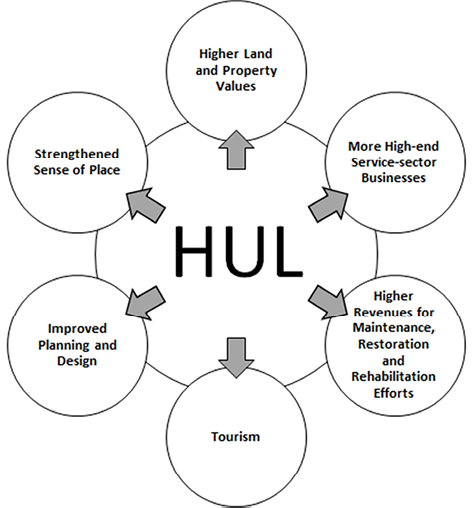
Source: own work based on UNESCO (2013).
3. Tools of the hul approach
As mentioned earlier, the HUL approach comprises four types of tools: civic engagement tools, knowledge and planning tools, regulatory systems, and financial tools. They will be explained in detail in the following.
3.1. Civic engagement tools
According to UNESCO (2011, p. 4), “[It] should involve a diverse cross-section of stakeholders, and empower them to identify key values in their urban areas, develop visions that reflect their diversity, set goals, and agree on actions to safeguard their heritage and promote sustainable development. These tools, which constitute an integral part of urban governance dynamics, should facilitate intercultural dialogue by learning from communities about their histories, traditions, values, needs and aspirations, and by facilitating mediation and negotiation between groups with conflicting interests.”
Research indicates that participation is ensured by motivation, opportunities, and ability, and they are important variables for successful civic engagement (Rasoolimanesh et al., 2017). Civic participation may be enhanced through capacity-building activities, an intergenerational approach to culture, mapping of stakeholders and practices, and community-based design. To create a common vision, decision-making processes should involve all levels of society and guarantee transparency and dialogue (Erkan, 2018).
A range of instruments that inform, mobilise, and engage are included in the category of community engagement tools. They take skills and know-how from local communities and other society groups. The tools, which include different kinds of plans, viewscape mapping, baseline character-defining features and process documentation, participant groups’ cognitive mapping, insights from anthropology and cultural geography, and locals’ documentation of oral traditions and customs, can serve as advisory tools (Bandarin and Van Oers, 2012).
3.2. Knowledge and planning tools
According to UNESCO (2011, p. 4), “[It] should help protect the integrity and authenticity of the attributes of urban heritage. They should also allow for the recognition of cultural significance and diversity, and provide for the monitoring and management of change to improve the quality of life and of urban space. These tools would include documentation and mapping of cultural and natural characteristics. Heritage, social and environmental impact assessments should be used to support and facilitate decision-making processes within a framework of sustainable development.”
The knowledge and planning tools indicate to technical methods for analysing, monitoring, and managing urban heritage (Hosagrahar, 2014). Hosagrahar (2014) classified the tools into three main sections, namely: (1) mapping, measuring, and visualisation tools for knowledge and data gathering; (2) reading, interpreting, and analysing tools of the urban landscape; and (3) planning and regulating intervention tools in historic areas and making decisions and choices regarding protection, changes, and new development.
Regarding the first section, mapping, inventorying, and documenting would need to go beyond emphasising the architectural and material characteristics of urban heritage and acknowledge cultural importance and variety, as well as assist in monitoring and managing change. Surveying and documenting are required at several scales, ranging from the urban and regional scale to the interior of individual buildings and architectural details. Depending on the circumstances, survey and documentation may involve the use of electronic devices and systems.
The next section is about how to read and interpret the urban landscape. It consists of various evaluations, such as inventory and database; historical analysis and mapping; visual and formal analysis; cultural analysis; mapping cultural meanings, practices, and identities; socio-economic analysis; morphological analysis; infrastructure analysis; and geospatial referencing.
The final section addresses the identification of ways to handle development demands and potentials in a way that is compatible with the heritage character while protecting and safeguarding the continuity of the most important heritage features. This is done through the assessment of the potential and development pressures on a site, weighing and ranking a range of possible actions and interventions, and predicting and evaluating their consequences. Some of the popular techniques are SWOT analysis, visioning and strategic planning, cultural heritage impact assessment, environmental impact assessment, and zoning (Hosagrahar, 2014).
3.3. Regulatory systems
According to UNESCO (2011, p. 5), “[It] should reflect local conditions, and may include legislative and regulatory measures aimed at the conservation and management of the tangible and intangible attributes of the urban heritage, including their social, environmental and cultural values. Traditional and customary systems should be recognized and reinforced as necessary.”
In this context, regulatory systems refer to all laws, regulations, guidelines, and administrative practices that affect urban heritage. This includes regulations related to urban planning, such as municipal plans and zoning laws. Additionally, national laws may offer norms for heritage designation and protection that consist of standards for researching, documenting, and listing historically significant assets and sites (O’Donnell, 2014). Traditional systems and practices should also be considered, respecting public and private land uses, building techniques and materials, and locations where customs and practices are reflected. As a result, new regulatory systems can be developed based on previous traditions and legal tools or tailored to meet the urban imperatives and innovations of the twenty-first century. This process goes forward when professionals, officials, and citizens collaborate together to form new regulations and legal tools through collective action (Höftberger, 2023; O’Donnell, 2014). At the heritage site level, conservation, management, and business plans are commonly used regulatory tools. They identify and assess a site’s significance, define development strategies, policies, and conservation practices, recommend specific actions, and develop financial and marketing strategies (Bond and Worthing, 2016).
The HUL approach uses regulatory tools to address threats in cities, particularly through Heritage Impact Assessments (HIA), as a reactive mechanism. Applying impact assessments as a proactive mechanism, such as Strategic/Environmental Impact Assessments, can result in broader benefits (Erkan, 2018).
3.4. Financial tools
According to UNESCO (2011, p. 5), “[It] should be aimed at building capacities and supporting innovative income-generating development, rooted in tradition. In addition to government and global funds from international agencies, financial tools should be effectively employed to foster private investment at the local level. Micro-credit and other flexible financing to support local enterprise, as well as a variety of models of partnerships, are also central to making the historic urban landscape approach financially sustainable.”
Heritage financial tools are mechanisms and programs that are used to encourage and facilitate investment in heritage assets (Jafarpour Nasser et al., 2020). The reason of creating financial tools for heritage conservation is based on the principle that historic buildings have values in addition to their economic value, including symbolic, social, environmental, educational, cultural, and aesthetic values, among others, and that a larger community benefits more from those values than the building owner does (Rypkema, 2014).
Cities are in a competition to build competitive dreamlands in line with sustainable development, while they have neglected to accept affordable economic functions. Financial instruments should address this gap by helping communities create good jobs for their citizens. Establishing international and national funds, stimulating private investment, developing adaptable financing (microcredit) models, and supporting local entrepreneurship are all beneficial strategies. In order to achieve this, it is desirable to base income-generating actions on tradition, adopting a range of partnerships beyond public-public, public-private models, and ensuring that the financial models are sustainable (Erkan, 2018).
4. Literature review
Since the introduction of the HUL approach, many scholars have addressed it. Most of these studies are descriptive and dedicated to reviewing the literature (e.g., Azpeitia Santander et al., 2018; Rey-Pérez and Pereira Roders, 2020; Wen-zhuo and Feng, 2017) or interpreting and elaborating on this approach (e.g., Pereira Roders, 2019; Sonkoly, 2017; Veldpaus and Roders, 2017).
In other research, the implementation of this approach has been examined from various perspectives and in different contexts. For instance, De Rosa and Di Palma (2013) investigated the use of the HUL approach in regenerating the port cities, considering Naples, Italy. In a case study of Edmonton, Canada, Jones and Zembal (2019) intended to understand the opportunities and barriers of applying the HUL approach in a fast-growing city. Jiang et al. (2022) also employed the HUL approach within the city of Suzhou, China, to examine the challenges and opportunities in preserving its historical heritage while promoting sustainable urban development.
In the context of World Heritage Urban Areas, Wang and Gu (2020) discussed different challenges of urban landscape management in Pingyao, as one of the WHSs in China, and proposed that the management must be done in a historical, cultural, and socio-economic context. The authors submitted that due to rapid urbanisation and development of tourism in historical cities, the HUL must be integrated into national planning systems. The authors employed a mixed-methods approach, combining qualitative analysis of historical documents and spatial data with quantitative analysis of socio-economic indicators. The study recommended balancing conservation and development, engaging local communities, and adopting innovative planning approaches to ensure the long-term sustainability of historic urban landscapes. Zeayter and Mansour (2018) investigated the use of the HUL approach in the old city of Tyre, a WHS in Lebanon, and in particular the analysis of heritage conservation ideologies. Their study offered insights into the various perspectives and approaches to heritage preservation in the city and how these ideologies influence the implementation of the HUL approach. The qualitative research methodology included document analysis, interviews, and field observations. Findings showed that there was a diversity of the heritage conservation ideology, from the preservationist to the adaptive reuse. The authors also stressed that these diverse perspectives should be considered while creating a holistic and inclusive HUL strategy. In their research, Aureli and Del Baldo (2023) focused on the delicate balance between cultural heritage preservation and the need for sustainable development. The study addresses the city of Urbino, Italy, designated as a WHS, illustrating the part of local authorities in being involved in protecting and increasing the historical centre of the city by engaging stakeholders. Data were gathered using participant observation in the form of informal interviews, group interviews, and direct observation of project activities. The results illustrated the power of participatory governance in promoting the more sustainable use of assets and citizen inclusiveness in heritage revival actions. Macamo et al. (2024) investigated the potential of using the HUL approach to support the conservation of heritage on Ilha de Moçambique, a WHS in Mozambique. Their study sought to determine if this method could address the issues with preserving heritage in fast-expanding urban areas. By employing a range of research tools, including field observations, stakeholder interviews, and the analysis of urban planning documents, the authors identified that knowledge of island culture and social and economic processes is crucial for environmental conservation planning. They stressed the importance of a holistic approach that respects the island’s entire urban fabric, from its cultural landscapes and buildings to its intangible.
Thematically and with similar case studies, Zhao et al. (2023) explored the complex interplay between public policymaking, planning for conservation, and sustainable heritage tourism on Kulangsu Island, a WHS. The findings highlighted the importance of a coordinated government and local communities with tourism stakeholders’ efforts. They underscored the need for adaptive management strategies that can respond to changing tourism demands without compromising the integrity of the island’s cultural and historical elements. Dehghan Pour Farashah and Aslani (2021) aimed to develop a tourism-oriented conservation plan for the historic neighbourhood in the Historic City Yazd, a WHS in Iran. The study used field surveys to evaluate the area’s environmental, functional, and aesthetic features. The findings recommended careful planning to support both tourism and conservation in historic cities.
Focusing on the Historic Centre of Krakow, two significant studies have been conducted that are somewhat in line with the current research. Bieda and Parzych (2013) addressed the relationship between the preservation of monumental urban landscapes and spatial planning in Krakow. A mixed-methods approach including analysis of historical documents, spatial plans, and the process of urban development was applied. The paper highlighted the need for designing spatial planning strategies that respect the distinct character of monumental towns and support their sustainable development. Kowalczyk-Anioł (2023) has showed how tourism and urban regeneration processes are interwoven and fundamental to one another in Krakow. She used a mixed method combining quantitative data analysis, qualitative data from interviews, and observation. Her findings indicated that tourism-led development could bring alongside positive as well as negative consequences of gentrification, displacement, and social exclusion.
In terms of the methodology, the IPA technique, despite its age, has been widely applied in various scientific fields due to its management applications, especially for evaluation of user satisfaction and quality services. For example, in the context of tourism (e.g., Boley et al., 2017; Disastra et al., 2018), transportation (e.g., Aghajanzadeh et al., 2022; Esmailpour et al., 2020), education (e.g., McLeay et al., 2017; Rozina et al., 2016), and health (e.g., Park et al., 2019; Vidyanto et al., 2023), etc.
A review of the aforementioned studies reveals that the HUL approach has been examined from various perspectives and within the context of WHCs. A wide range of methods, including quantitative and qualitative or a combination of them, have been employed. However, an urban plan, especially in a WHC, has not been evaluated based on the HUL approach so far. On a broad scale, this study presents a framework that could be used to revise urban plans. Furthermore, since the revitalisation plan of the Historic Centre of Krakow shares structural similarities with traditional urban plans, it shows to what extent principles and notions of the HUL approach are considered in existing urban heritage conservation and management plans. The findings also highlight directions for improving the revitalisation planning at the local level.
5. The historic centre of Krakow
Krakow is a city in southern Poland and the capital of the historic Lesser Poland Voivodeship (Fig. 2). Krakow is the second most populous city and the fourth largest in terms of area (Budzyński et al., 2014). Krakow’s international popularity is evident in its high rankings in the most frequently visited cities in Europe and the world (Noworól and Bartuś, 2007), as well as its top place in the rankings of top European destinations based on TripAdvisor reviews (Tripadvisor, 2024).
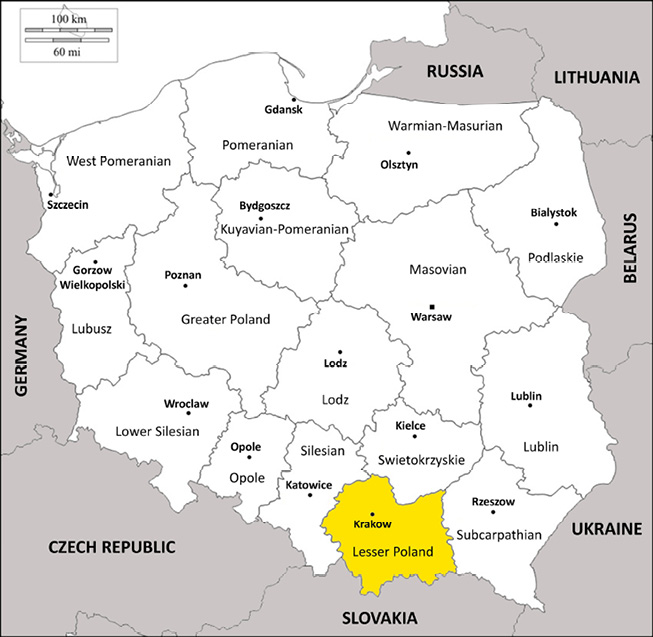
Source: own work.
Krakow, Poland’s former capital, has an extensive history dating back to the 7th century. The Historic Centre of Krakow was designated a UNESCO WHS in 1978 for demonstrating continuous urban growth from the Middle Ages to the present, as well as for its exceptional townscape and outstanding individual monuments. The core zone area is 149.65 ha, while its buffer zone covers 907.35 ha. This area consists of three main parts: the medieval city, the Wawel Hill with its castle, and the historic Jewish town of Kazimierz (see Fig. 3) (UNESCO, n.d.).
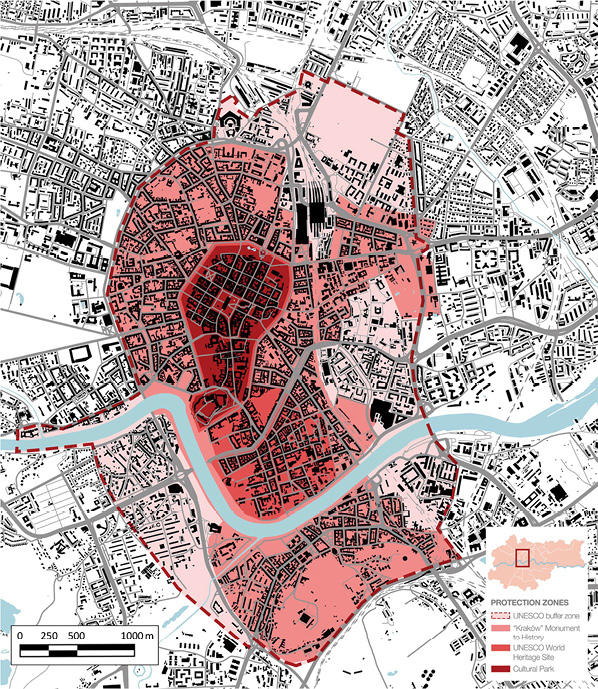
Source: adapted from Porębska et al. (2021).
6. Research design
This study used a mixed-methods research design that included a deductive thematic analysis and the IPA. As a qualitative analysis, key themes and patterns from the revitalisation plan were extracted in accordance with the study’s objectives. In the quantitative stage, the IPA was applied to calculate importance and performance scores, as well as to determine strategy priorities.
To collect data, an online questionnaire in Polish was prepared and sent to the e-mail addresses of potential respondents in two rounds. Additionally, one of the researchers referred to the Krakow Municipality offices in person and shared the link with the local experts. These individuals were selected through purposive sampling. The selection criteria were appropriate knowledge and experience of the studied plan and the area. Hence, local academics with at least a Ph.D. and authorities from the Krakow Municipality in the fields of tourism, urban planning, and heritage conservation were chosen. Finally, seventeen completed questionnaires were received. The profiles of the respondents are summarised in Table 1.
| Academia | Public administration | ||||
|---|---|---|---|---|---|
| No. | Gender | Age | No. | Gender | Age |
| 1 | Male | 77 | 13 | Male | 64 |
| 2 | Male | 68 | 14 | Male | 60 |
| 3 | Male | 66 | 15 | Male | 49 |
| 4 | Male | 64 | 16 | Female | 34 |
| 5 | Male | 59 | 17 | Female | 30 |
| 6 | Male | 52 | 18 | Male | 28 |
| 7 | Male | 51 | 19 | Female | 27 |
| 8 | Male | 51 | brak danych | brak danych | brak danych |
| 9 | Male | 50 | brak danych | brak danych | brak danych |
| 10 | Female | 42 | brak danych | brak danych | brak danych |
| 11 | Male | 40 | brak danych | brak danych | brak danych |
| 12 | Female | 34 | brak danych | brak danych | brak danych |
Source: own work.
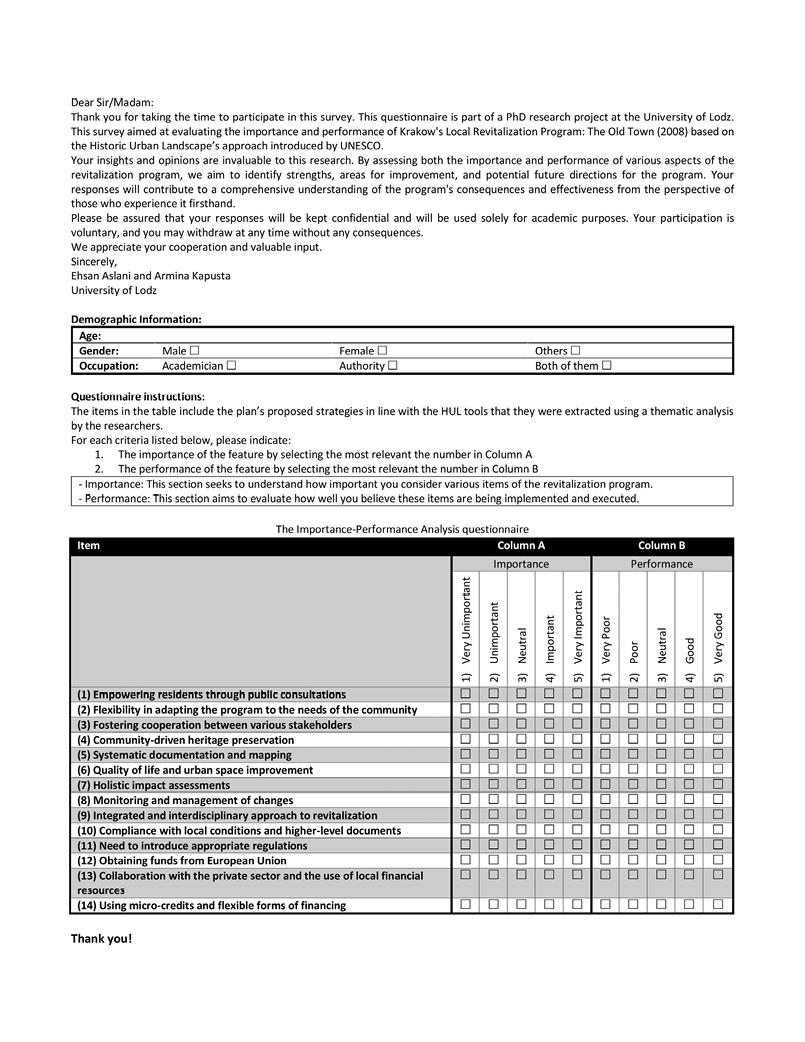
The questionnaire included 14 proposed strategies extracted from the document and their descriptions, as well as two columns for evaluating their importance and performance on a five-point Likert scale, ranging from 1 for “very unimportant” or “strongly dissatisfied” to 5 for “very important” or “strongly satisfied.”
6.1. Deductive thematic analysis
The first phase of the research consisted of a deductive thematic analysis of the revitalisation plan. Deductive thematic analysis guides the analysis of qualitative data using preconceived themes or categories (Braun and Clarke, 2006). This approach is structured and follows systematic steps. It often starts with selecting a theoretical framework, familiarising oneself with the data, generating initial codes based on that framework, searching for themes, reviewing themes, defining and naming themes, and finally producing the report (Fereday and Muir-Cochrane, 2006; Guest et al., 2011).
6.2. Importance-Performance Analysis
The IPA technique was developed by Martilla and James (1977) in order to guide decision-making and resource allocation in the field of marketing. One of its applications is the examination of management strategies (Sever, 2015). The IPA framework was selected over other analytical methods (e.g., SWOT) for its ability to prioritise actionable strategies by explicitly comparing stakeholder perceptions of importance (theoretical relevance) and performance (practical implementation). Consequently, the IPA allows for the identification of strategies that require more attention and potential improvements. We apply a traditional IPA matrix with data-centred quadrants here.
Step one: the degree of importance of the attributes extracted from the qualitative stage of the research is determined bjp and cjp (p = 1, 2, 3,…, n and j = 1, 2, 3, …, m) represent the importance value and the performance value, respectively, which are determined for the jth attribute by the pth decision-maker. A Likert scale is applicable to describe these values.
Step two: to integrate the decision-maker’ opinions, the geometric mean was utilised. Next, applying equations 1 and 2, the final importance value (bj) and the final performance value of the jth attribute (cj) are computed, which is the result of the combining opinion of p decision-makers (Yang et al., 2011).
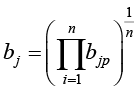 (1)
(1)
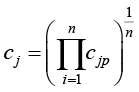 (2)
(2)
Step three: the threshold values must be specified. It is defined as the overall grand mean of the collected importance and performance scores, which determines the intersection point of the IPA matrix (Fig. 4) axes (Warner et al., 2016).
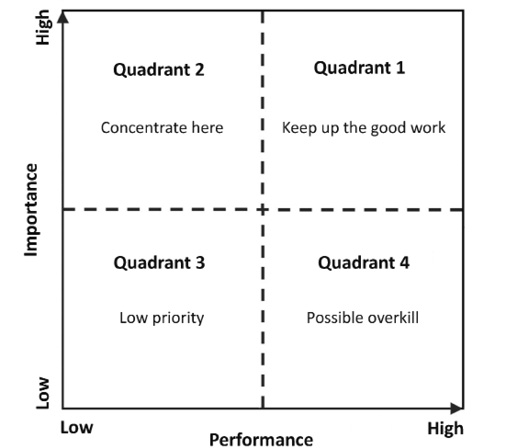
Source: adapted from Yang et al. (2011).
The threshold values are calculated by equations 3 and 4. m denotes the number of research attributes, whereas μb and μc reflect the importance threshold value and the performance threshold value, respectively. μb and μc may not be centered on the axes (Yang et al., 2011).
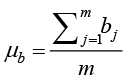 (3)
(3)
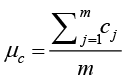 (4)
(4)
Step four: the relative position of each attribute is specified in the IPA matrix. According to Fig. 4, quadrant 1 represents attributes of both high importance and high performance. The set-up standards for this zone are bj > μb and cj > μc, respectively. Quadrant 2 represents a high importance degree of attributes but a low performance degree. The set-up standards for this zone are bj > μb and cj < μc, respectively. Quadrant 3 comprises attributes that are considered to be less important and have a low performance degree. The set-up standards for this zone are bj < μb and cj < μc, respectively. Quadrant 4 contains attributes that are perceived as of relatively low importance but of high performance. The set-up standards for this zone are bj < μb and cj > μc, respectively. Therefore, attributes in quadrant 1 should be kept and given more attention as competitive advantages. The attributes included in quadrant 2 are vulnerable and should be prioritised for improvement. The attributes in quadrants 3 and 4 need less attention.
Step five: the weight and ranking of research attributes are established. The weight of the jth attribute is represented by OWj, which is determined using Equation 5.
 (5)
(5)
Next, the weights are normalised using Equation 6.
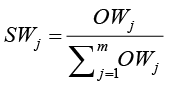 (6)
(6)
where SWj represents the standardised weight of the jth attribute, 0 ≤ SWj ≤ 1, and 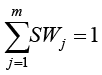 (Yang et al., 2011).
7. Data analysis
7.1. Thematic analysis results
Considering the UNESCO’s definition of four HUL tools, namely civic engagement tools, knowledge and planning tools, regulatory systems, and financial tools (see Sections 3.1 to 3.4 for full descriptions), the plan’s proposed strategies were identified and categorized as shown in Table 2.
| HUL tools | Code | The proposed strategy |
|---|---|---|
| Description | ||
| Civic engagement tools | CET1 | Empowering residents through public consultations |
| The document emphasises the importance of public consultations, which were aimed at familiarising residents and local communities with the issues of revitalisation. These consultations were a platform to present and discuss the current draft version of the plan, as well as to obtain the opinions, positions and ideas of residents, which is an important step towards including them in the decision-making process. | ||
|
Civic engagement tools |
CET2 | Flexibility in adapting the plan to the needs of the community |
| The document emphasises that the revitalisation plan should be flexible and adapted to new requirements and needs of the community. This approach promotes the active participation of residents in identifying key problems and in defining goals and actions that aim to improve the quality of life in their area. | ||
| CET3 | Fostering cooperation between various stakeholders | |
| The document indicates the need for cooperation between the municipality, operators and other participants of the revitalisation process. Such a management system is intended not only to coordinate activities, but also to enable mediation and negotiations between various interest groups, which is crucial in the context of the diverse needs and values of residents. | ||
| CET4 | Community-driven heritage preservation | |
| In the context of promoting sustainable development, the document also emphasises the importance of preserving and revitalising buildings and objects of historical, cultural and architectural value, which is consistent with the aspirations of local communities to protect their heritage. | ||
|
Knowledge and planning tools |
KPT1 | Systematic documentation and mapping |
| According to the document, an important element is the systematic documentation and mapping of the cultural and natural features of the revitalisation area. This allows for a better understanding and assessment of the value of heritage, which is crucial for its protection. | ||
| KPT2 | Quality of life and urban space improvement | |
| The document aims to improve the quality of life of residents and the urban space. This theme reflects the ultimate goal of revitalisation efforts, which is to create a better living environment for the community. | ||
| KPT3 | Holistic impact assessments | |
| The document points out the need to conduct heritage, social and environmental impact assessments to support decision-making processes as part of sustainable development. Assessing the current situation in the revitalisation area, the document contains a SWOT analysis that identifies key problems and areas requiring intervention. This approach allows for a better understanding of cultural significance and diversity, which is essential to protect the integrity and authenticity of urban heritage. | ||
| KPT4 | Monitoring and management of changes | |
| According to the document, planning tools should enable monitoring and management of changes in urban space. This means that mechanisms should be introduced that will allow for ongoing assessment of the impact of revitalisation activities on the quality of life of residents and urban space. | ||
| KPT5 | Integrated and interdisciplinary approach to revitalisation | |
| The document indicates the need for an integrated and interdisciplinary approach to revitalisation, which takes into account various aspects of urban life, including cultural, social and ecological aspects. | ||
|
Regulatory systems |
RS1 | Compliance with local conditions and higher-level documents |
| The document refers to regulatory systems in the context of the revitalisation of the Old Town, emphasising the importance of adapting activities to local conditions and the specific needs of the area. As part of the Krakow Municipal Revitalization Program, it is important that the plan is consistent with existing strategic documents, which include both national and regional regulations regarding spatial, socio-economic development. | ||
| RS2 | Introducing appropriate regulations | |
| The document highlights the need to introduce appropriate legal and legislative regulations regarding the protection of cultural heritage is aimed at preventing the degradation of these objects. | ||
|
Financial tools |
FT1 | Obtaining funds from the European Union |
| The document indicates the need to obtain funds from various sources, including European Union structural funds, which is necessary to implement revitalisation activities and heritage protection. | ||
| FT2 | Collaboration with the private sector and the use of local financial resources | |
| The document suggests that a variety of partnership models can contribute to the financial sustainability of approaches to the revitalisation of historic urban landscapes. Collaboration with the private sector and the use of local financial resources are key to the long-term success of the revitalisation plan. | ||
| FT3 | Using micro-credits and flexible forms of financing | |
| The document highlights the importance of the local economy and job creation, which can be supported by a variety of financing models, including micro-credit and other flexible forms of support for local businesses. This approach aims not only to revitalise the area, but also to ensure its long-term financial and social stability. |
Source: own work.
7.2. The IPA results
Table 3 shows the calculation results of the importance values and the performance values using the geometric mean. The calculations were performed using Microsoft Excel software.
| Code | The proposed strategy | bj | cj |
|---|---|---|---|
| CET1 | Empowering residents through public consultations | 4.379 | 3.017 |
| CET2 | Flexibility in adapting the program to the needs of the community | 3.768 | 2.845 |
| CET3 | Fostering cooperation between various stakeholders | 4.124 | 2.879 |
| CET4 | Community-driven heritage preservation | 3.800 | 2.787 |
| KPT1 | Systematic documentation and mapping | 3.591 | 3.203 |
| KPT2 | Quality of life and urban space improvement | 4.349 | 3.551 |
| KPT3 | Holistic impact assessments | 3.959 | 2.777 |
| KPT4 | Monitoring and management of changes | 4.115 | 2.959 |
| KPT5 | Integrated and interdisciplinary approach to revitalisation | 3.740 | 2.725 |
| RS1 | Compliance with local conditions and higher-level documents | 3.529 | 3.090 |
| RS2 | Introducing appropriate regulations | 3.626 | 2.969 |
| FT1 | Obtaining funds from the European Union | 3.941 | 3.760 |
| FT2 | Collaboration with the private sector and the use of local financial resources | 4.096 | 2.889 |
| FT3 | Using micro-credits and flexible forms of financing | 3.384 | 2.847 |
Source: own work.
The importance threshold value and the performance threshold value were determined using the arithmetic mean, and the results are presented in Table 4.
| brak danych | μb | μc |
|---|---|---|
| Value | 3.886 | 3.021 |
Source: own work.
According to Table 4, the coordinates 3.886 and 3.021 were specified as the border between the four quadrants of the IPA matrix.
Figure 5 visually represents the positioning of each strategy in the IPA matrix. The strategies placed in the first quadrant are considered strengths that should be maintained. In the second quadrant, the strategies need to be improved. The other quarters either have resource wastage or are not essential, so they do not need to be examined. According to Figure 5, the strategies of “systematic documentation and mapping” (KPT1) and “compliance with local conditions and higher-level documents” (RS1) fall into the high importance but low performance quadrant. It indicates a need for improvement in these areas. The strategies of “obtaining funds from the European Union” (FT1), “quality of life and urban space improvement” (KPT2) and, with some leniency, “empowering residents through public consultations” (CET1) are placed in the high importance and high-performance quadrant. It shows they are currently effective and should be maintained. Other strategies are of lower importance and performance, thus requiring less focus in the immediate future. However, given the number of experts participating in this study, the results for the strategies FT1 and RS2, positioned near the boundaries of quadrant 2, should be interpreted with caution.
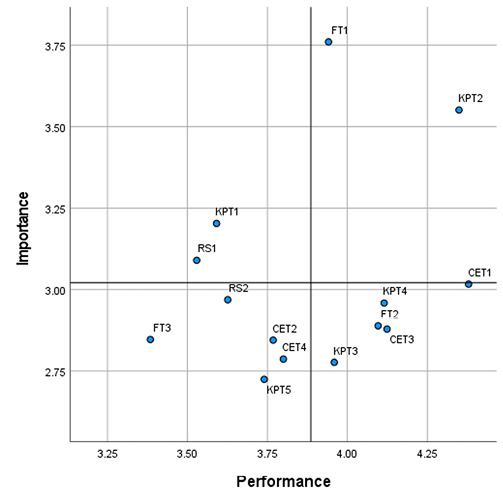
Source: own work.
However, given the number of experts participating in this study, it should be cautious in interpreting the results for strategies one and two, which are near the boundaries between quadrants.
In the following, the determination of the weight and rank of each strategy is presented in Table 5. The rank of each indicates the priority for the enhancement of the strategies. It should be noted that the ranking was only done for features that are in the second quadrant (Jalalian et al., 2024).
| Code | The proposed strategy | OWj | SWj | Rank |
|---|---|---|---|---|
| RS1 | Compliance with local conditions and higher-level documents | 1.357 | 0.038 | 1 |
| KPT1 | Systematic documentation and mapping | 1.243 | 0.035 | 2 |
Source: own work.
8. Discussion and conclusion
This study first thematically analysed the content of the revitalisation plan of the Historic Centre of Krakow based on the HUL’s recommended tools to extract the suggested strategies. Conversely, the IPA of the plan revealed a general understanding of the current and desired status of the strategies’ implementation.
Based on the participant experts’ opinion, while a few strategies perform well, others require revision or enhancement to align with the dynamic needs of the studied area. The findings show an uneven distribution for financial tools. While “obtaining funds from the European Union” (FT1) is in progress and has demonstrated its effectiveness, “collaboration with the private sector and the use of local financial resources” (FT2), as well as “using micro-credits and flexible forms of financing” (FT3), surprisingly did not reach the threshold of importance for further improvement. This reliance on external funding sources indicates a lack of attention to community-based financial models that not only enhance local economic stability but are also aligned with HUL’s emphasis on community empowerment through sustainable urban practices (Erkan, 2018; Rypkema, 2014). This requires local financing mechanisms to reduce foreign reliance and instead stimulate local investments (Jafarpour Nasser et al., 2020).
From the knowledge and planning tools perspective, “quality of life and urban space improvement” (KPT2) was of high importance and also performed well. This aligns with the broader goals of the HUL approach, which emphasize enhancing urban liveability and sustainability as part of heritage-led development (UNESCO, 2013; Veldpaus and Roders, 2017). Nonetheless, “systematic documentation and mapping” (KPT1) should receive more attention. According to Hosagrahar (2014), robust documentation practices, including inventorying, mapping, and geospatial referencing, are fundamental for understanding heritage values and monitoring change over time.
In the category of civic engagement tools, none of the strategies were considered sufficiently important. However, “empowering residents through public consultations” (CET1) approached the importance threshold and also demonstrated strong performance. In this regard, expanding participatory governance frameworks and ensuring transparent decision-making processes could enhance stakeholder inclusivity and adaptability (Aureli and Del Baldo, 2023; UNESCO, 2011).
Poor performance was noted in the area of regulatory systems, particularly in “compliance with local conditions and higher-level documents” (RS1). This finding highlights the fragmentation within the legislative hierarchy and aligns with Zeayter and Mansour (2018), who emphasised the need for a comprehensive and inclusive strategy in implementing the HUL approach. However, “introducing appropriate regulations” (RS2) was only marginally considered by experts to be important enough for further strengthening.
In summary, this paper contributed to knowledge by proposing a new application for the IPA in urban planning, as well as broke new ground by evaluating a revitalisation plan through the lens of the HUL approach in the context of a WHC. The main limitations of the research were the low participation rate and the number of respondents, which may still restrict the generalisability of the findings. Out of a total of 173 emails sent to potential respondents in two rounds and referring the local experts in person, only 19 completed questionnaires were received. Since the more respondents, the more robust the final results will be, future studies could expand the statistical sample. They also could explore the impacts of these strategies from stakeholder viewpoints and further refine evaluation methods for more precise planning and resource allocation. Addressing knowledge and planning tools as well as regulatory systems will be critical in ensuring long-term success in integrating heritage conservation with urban development due to their high indicators’ score.
Acknowledgments. We would like to sincerely thank the anonymous reviewers for their valuable comments and constructive feedback, which greatly helped improve the quality of this manuscript.
APPENDIX
The survey form that was sent to the respondents.
Autorzy
REFERENCES
AGHAJANZADEH, M., AGHABAYK, K., ESMAILPOUR, J. and DE GRUYTER, C. (2022), ‘Importance–Performance Analysis (IPA) of metro service attributes during the COVID-19 pandemic’, Case studies on transport policy, 10 (3), pp. 1661–1672. https://doi.org/10.1016/j.cstp.2022.06.005
ASLANI, E., SHAHRIARI, S. K. and ZABIHI, H. (2022), ‘Analysis of Indicators Affecting the Establishment of the Integrated Urban Management System in a World Heritage City (Case Study: Historic City of Yazd)’, Quarterly Journals of Urban and Regional Development Planning, 7 (20), pp. 145–179. https://doi.org/10.22054/urdp.2022.66372.1413
AURELI, S. and DEL BALDO, M. (2023), ‘Stakeholders’ consciousness of cultural heritage and the reconciliation of different needs for sustainable development’, Journal of Cultural Heritage Management and Sustainable Development, 13 (4), pp. 964–982. https://doi.org/10.1108/JCHMSD-10-2020-0156
AZPEITIA SANTANDER, A., AZKARATE GARAI-OLAUN, A. and DE LA FUENTE ARANA, A. (2018), ‘Historic urban landscapes: A review on trends and methodologies in the urban context of the 21st century’, Sustainability, 10 (8), p. 2603. https://doi.org/10.3390/su10082603
BANDARIN, F. (2010), Managing Historic Cities, Paris: UNESCO.
BANDARIN, F. and VAN OERS, R. (2012), The historic urban landscape: managing heritage in an urban century, Chichester: John Wiley & Sons.
BIEDA, A. and PARZYCH, P. (2013), Development of spatial politics of monumental towns based on Krakow example. Paper presented at the GeoConference on Informatics, geoinformatics and remote sensing: 13th International Multidisciplinary Scientific GeoConference, Albena.
BOLEY, B. B., MCGEHEE, N. G. and HAMMETT, A. T. (2017), ‘Importance-performance analysis (IPA) of sustainable tourism initiatives: The resident perspective’, Tourism management, 58, pp. 66–77. https://doi.org/10.1016/j.tourman.2016.10.002
BOND, S. and WORTHING, D. (2016), Managing built heritage: The role of cultural values and significance, John Wiley & Sons.
BORKOWSKI, K. (2023). ‘Ruch Turystyczny w Krakowie w 2022 roku’, Małopolska Organizacja Turystyczna, https://turystykakrakow.pl/badania_i_analizy/275010,artykul,ruch_turystyczny_w_krakowie.html [accessed on: 07.12.2024].
BRAUN, V. and CLARKE, V. (2006), ‘Using thematic analysis in psychology’, Qualitative research in psychology, 3 (2), pp. 77–101. https://doi.org/10.1191/1478088706qp063oa
BUDZYŃSKI, I., KACPERCZYK, E., KORCZAK-ŻYDACZEWSKA, K., MILUSZ, M., WÓJCIKOWSKA, J., SZNEJDER, A. and MARCZAK, M. (2014). ‘Area and population in territorial cross-section in 2014’, STATISTICS POLAND, https://archive.fo/LuByn#selection-1739.0-1745.6 [accessed on: 07.12.2024].
DE ROSA, F. and DI PALMA, M. (2013), ‘Historic urban landscape approach and port cities regeneration: Naples between identity and outlook’, Sustainability, 5 (10), pp. 4268–4287. https://doi.org/10.3390/su5104268
DEHGHAN POUR FARASHAH, M. and ASLANI, E. (2021), ‘A tourism-oriented conservation plan for a historic neighborhood based on urban design qualities: The case of Yazd in Iran’, Konwersatorium Wiedzy o Mieście, 6 (34), pp. 83–98. https://doi.org/10.18778/2543-9421.06.08
DISASTRA, G. M., HANIFA, F. H. and SASTIKA, W. (2018), ‘Importance-performance analysis (IPA) on tourists satisfaction (study in Ciamis Regency, Indonesia)’, Advanced Science Letters, 24 (4), pp. 2922–2925. https://doi.org/10.1166/asl.2018.11095
ERKAN, Y. (2018), ‘The way forward with historic urban landscape approach towards sustainable urban development’, Built Heritage, 2 (4), pp. 82–89. https://doi.org/10.1186/BF03545686
ESMAILPOUR, J., AGHABAYK, K., VAJARI, M. A. and DE GRUYTER, C. (2020), ‘Importance–Performance Analysis (IPA) of bus service attributes: A case study in a developing country’, Transportation research part a: policy and practice, 142, pp. 129–150. https://doi.org/10.1016/j.tra.2020.10.020
FEREDAY, J. and MUIR-COCHRANE, E. (2006), ‘Demonstrating rigor using thematic analysis: A hybrid approach of inductive and deductive coding and theme development’, International Journal of Qualitative Methods, 5 (1), pp. 80–92. https://doi.org/10.1177/160940690600500107
GUEST, G., MACQUEEN, K. M. and NAMEY, E. E. (2011), Applied thematic analysis, Los Angeles: Sage.
HÖFTBERGER, K. (2023), ‘Conservation and development: Implementation of the historic urban landscape approach in Khiva, Uzbekistan’, International Journal of Heritage Studies, 29 (4), pp. 314–328. https://doi.org/10.1080/13527258.2023.2183885
HOSAGRAHAR, J. (2014), ‘Knowledge and planning tools’, [in] BANDARIN, F. and OERS, R. V. (eds), Reconnecting the City: Th e Historic Urban Landscape Approach and the Future of Urban Heritage, Chichester, John Wiley & Sons, pp. 249–268. https://doi.org/10.1002/9781118383940.ch10
ISSARATHUMNOON, W. (2020), ‘Applying the historic urban landscape approach to the identification of urban heritage attributes of Bangkok old town’, Nakhara: Journal of Environmental Design and Planning, 19, pp. 25–38. https://doi.org/10.54028/NJ2020192538
JAFARPOUR NASSER, S., ESFANJARY KENARI, E. and TABIBIAN, M. (2020), ‘Historic Urban Landscape Approach: A New Tool for Urban Heritage Management’, Culture of Islamic Architecture and Urbanism Journal, 5 (1), pp. 183–199. https://doi.org/10.29252/ciauj.5.1.11
JALALIAN, S., SHAHABIAN, P., LAK, A. and MODIRI, A. (2024), ‘Prioritizing Effective Criteria in University Design to Promote the Presence of Women: A Study in Urban Design’, International Journal of Urban Management and Energy Sustainability, 5 (2), pp. 61–81. https://doi.org/10.22034/ijumes.2024.2025934.1207
JIANG, J., ZHOU, T., HAN, Y. and IKEBE, K. (2022), ‘Urban heritage conservation and modern urban development from the perspective of the historic urban landscape approach: A case study of Suzhou’, Land, 11 (8), p. 1251. https://doi.org/10.3390/land11081251
JONES, K. and ZEMBAL, V. (2019). ‘Pursuing a Historic Urban Landscape Approach to Heritage in Edmonton’, https://edmontonheritage.ca/wp-content/uploads/HUL-Evolving-Report-V1-3.pdf [accessed on: 07.12.2024].
KOWALCZYK-ANIOŁ, J. (2023), ‘Rethinking tourism-driven urban transformation and social tourism impact: A scenario from a CEE city’, Cities, 134, p. 104178. https://doi.org/10.1016/j.cities.2022.104178
KRUCZEK, Z., GMYREK, K., ZIŻKA, D., KORBIEL, K. and NOWAK, K. (2023), ‘Accessibility of Cultural Heritage Sites for People with Disabilities: A Case Study on Krakow Museums’, Sustainability, 16 (1), p. 318. https://doi.org/10.3390/su16010318
MACAMO, S., RAIMUNDO, M., MOFFETT, A. and LANE, P. (2024), ‘Developing Heritage Preservation on Ilha de Moçambique Using a Historic Urban Landscape Approach’, Heritage, 7 (4), pp. 2011–2030. https://doi.org/10.3390/heritage7040095
MARTILLA, J. A. and JAMES, J. C. (1977), ‘Importance-performance analysis’, Journal of Marketing, 41 (1), pp. 77–79. https://doi.org/10.2307/1250495
MCLEAY, F., ROBSON, A. and YUSOFF, M. (2017), ‘New applications for importance-performance analysis (IPA) in higher education: Understanding student satisfaction’, Journal of Management Development, 36 (6), pp. 780–800. https://doi.org/10.1108/JMD-10-2016-0187
MINNERY, J., CAMERON, C., BROWN, J. and NEWMAN, P. (1993), ‘Evaluation in urban planning: A framework for analysis’, Australian planner, 31 (1), pp. 8–13. https://doi.org/10.1080/07293682.1993.9657595
NOWORÓL, M. and BARTUŚ, K. (2007), ‘Kraków – Rynek Hotelowy’, Świat Nieruchomości, 62 (2), pp. 8–12.
O’DONNELL, P. (2014), ‘The role of regulatory systems’, [in] BANDARIN, F. and OERS, R. V. (eds), Reconnecting the City: The Historic Urban Landscape Approach and the Future of Urban Heritage, Chichester, John Wiley & Sons, pp. 269–281. https://doi.org/10.1002/9781118383940.ch11
PARK, H., KIM, Y. and CHU, S. H. (2019), ‘Importance-performance analysis (IPA) to improve emergency care for novice nurses’, Journal of Korean Academy of Fundamentals of Nursing, 26 (3), pp. 155–165. https://doi.org/10.7739/jkafn.2019.26.3.155
PEREIRA RODERS, A. (2019), ‘The Historic Urban Landscape approach in action: Eight years later’, Reshaping urban conservation: The historic urban landscape approach in action, pp. 21–54. https://doi.org/10.1007/978-981-10-8887-2_2
PORĘBSKA, A., BARNAŚ, K., DENDURA, B., KANIA, O., ŁUKASIK, M., ROGULSKA, A. and ZIELIŃSKI, M. (2021), ‘Lockdown in a disneyfied city: Kraków Old Town and the first wave of the Covid-19 pandemic’, Urban Design International, 26 (4), pp. 315–331. https://doi.org/10.1057/s41289-021-00175-5
RASOOLIMANESH, S. M., JAAFAR, M., AHMAD, A. G. and BARGHI, R. (2017), ‘Community participation in World Heritage Site conservation and tourism development’, Tourism Management, 58, pp. 142–153. https://doi.org/10.1016/j.tourman.2016.10.016
REY-PÉREZ, J. and PEREIRA RODERS, A. (2020), ‘Historic urban landscape: A systematic review, eight years after the adoption of the HUL approach’, Journal of Cultural Heritage Management and Sustainable Development, 10 (3), pp. 233–258. https://doi.org/10.1108/JCHMSD-05-2018-0036
ROZINA, N., JAAFAR, N. A. N., NOOR, Z. M. and MOHAMED, M. (2016), ‘Student ratings of teaching effectiveness: An importance-performance analysis (IPA)’, Journal of Educational and Social Research, 6 (3), pp. 33–44. https://doi.org/10.5901/jesr.2016.v6n3p33
RYPKEMA, D. (2014), ‘Devising financial tools for urban conservation’, [in] BANDARIN, F. and OERS, R. V. (eds), Reconnecting the City: The Historic Urban Landscape Approach and the Future of Urban Heritage, Chichester, John Wiley & Sons, pp. 283–300. https://doi.org/10.1002/9781118383940.ch12
SEVER, I. (2015), ‘Importance-performance analysis: A valid management tool?’, Tourism management, 48, pp. 43–53. https://doi.org/10.1016/j.tourman.2014.10.022
SONKOLY, G. (2017), Historical Urban Landscape, Cham: Palgrave Macmillan.
TRIPADVISOR (2024), Travelers’ Choice Awards; Best of the Best Destinations, https://www.tripadvisor.com/TravelersChoice-Destinations-cTop-g4 [accessed on: 07.12.2024].
UNESCO (2011), ‘Recommendation on the historic urban landscape’, UNESCO, https://whc.unesco.org/uploads/activities/documents/activity-638-98.pdf [accessed on: 07.12.2024].
UNESCO (2013), New life for historic cities: The historic urban landscape approach explained, Paris: UNESCO.
UNESCO (2015), ‘Hangzhou outcomes’, https://scbdcee3899006020.jimcontent.com/download/version/1462914805/module/13074173825/name/SustCit_Hangzhou_Outcomes_EN.pdf [accessed on: 07.12.2024].
UNESCO (n.d.), Historic Centre of Kraków, https://whc.unesco.org/en/list/29/ [accessed on: 07.12.2024].
VAN OERS, R. (2010), ‘Managing cities and the historic urban landscape initiative–an introduction’, [in] OERS, R. V. and HARAGUCHI, S. (eds), Managing historic cities, Paris, UNESCO, pp. 7–17.
VELDPAUS, L. (2015), Historic urban landscapes: Framing the integration of urban and heritage planning in multilevel governance, Doctoral Thesis, Technische Universiteit Eindhoven, Eindhoven.
VELDPAUS, L. and RODERS, A. P. (2017), ‘Historic urban landscape approach as a tool for sustainable urban heritage management’, [in] ASIKAINEN, S., BRITES, C., PLEBAŃCZYK, K., MIJATOVIĆ, L. R. and SOINI, K. (eds), Culture in sustainability: towards a transdiciplinary approach, Jyväskylä, University of Jyväskylä, pp. 62–74.
VIDYANTO, V., BERTUS, B. N., KRISNASARI, S. and NAPIRAH, M. R. (2023), ‘Analysis of Satisfaction Levels of Patients on Service Quality with The Importance Performance Analysis (IPA) Method’, Journal of Health and Nutrition Research, 2 (3), pp. 109–119. https://doi.org/10.56303/jhnresearch.v2i3.207
WANG, S. and GU, K. (2020), ‘Pingyao: The historic urban landscape and planning for heritage-led urban changes’, Cities, 97, p. 102489. https://doi.org//10.1016/j.cities.2019.102489
WARNER, L. A., CHAUDHARY, A. K. and LAMM, A. J. (2016), ‘Using importance-performance analysis to guide extension needs assessment’, The Journal of Extension, 54 (6), p. 21.
WEN-ZHUO, Z. and FENG, H. (2017), ‘A review of the theoretical and practical research on historic urban landscape’, Landscape Architecture, 24 (6), pp. 22–28. https://doi.org/10.14085/j.fjyl.2017.06.0022.07
WHC (2005). Vienna Memorandum on “World Heritage and Contemporary Architecture – Managing the Historic Urban Landscape, UNESCO, https://whc.unesco.org/document/5965 [accessed on: 07.12.2024].
YANG, L.-J., CHOU, T.-C. and DING, J.-F. (2011), ‘Using the Importance-Performance Analysis (IPA) approach to measure the service quality of mobile application stores in Taiwan’, African Journal of Business Management, 5 (12), p. 4824. https://doi.org/10.5897/AJBM10.1163
ZEAYTER, H. and MANSOUR, A. M. H. (2018), ‘Heritage conservation ideologies analysis – Historic urban Landscape approach for a Mediterranean historic city case study’, HBRC Journal, 14 (3), pp. 345–356. https://doi.org/10.1016/j.hbrcj.2017.06.001
ZHAO, L., LI, Y., ZHANG, N. and ZHANG, Z. (2023), ‘Public policies and conservation plans of historic urban landscapes under the sustainable heritage tourism milieu: discussions on the equilibrium model on Kulangsu Island, UNESCO World Heritage site’, Built Heritage, 7 (6), pp. 1–20. https://doi.org/10.1186/s43238-023-00086-0