
CROSS-BORDER TRADE IN THE EUROPEAN ECONOMIC CONVERGENCE SYSTEM
Nataliia UKHNAL  *
*
Olena PURDENKO *
Victoryia MELNIK *
Kateryna KLYMENKO *
Abstract. The article examines cross-border trade dynamics within the framework of European economic convergence, focusing on trade between Ukraine, Poland, Romania, Slovakia, and Hungary. It aims to shed light on trade trends, implications in the context of economic integration, and convergence efforts. The study provides a comprehensive analysis of trade channels, outlining the economic convergence goals and principles within the European context and highlighting the importance of trade. It explores specific trade channels between Ukraine and its neighbouring countries, analyses data, and assesses the impact on economic development and convergence efforts. The findings contribute to understanding the role of trade in promoting cohesion.
Key words: trade, economic convergence, neoconvergence, Ukraine, European Union.
1. INTRODUCTION
In the context of globalisation and increasing integration processes, the development of the foreign trade sector plays a crucial role in enhancing the competitiveness of national economies. The foreign trade sector serves as a vital conduit for economic growth, facilitating the flows and exchange of tangible and intangible assets, natural resources, goods and services, and financial and intellectual capitals across borders (Feenstra and Taylor, 2021). By engaging in international trade, countries can utilise new markets, access resources and technologies, and foster economic interdependence (Krugman et al., 2022). Moreover, a thriving foreign trade sector promotes job creation, fosters innovation, and encourages the development of domestic industries. It also enables the diversification of revenue streams and reduces reliance on a single market. Therefore, the act of prioritising the development of the foreign trade sector is essential for countries seeking to bolster their competitiveness in the global marketplace.
As globalisation progresses, the boundaries that once defined trade relationships between nations become increasingly fluid. The driving forces behind trade border blurring include advancements in technology, the liberalisation of trade policies, and the growth of global value chains (Baldwin, 2016). These factors have facilitated the integration of economies and the expansion of cross-border trade activities. The impacts of border blurring lie in economic, social, and political lenses, in particular the benefits of increased market access, enhanced competition, and the potential for economic growth (Ohmae, 2008). It depends on regulatory harmonisation, protectionism, and the erosion of national sovereignty that arise as a result of increased economic interdependence. Additionally, the convergence of cross-border trade depends on the role of international organisations, such as the World Trade Organization (WTO), in managing and governing the evolving landscape of global trade.
Overall, articles underscore the significance of implementing leading management practices to enhance cross-border trade between nations. They highlight the necessity of fostering collaboration among diverse stakeholders, such as governments, producers, researchers, and consumers, to address obstacles and capitalise on the opportunities presented by cross-border cooperation. Additionally, the articles indicate the substantial role of public policy in fostering economic activity and driving innovative approaches for managing cross-border trade flows. A comprehensive literature review demonstrates that the expansion of cross-border business activities across various domains is vital for ensuring sustainable economic development for participating countries. The studies reviewed underscore that integrating sustainable practices and advanced technologies to enhance the efficiency and sustainability of the real economy sector can motivate policymakers and stakeholders to formulate effective strategies for facilitating cross-border trade.
While existing literature has extensively explored the general dynamics of international trade and economic integration (e.g., Krugman et al., 2022; Baldwin, 2016), there is a notable gap in research that would address the role of cross-border trade in the context of European economic convergence, particularly focusing on Ukraine and its neighbouring EU countries. This gap is especially significant given Ukraine’s ongoing efforts towards European integration and the unique challenges and opportunities presented by its geographical and economic position. However, Ukraine’s progress in implementing the Association Agreement with the EU, gaining candidate status for EU membership, and navigating modern geopolitical realities necessitates the development of robust mechanisms for organising horizontal cooperation with strategic partner countries.
The article aims to provide an in-depth analysis of the current state of economic cooperation between Ukraine and its neighbouring countries, particularly EU members, and assess the prospects for its further development. By examining recent trade data, policy developments, and economic indicators, this study provides novel insights into:
- i. the specific trade channels and patterns emerging between Ukraine and its EU neighbours in the context of the Association Agreement and Ukraine’s EU candidate status,
- ii. the impact of these trade dynamics on economic convergence efforts and regional development, and
- iii. the challenges and opportunities presented by cross-border trade for Ukraine’s economic integration with the EU.
Furthermore, this research contributes to the literature by offering a timely analysis of how recent geopolitical events, including the war of 2022, have shaped cross-border trade patterns and economic convergence efforts in the region. By addressing these aspects, this article aims to provide policymakers, researchers, and economic practitioners with valuable insights into the role of cross-border trade in promoting economic convergence and regional integration between Ukraine and its EU neighbors. The findings of this study will contribute to a better understanding of the complexities involved in economic integration processes and inform strategies for enhancing cross-border cooperation and trade facilitation in the region.
2. BACKGROUND
The review of the theoretical perspectives which underpin cross-border trade and economic convergence covers a wide spectrum of economic theories. This extended analysis recommends combining traditional theories and classical ones with the recent advances in order to have a complete comprehension of the patterns of cross-border trade in the conditions of the European economic convergence. The foundations of international trade theory, laid by Ricardo’s (1817) comparative advantage and later expanded by the Heckscher-Ohlin model (Ohlin, 1933), continue to inform our understanding of trade patterns. However, recent research has extended these theories to account for the complexities of modern global trade networks. Holsti’s comparative studies (1973) have shed light on the factors that contribute to unity and disintegration within alliances, offering a comprehensive analysis of the mechanisms that shape cooperation and its limitations. Liska’s research (1968) focused on the interdependence of nations within alliances, exploring the boundaries and constraints that impact their cooperative efforts. Wolfers’ essays (1962) delved into the discord and collaboration inherent in international politics, examining the multifaceted nature of conflicts and the possibilities for cooperation. Furthermore, they underscored the significance of transborder cooperation in addressing shared challenges and fostering positive diplomatic relations. The approaches presented in these papers contribute to the broader academic discourse on international relations, by deepening our understanding of cooperation in international alliances and transborder cooperation, and enhancing our ability to navigate complex global challenges and promote peaceful and productive relationships among nations. Guo (2015) has explored the theoretical foundations and methodologies of cross-border management, particularly in the context of globalisation and the development of cross-border cooperation, and delved into the challenges and approaches to effectively manage and foster development in transborder regions. Johnson (2009) focused on the concept of cross-border regions and territorial restructuring in Central Europe, in particular examined the potential for creating larger transboundary spaces and emphasized the importance of collaborative initiatives for regional development and integration. Löfgren (2004) examined the transformation of cross-border regions in Scandinavia, highlighting the processes of regional development, joint projects, and border crossings in these regions, shedding light on the dynamics and impacts of transborder cooperation.
The New Economic Geography (NEG) framework, pioneered by Krugman (1991) and further developed by Fujita et al. (1999), offers valuable insights into the spatial distribution of economic activities. Recent contributions by Brakman et al. (2019) have applied NEG concepts to analyse the effects of European integration on regional economic structures. Their work is particularly pertinent to understanding how cross-border trade affects economic convergence within the EU and its neighbouring regions. Recent global events, including the COVID-19 pandemic and geopolitical tensions, have highlighted the importance of economic resilience in international trade. Bonadio et al. (2021) have examined how global supply chain disruptions affect economic outcomes, providing insights into the vulnerabilities and strengths of different trade structures. Capello et al. (2018a, 2018b) have analysed the impact of cross-border cooperation programs in the EU, finding positive effects on regional growth and convergence. Their work provides a framework for understanding how similar initiatives might benefit Ukraine and its EU neighbours.
Campos et al. (2019), and Dobrzanski and Olszewski (2019) in their researches have arrived at a conclusion that the EU enlargement has proven advantageous for its Member States, particularly the nations of Central and Eastern Europe, as well as for Europe as a whole. They noted that this expansion has generated fresh prospects for addressing critical issues such as aging populations and intensified economic competition with the United States. Alexa et al. (2019) have explored the significance of regional competitiveness within the current era of globalisation. They argue that regional competitiveness plays a crucial role in bridging the gap between firm competitiveness, national competitiveness, and the overall prosperity of a country’s citizens. In the context of economic growth, regions are viewed as the fundamental units for wealth creation and pursuing growth, particularly within the EU. Enhancing the competitiveness and innovation of regions is considered a vital step towards achieving social cohesion, prosperity, and the desired convergence. According to Kitson et al. (2004), the subject of regional competitiveness is not only academically debated but also holds significant importance in policy discussions and practical implementation.
Thu and Diep (2023) discussd the benefits and challenges associated with cross-border trade based on exchanging trade-related data and information on custom in Vietnam (exemption from the requirement to physically present goods; exemption from the need for written signatures; establishment of institutional and operational coordination with border agencies); in particular they have identified improved trade facilitation, reduced transaction costs, and increased transparency as potential advantages. However, they also acknowledged potential obstacles such as insufficient technological infrastructure, limited digital literacy, and data security concerns that need to be addressed.
Bilorus (2015) has emphasized that neoconvergence represents a complex global process of convergence, interdependence, and co-development among similar market-based systems with varying levels of civilization, economic, technological, and socio-cultural development. The processes of global integration and convergence involve the convergence of opposing political systems (capitalist and socialist) alongside the new economic neoconvergence of similar market systems at different developmental stages. The transition from industrial capitalism to the corporate-monopoly post-industrial stage has paved the way for contradictory phenomena such as market fundamentalism, globalisation, global integration, neoconvergence, and the establishment of a globally integrated system – the world-system of globalism. At the core of this global economic system lies the global financial system, giving rise to unprecedented processes of financialisation in economic development and malignant hyper-financialisation in global reproduction.
This expanded theoretical review synthesizes classical trade theories with recent developments in economic geography, convergence studies, and institutional economics. It provides a robust framework for analysing cross-border trade dynamics between Ukraine and its EU neighbours within the context of European economic convergence. The integration of these theoretical perspectives offers a nuanced understanding of the complex interplay between trade, institutional quality, and economic development, crucial for informing policy decisions and future research directions.
3. METHODOLOGY
The main principles and content of Ukraine’s foreign trade relations with its neighbouring EU member countries were revealed in the study using scientific methods. Various scientific methods of analysis, synthesis, induction and deduction, abstraction, search, comparison, and generalisation were used, as well as statistical and analytical methods of researching foreign economic activity, which are based on a statistical sample of the main agencies – the State Statistics Service, the State Customs Service, and the National Bank of Ukraine. When conducting an analytical study and analysis of trade between countries, the authors used methods of grouping, analysis and synthesis, graphic-economic, and statistical methods. The trends of development and foreign economic security of the country were determined by the methods of induction, deduction, comparison, observation, and measurement; analysis and synthesis, analytical and statistical – in a comprehensive assessment of the current state of export-import operations of countries; SWOT analysis was used to identified opportunities, threats, strengths and weaknesses of cross-border trade of Ukraine, provided recommendations for improving the foreign trade development strategy. To develop practical recommendations for improving the implementation of this strategy, the authors used a systematic method and tools of financial and strategic analysis. The applied methods made it possible to reflect the state’s strategies for strengthening the export potential for the formation of foreign exchange revenues for the budget of Ukraine and to contribute to a further analysis of this issue, which requires constant monitoring, compliance, and response in connection with the worsening of the global economic and geopolitical situation.
4. PREREQUISITES FOR UKRAINE’S FOREIGN TRADE UNDER EUROPEAN CONVERGENCE: AN OVERVIEW
The period of systematic economic transformation of Ukraine is characterised by significant changes in foreign trade activity, which have diverse implications for economic security. The geographical proximity and cultural similarities provide a strong foundation for trade growth to Poland, Romania, Slovakia, and Hungary. Hence, the analysis of trends and developments in the realm of foreign trade is of utmost importance for making effective managerial decisions and introducing well-founded corrections to the country’s economic policy. Analysing the trade dynamics within Ukraine’s trade relations with its neighbouring countries provides valuable insights into the current state of affairs and highlights areas for potential growth and collaboration, identifies various opportunities and challenges. Moreover, within the framework of implementing the Association Agreement between the European Union and Ukraine, the convergence of trade standards, liberalisation of customs policies, and investment in infrastructure development create a business-friendly environment. In the context of the diversification of Ukrainian production and expanding into the European market, which is related to number of challenges that country faces in achieving these goals, potential directions for solving the outlined problems and political recommendations for the effective implementation of the Association Agreement are necessary.
Within the European context, economic convergence refers to the process by which less developed economies within the European Union (EU) strive to narrow the gap with their more advanced counterparts. This goal is enshrined in the EU’s principles and objectives, notably outlined in the Treaty on European Union. Here are some key goals and principles:
- The Single Market is designed to facilitate the frictionless movement of goods, services, capital, and labour across borders. By eliminating trade and investment barriers, nations can take advantage of economies of scale, heightened competition, and improved specialization, ultimately resulting in economic expansion and convergence.
- The Economic and Monetary Union (EMU) was formed through the Maastricht Treaty with the objective of introducing a single currency (the euro) and harmonising economic policies across Member States. Convergence criteria, including inflation rates, public debt, and budget deficits, were established to guarantee the stability of the eurozone and promote alignment among member economies.
- Cohesion policy aims to reduce economic and social disparities among regions by providing financial assistance to less developed areas. Funds are allocated to support infrastructure development, innovation, education, and job creation, thus promoting economic convergence across the EU.
- Cross-border trade and cooperation play a vital role in fostering economic integration and convergence within the EU. Collaborative initiatives, such as joint infrastructure projects, research partnerships, and trade agreements, can enhance economic ties between regions, promote specialisation, and facilitate the transfer of knowledge and technology.
- Economic convergence should be pursued in a sustainable manner, considering environmental, social, and governance matters. Policies aimed at promoting sustainable growth, tackling climate change, and ensuring social inclusion can contribute to long-term economic convergence and prosperity.
Economic convergence within the European context is guided by the principles of market integration, policy coordination, financial assistance, structural reforms, and sustainable development. Cross-border trade and cooperation play a crucial role in this process by promoting economic integration, enhancing competitiveness, and fostering shared prosperity among EU Member States.
The net export balance plays a significant role in impacting a country’s balance of payments, its foreign exchange market dynamics, exchange rates, and gross international reserves. It also influences the country’s ability to maintain economic independence, sustain external debt at a safe level, and avoid reaching a critical level of borrowing on the global financial market. Consequently, it is crucial for state economic policy to effectively manage the export and import activities of economic entities at the macro level. This is necessary to maintain a rational product structure and achieve a favourable balance of foreign trade for the economy.
Cross-border trade of Ukraine remains relevant in modern realities and has great potential for development, especially in the context of the EU integration of Ukraine and was granted EU candidate status, changes in the geopolitical environment, and the Russia-Ukraine war. However, foreign economic activity of Ukraine is characterised by number of problems that complicate the development of export and import of goods and services in recent years. The main ones are: dependence on energy imports, insufficient export diversification, trade barriers, high transport costs, corruption risk, and political instability.
We consider it expedient to conduct a SWOT analysis of strengths and weaknesses in cross-border trade of Ukraine on its way to convergence to the EU, with subsequent identification of its development potential and potential threats (see Table 1).
| Strengths | Weaknesses |
|---|---|
| Geographical location of Ukraine, which provides access to various markets, significant transit potential; Ukraine shares its border with four EU nations: Poland, Slovakia, Hungary, and Romania; access to the Black Sea through the ports of the Odesa region | Outdated infrastructure development strategy, low operating efficiency of existing logistic infrastructure, limited capacity of border crossing points, the need to modernize the railway infrastructure to meet EU standards |
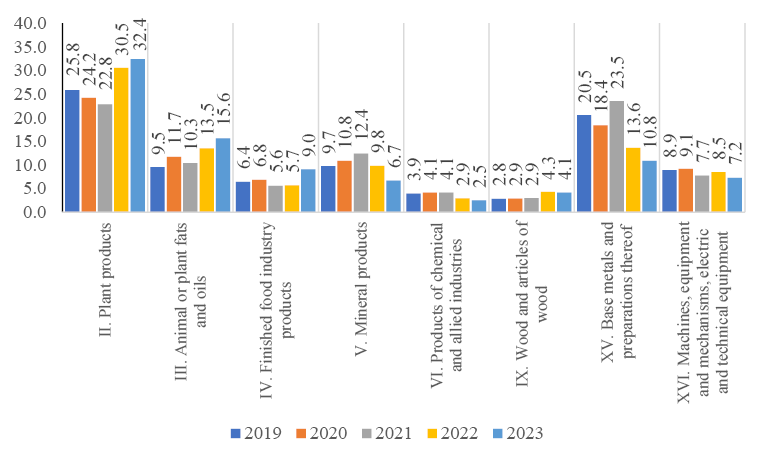
| Agriculture and the potential for export of agricultural products. The status of a key supplier of agricultural products to the EU markets due to the increasing share of crop production in exports from 25.8% (2019) to 32.4% (2023), and exports of fats and oils from 9.5% (2019) to 15.6% (2023) | Low competitiveness of industries. Decrease in the share of steel products in exports from 23.5% (2021) to 10.8% (2023), the high energy intensity of production, the technological lagging |
| Natural resources potential (land, water, forest, recreational resources, significant mineral deposits) | High dependence on foreign markets and the economic situation |
| Expansion of trade agreements and partnerships with other countries | Lack of a stable and predictable trading environment |
| Partial integration into the EU system, Association Agreement EU-Ukraine, EU candidate status for membership | Imperfection and frequent changes of public policy and legal framework |
| Established business relations between domestic business entities and partners | Unstable economic situation, high inflation and low purchasing power |
| Availability of qualified workforce and engineering and technical potential | Complexity of doing business, low Doing Business rating and high Corruption Perceptions Index |
| Opportunities | Threats |
| Increase the EU share in Ukraine's foreign trade to 56.0% (2023), introducing new products to the markets | Economic and political instability in neighbouring countries |
| Development of trade routes and infrastructure to facilitate the transportation of goods, the successful operation of the Ukrainian sea passage, the enhanced capabilities of the Danube ports, and the development of dry ports along the western border | High competition in international markets |
| Stabilisation of the situation on the international commodity markets and rising prices for basic export commodities of Ukraine | Changes in trade policies in EU countries |
| Opening of new opportunities for private business participation | Strengthening measures to restrict imports in target countries for various reasons |
| Process of market liberalisation of transport (railway, aviation, port, road infrastructure) and further tariff liberalisation | Shortage of qualified personnel due to forced population migration |
| Full integration with the EU market | Unpredictable climatic changes and other force majeure circumstances |
| Enhancement of e-commerce and digital markets, including the eCustoms project implementation with Romania (2023), development of electronic document management, and automation of customs procedures | Expansion of the hostilities in the Russia-Ukraine War across the territory of neighbouring countries, the growing conflict between authoritarianism and democracy and turning it into the Third World War |
Source: own work.
5. DYNAMICS AND TRENDS OF UKRAINE’S CROSS-BORDER TRADE IN THE CONTEXT OF EUROPEAN ECONOMIC CONVERGENCE
In light of the global challenges and the external threats that Ukraine has encountered in recent years, the matters of fostering partnership relations with European Union (EU) countries and enhancing international economic cooperation and cross-border collaboration have become paramount priorities. Since Ukraine has strategically embraced the European trajectory for its economic development, it has embarked on a comprehensive reform agenda aimed at aligning its economic systems, regulations, and standards with those of the European Union. Furthermore, Ukraine has been actively participating in various EU integration initiatives and programs, seeking to enhance its economic cooperation with EU Member States. Through bilateral trade agreements, investment facilitation mechanisms, and joint research and innovation projects, Ukraine aims to deepen its integration with the European economic space and leverage the benefits of market access, technology transfer, and knowledge exchange.
5.1. Economic indicators and their impact on convergence processes and efficiency of cross-border trade
The economic landscape of Ukraine has experienced significant transformation over the past few years. Following a deep crisis in 2014−2015, the country has exhibited steady growth since 2016, evolving from a predominantly producing economy with a focus on competitive products in developing countries to one capable of competing in advanced markets. Ukraine has also enhanced its appeal for business development and investment opportunities. Regardless of encountering both external and internal challenges, the period between 2016 and 2018 witnessed a gradual recovery. However, economic growth has been subdued, with GDP in 2019 reflecting a 5.6% decrease compared to 2013. During a challenging period for the country, significant transformative changes occurred. The country faced external pressures such as military and trade aggression from Russia, while simultaneously grappling with internal contradictions that impeded progress. The pandemic’s impact on industrial production in Ukraine has resulted in decreased demand for goods and raw materials from high-income countries and disruptions in value chains. These disruptions stemmed from delays in the supply of necessary components and supplies from more technologically advanced countries, restrictions on the movement of goods and people, challenges in worker mobility, and financial constraints affecting normal production processes. Neither the economy, government or society were adequately prepared for swift changes, resulting in a slowdown. Despite these challenges, Ukraine has initiated the process of economic recovery.
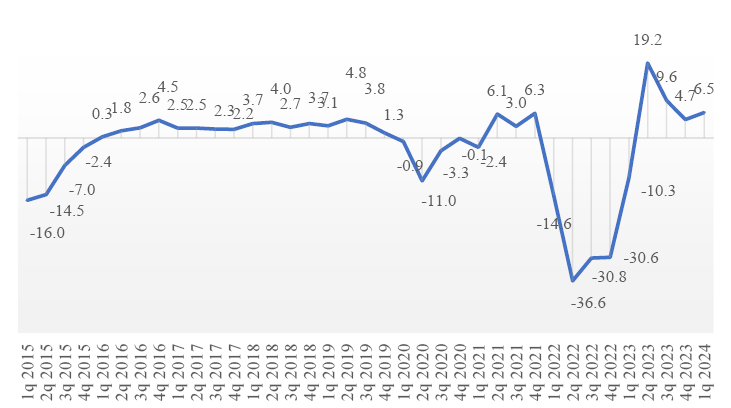
Ukraine’s GDP (Fig. 1) in 2020 decreased by 3.8% due to the pandemic shock, but in 2021, it grew by 3.4% driven by strong consumer demand, increased investment, and a record harvest. However, several factors have hindered economic recovery, including high energy and raw material prices, supply shortages, the impact of a poor 2020 harvest, slow recovery in the service sector, limited production capacity due to renovations, and accelerated fiscal consolidation. Notably, public and private consumption have played a significant role in driving economic recovery, distinguishing this crisis from previous ones.
Source: own calculations based on open data by State Statistics Service of Ukraine.
In 2022, Ukraine experienced a substantial economic contraction of nearly one-third. The primary contributing factors to this unprecedented recession included the aftermath of a large-scale invasion of Russian troops, which resulted in the devastation of infrastructure and production capabilities, disruption of logistical networks leading to decreased exports, diminished investment, weakened consumer demand due to significant migration, and notably reduced crop yields compared to the previous year.
In 2023, the economy rebounded with a 5.3% growth in real GDP, attributed to businesses and the population’s adaptability to wartime conditions, along with a supportive fiscal policy backed by substantial international financing. Anticipated high budget expenditures and international aid at expected levels are predicted to drive a 3.6% growth in real GDP in 2024, though at a slower pace than in 2023 due to potential decreases in harvests and exacerbated labour market disparities during wartime conditions. Subsequent years (2025−2026) are expected to see accelerated economic growth of 4−6% annually, driven by reduced security risks, improved consumer and investment sentiments, and the implementation of European integration reforms (NBU, 2024b). Post-war, the economy will continue to be supported by a soft fiscal policy, with a significant reduction in the budget deficit due to strengthened domestic resources.
5.2. Analysis of trade flows between Ukraine and neighbouring EU countries: structure and evolution
Below are the key statistics and details regarding Ukraine’s trade performance for last years (Table 2). This information covers the country’s export and import indicators, and specific changes compared to the previous years.
| Indicators | 2000 | 2005 | 2010 | 2015 | 2020 | 2021 | 2022 | 2023 | 2023 to 2000, % |
|---|---|---|---|---|---|---|---|---|---|
| Exports of goods | 13,781.0 | 32,184.0 | 47,299.0 | 35,420.0 | 45,143.0 | 63,113.0 | 40,899.0 | 34,678.0 | 151.6 |
| Exports of goods and services | 18,358.0 | 42,626.0 | 65,626.0 | 47,862.0 | 60,707.0 | 81,504.0 | 57,517.0 | 51,093.0 | 178.3 |
| Exports to GDP, % | 56.7 | 47.8 | 46.5 | 52.6 | 38.8 | 40.8 | 35.8 | 28.6 | – |
| Import of goods | 13,907.0 | 34,377.0 | 56,896.0 | 38,875.0 | 51,921.0 | 69,755.0 | 55,551.0 | 63,473.0 | 356.4 |
| Imports of goods and services | 16,922.0 | 41,952.0 | 69,608.0 | 50,224.0 | 63,085.0 | 84,175.0 | 83,254.0 | 88,830.0 | 424.9 |
| Imports to GDP, % | 52.3 | 47.0 | 49.3 | 55.2 | 40.3 | 42.1 | 51.9 | 49.7 | – |
| Net exports of goods | 126.0 | 2,193.0 | 9,597.0 | 3,455.0 | 6,778.0 | 6,642.0 | 14,652.0 | 28,795.0 | – |
| Net exports of goods and services | -1,436.0 | -674.0 | 3,982.0 | 2,362.0 | 2,378.0 | 2,671.0 | 25,737.0 | 37,737.0 | – |
| Net exports to GDP, % | -4.4 | -0.8 | 2.8 | 2.6 | 1.5 | 1.3 | 16.0 | 21.1 | – |
Source: own calculations based on open data by Ministry of Economy of Ukraine, National Bank of Ukraine and World Bank.
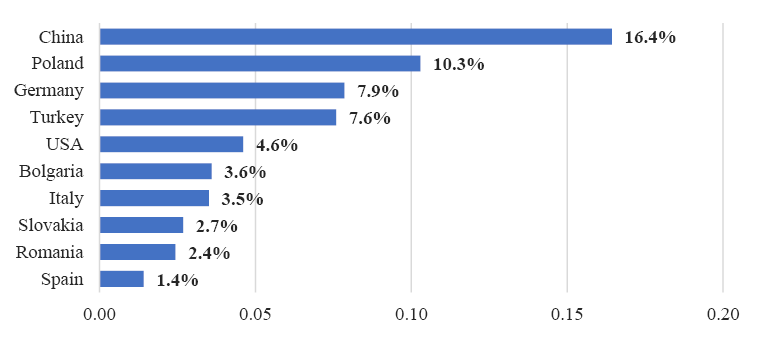
In 2022, the EU remained Ukraine’s largest trade partner, accounting for 53.6% of total trade, with exports to the EU at $30.6 billion (up by 1.1%) and imports falling 11.1% to $28.7 billion. Major imports included energy materials, transportation equipment, and pharmaceuticals. Ukraine exported $9.2 billion in services globally, with the EU accounting for $3.4 billion (down by 22.3%), and service imports from the EU dropping 48.5% to $1.7 billion. In 2023, trade in goods with the EU accounted for 56.0% of Ukraine’s total trade volume. The export of services to the EU in 2023 totalled $8.2 billion, representing 89.1% of the 2022 data, while the import reached $5.2 billion, amounting to 173.3% of the 2022 level, so the positive balance of trade amounted to $3.0 billion. Compared to the previous year, there was a decrease in export volumes of various goods in 2023: ferrous metals by 41.6%, electric machines by 34.9%, cereals by 8.8%, and fats and oils of animal or vegetable origin by 5.0%. Meanwhile, the import of means of land transport, except for railways, increased by 33.3%, ferrous metals and their products by 31.5%, nuclear reactors, boilers, and machines by 26.2%, and electric machines by 20.1%. The import of mineral fuels, oil, and products of its distillation decreased by 19.1%. Poland followed as Ukraine’s second largest import partner (after China), holding a 10.3% share, equivalent to $6,347 million. Germany ranked next with $4,842 million (7.9%), followed by Turkey with $4,680 million (7.6%), while the United States contributed $2,842 million (4.6%). Other countries with notable imports included Bulgaria (3.6%), Italy (3.5%), Slovakia (2.7%), Romania (2.4%), and Spain (1.4%). Despite having smaller shares compared to the top three, these countries remained integral to Ukraine’s international trade (Fig. 2). Additionally, in the first seven months of 2024, Ukraine’s imports and exports gradually increased. The value of imports reached a record high in recent years, standing at $51.5 billion. However, despite this growth, exports only amounted to $32.3 billion, which is still below the level recorded in 2019.
Source: NBU.
In 2023, the European Union further reinforced its position as one of Ukraine’s major trading partners, comprising 47.5% of total imports, an increase from 44.5% in 2022. Imports from EU countries also experienced a substantial rise of $5.4 billion, marking a noteworthy 21.9% increase. Ukraine sustained its export momentum, making significant contributions to Poland (13.1% of total exports), followed by Romania (10.4%), and China (6.7%) (Accounting Chamber of Ukraine, 2024). This trend is expected to persist in the future. Instead of the projected growth of 3.8%, the export of goods decreased across all main product groups. According to the NBU and the Accounting Chamber, the share of food products and raw materials for their production in the total volume of goods exports increased from 57.2% in 2022 to 63.4% in 2023. Notably, sunflower oil, corn, wheat, soybeans, cake, rapeseed, and poultry meat were the primary products exported.
Between 2019 and 2023, there were significant shifts in Ukraine’s export structure for major commodity groups, influenced by economic dynamics and external trade factors (Fig. 3).
Source: State Statistics Service of Ukraine.
In 2023, Ukraine established the Ukrainian Maritime Passage to enable connections with the Black Sea ports of the Odesa region due to Russia’s failure to fulfil its obligations under the Grain Agreement. Subsequently, there was a steady rise in grain exports and maritime exports of other goods, as well as a resumption of growth in maritime imports. Nevertheless, Ukraine also encountered challenges from the Polish blockade of its land border in 2023, impacting Ukrainian exports and tax revenues from imported items.
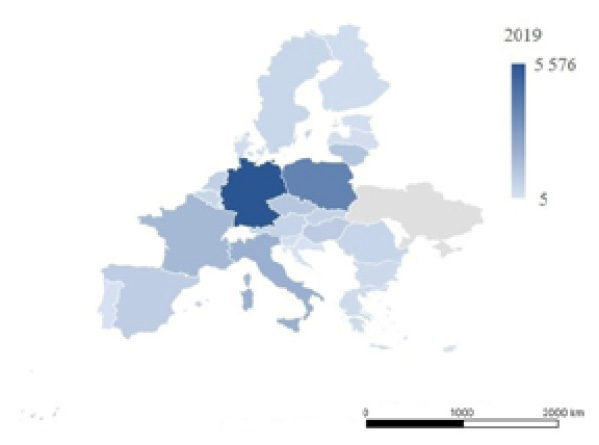
The analysis aimed to examine the trade dynamics of goods imported and exported between Ukraine and its neighbouring countries (Poland, Slovakia, Hungary, and Romania) from 2019 to 2023. Furthermore, visual aids such as charts and maps were utilised to provide a clear representation of the geographical structure of imports and exports, illustrating the trade volume dynamics between these countries in 2019 and 2023 (Figures 4−7).
Based on the National Bank of Ukraine’s data, in 2023, the balance of payments saw a remarkable improvement, with a surplus of $9.5 billion, as compared to a deficit of $2.9 billion in 2022. This improvement can be attributed to several key factors. Receipts from the IMF under the RFI Rapid Financing Instrument reached 3.3 billion SDRs, equivalent to $4.5 billion. Additionally, repayment of previous IMF loans amounted to $2.5 billion. In contrast, in 2022, receipts from the IMF under the RFI Rapid Financing Facility were 2.0 billion SDRs, equivalent to $2.7 billion, while loan repayments totalled $2.1 billion. This significant shift in financial dynamics exemplifies a positive trend in the economic landscape (NBU, 2024a).
Source: own work based on open data by NBU.
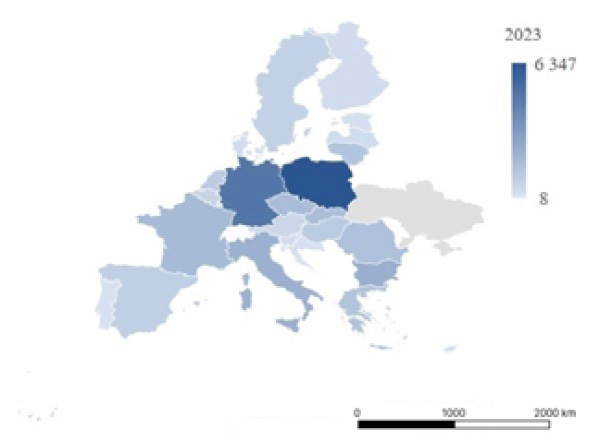
Source: own work based on open data by NBU.
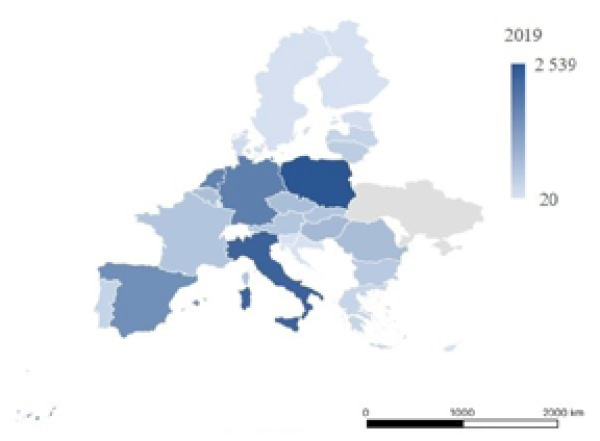
Source: own work based on open data by NBU.
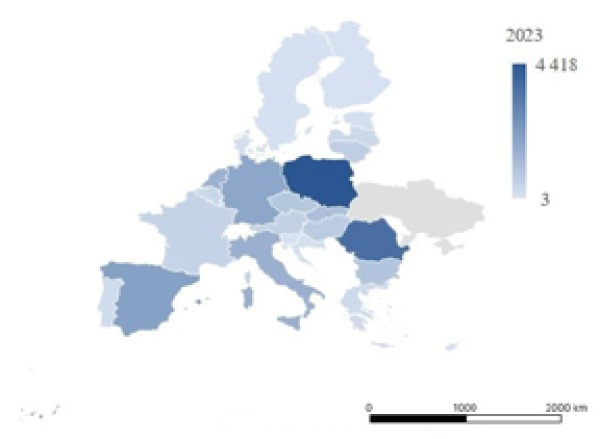
Source: own work based on open data by NBU.
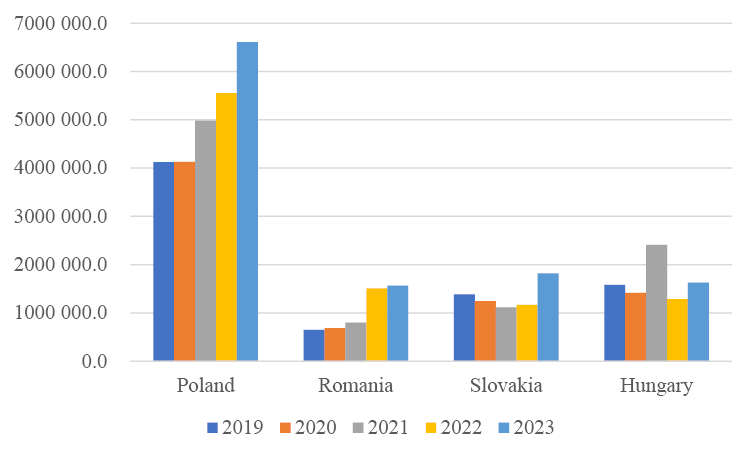
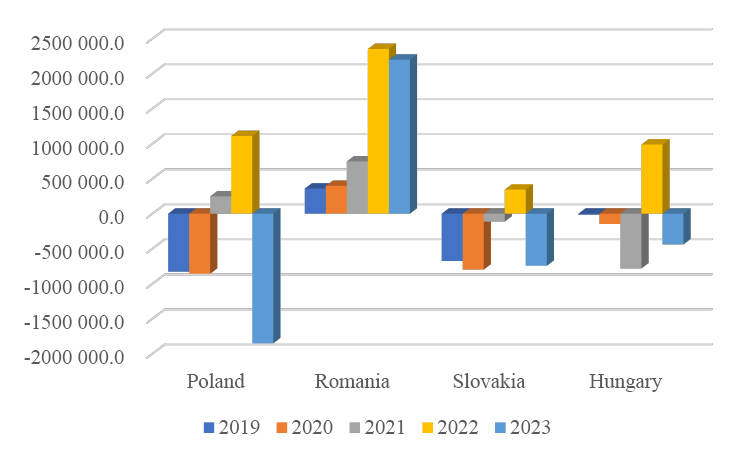
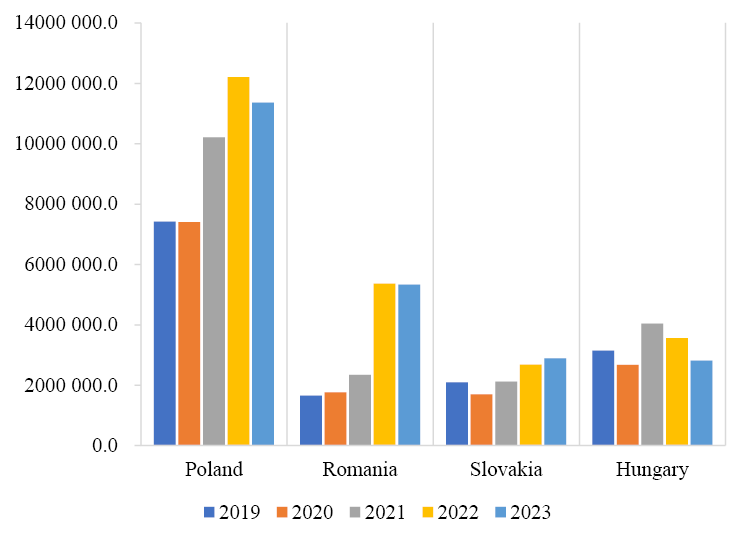
In the last five years, an examination of Ukraine’s trade ties with neighbouring countries shows noteworthy shifts in the expansion of exports and imports along with overarching trade volume trends (see Figures 8−11).
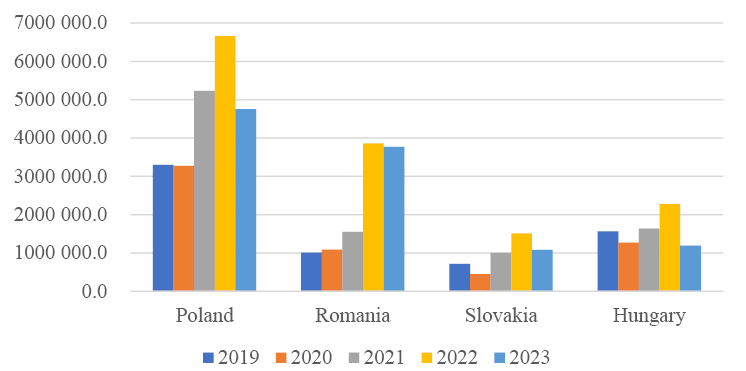
Source: own work based on open data by State Customs Service of Ukraine.
Source: own work based on open data by State Customs Service of Ukraine.
Source: own work based on open data by State Customs Service of Ukraine.
Source: own work based on open data by State Customs Service of Ukraine.
The analysis of imports and exports between Ukraine and its neighbouring countries from 2019 to 2023 enables us to summarise the following trends:
- Poland: Ukraine experienced a significant increase in exports, reaching a peak of $6.66 billion in 2022 but decreased to $4.75 billion in 2023. Imports showed steady growth, reaching $6.61 billion in 2023, with the trade balance remaining negative, recording a deficit of $1.85 billion in 2023. Trade turnover steadily grew to $11.36 billion in 2023.
- Romania: Exports grew impressively from $1.00 billion in 2019 to $3.76 billion in 2023, while imports rose at a slower pace, reaching $1.56 billion in 2023. Net exports remained positive, reaching $2.19 billion in 2023, and the trade volume between the countries increased significantly to $5.33 billion in 2023.
- Slovakia: Ukrainian exports increased less significantly from $709 million in 2019 to $1.07 billion in 2023, while imports also grew to $1.82 billion in 2023. Trade balance remained negative, with a deficit of $741 million in 2023, and trade turnover grew steadily to reach $2.89 billion in 2023.
- Hungary: Exports grew to $2.27 billion in 2022 but decreased to $1.18 billion in 2023. Imports fluctuated, peaking at $2.41 billion in 2021, declining to $1.62 billion in 2023. Trade balance was mostly negative, with a deficit of $440 million in 2023, and trade turnover fluctuated, reaching a peak of $4.04 billion in 2022 and declining to $2.80 billion in 2023.
On March 7, 2023, the State Customs Service of Ukraine and the Customs Administration of Romania launched a new eCustoms pilot project as part of the EU4Digital program funded by the European Union. The primary objective of the project is to streamline customs information exchange and implement advanced technologies for customs risk management. This pilot project will run from March to June 2023, and upon completion, recommendations will be made for the necessary legal, organisational, and technical changes to fully implement the program. The project makes use of innovative programs such as the Systematic Electronic Data Exchange (SEDE) program, which will enhance trade flow efficiency by identifying high and low-risk cargo, ultimately simplifying customs control and reducing border crossing times. Following the pilot launch and testing, the SEDE program will be customised to suit the specific requirements of each country (EUneighboursEast, 2023; EUforDigital, 2023).
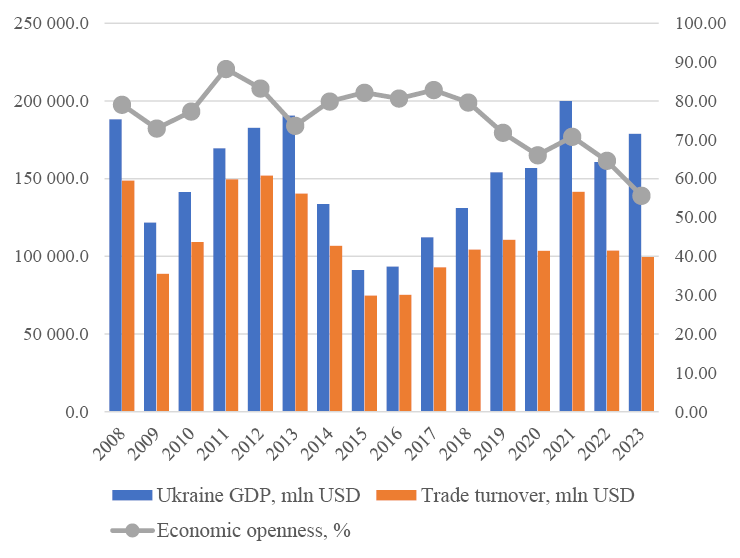
The economic openness indicator is a crucial measure of a country’s integration into the global economy through foreign trade, encompassing both exports and imports of goods and services. The indicator of economic openness is calculated using the following formula:
Economic openness (%) = Export + Import × 100
GDP
This indicator provides insight into several key aspects:
- Level of integration with the global economy: a high score indicates heavy dependence on foreign trade, reflecting active engagement in both export and import markets.
- Dependence on foreign markets: high reliance on exports and imports increases vulnerability to external shocks, such as fluctuations in global commodity prices, economic crises in other countries, or trade sanctions.
- Domestic economy efficiency: in some cases, a high level of openness may reflect a weak domestic market or inadequate domestic demand, leading to the need to seek markets abroad.
As foreign economic security is integral to overall economic stability, the economic openness indicator plays a significant role. High openness can render an economy susceptible to various external risks, including global economic crises, exchange rate fluctuations, changes in global commodity prices, and political sanctions. Balancing openness and self-sufficiency is crucial. While openness offers the benefits of globalisation, excessive dependence on foreign trade can be precarious without adequate domestic reserves or stability measures.
To ensure foreign economic security, monitoring the balance of foreign economic relations, particularly the level of economic openness, is imperative. Additionally, ensuring that export and import operations do not result in a significant trade deficit is essential. Government agencies and analysts utilise this indicator to formulate strategies for economic development and safeguard foreign economic security. For instance, if the openness indicator is excessively high with heavy reliance on certain exports, the government might implement measures to diversify the economy, strengthen the domestic market, or reduce import dependence.
Consequently, the economic openness indicator is a critical tool for evaluating a country’s foreign economic security and should be factored into economic decision-making processes.
The data in Figure 12 presents Ukraine’s key economic indicators from 2008 to 2023, such as GDP, foreign trade, and the level of economic openness. The last indicator varied during this period, reaching the highest level of economic openness in 2011 (88.2%) and the lowest in 2023 (55.6%). This figure highlights the proportion of foreign trade turnover to GDP, indicating a significant reliance on international trade in 2023.
Source: own calculations.
Ukraine acknowledges the importance of promoting cross-border cooperation with neighbouring EU Member States such as Poland, Slovakia, Hungary, and Romania, as a crucial element of their strategy for achieving successful European integration. This collaborative effort is viewed as vital for nurturing economic, social, and cultural connections, as well as for fostering mutual development and understanding between Ukraine and its neighbouring EU states.
The escalation of a full-scale war exacerbates cross-border challenges, resulting in a complex environment. Despite these challenges, it remains essential to create pathways for entrepreneurs to capitalise on emerging opportunities by developing and delivering essential products and services.
5.3. Strategic directions of cross-border trade development: challenges and opportunities for Ukraine
The examination of Ukraine’s foreign economic trade with its four neighbouring countries – EU members (Poland, Romania, Slovakia, and Hungary) – enabled us to propose a series of organisational measures aimed at coordinating the efforts of the government, businesses, and society. Firstly, there is a need to promote the development of renewable energy and bolster national energy projects to reduce the reliance on energy imports. This would help to increase energy security for the country. Supporting domestic manufacturers and fostering the growth of high-tech industries is another important measure. This will enhance the value of exported goods and contribute to overall economic growth. Additionally, there needs to be a plan to expand into new markets and diversify exports to mitigate risks and lessen the dependence on individual markets. This will provide more stability and resilience to the economy. Trade barriers need to be diminished through specific measures and efforts will be made to regain positions in international markets. This will help boost the country’s export potential and economic competitiveness. Furthermore, enhancing the transport infrastructure, particularly railways, highways, and ports, is crucial to optimise logistics and minimise the cost of goods transportation. This will make Ukrainian products more competitive in EU markets. Improving corporate governance and combating corruption are essential to bolster investor confidence and attract new investments to the country. This will create a more favourable environment for business and economic development. Lastly, ensuring the stability and transparency of the political environment is significant in boosting the trust of foreign partners and investors in the Ukrainian economy. This will contribute to a more conducive environment for foreign investment and trade relationships with neighbours.
Efforts are underway to enhance the capacity of the Danube region and create additional avenues for transporting grain. This involves the establishment of new transit points and dry ports along the western border with Poland and Romania. Ukraine is also proactively devising alternative measures to consistently bolster global food security and sustain its exports. There is a possibility that the state budget will incorporate insurance coverage for ships transporting Ukrainian grain, enabling them to operate even in the absence of a “grain corridor.”
Some additional effort would be useful in this regard, including the following (WorldBank, 2013):
- Standardising international supply and use tables is essential, and this could be achieved by integrating a uniform industry and product classification into national statistics.
- It is important to enhance classification systems to accurately recognise intermediate inputs in imported services and dual-use products, such as fuels.
- Utilising firm-level data from the current economic census and industry surveys, as well as customs transaction level data, could improve the allocation of imported inputs (both goods and services) to sector users within the country.
- There is a need to develop better estimates of bilateral trade in services.
The examination of Ukraine’s cross-border trade development strategies should be approached through the lens of the neoconvergence theory and the club convergence models explored by Borsi and Metiu (2015). Their research revealed that EU countries organise into “convergence clubs,” which are groups of nations sharing similar development characteristics and convergence trajectories. The neoconvergence theory posits that the alignment and harmonisation of institutional frameworks are essential prerequisites for achieving economic integration. This convergence facilitates smoother interactions among different economic systems, promoting cooperation and collaboration in economic activities. The initiatives aimed at modernising customs infrastructure, adopting European quality standards, and harmonising the regulatory environment are pivotal for facilitating Ukraine’s integration into the institutional framework of EU countries, particularly regarding their advanced trade infrastructure. Borsi and Metiu (2015) have established that the structural similarities among economies play a crucial role in the emergence of convergence clubs. Research on club convergence indicates that the degree of market integration significantly influences the velocity of economic convergence among regions or entities. Therefore, the structural transformations in Ukraine, characterised by a shift towards higher value-added export products, deeper integration into European cross-border production networks, and the advancement of innovative economic sectors, are facilitating the country’s progress towards convergence with more developed EU economies. A successful execution of these strategic directions should pave the way for Ukraine’s gradual integration into the relevant EU convergence clubs and promote long-term economic integration. However, it is crucial to recognise the fact that, as highlighted by the research of Borsi and Metiu, the process of convergence is not automatic; it demands deliberate efforts from the integrating country.
6. DISCUSSION
The analysis of Ukraine’s cross-border trade dynamics with its neighbouring EU countries (Poland, Romania, Slovakia, and Hungary) reveals significant trends and implications for economic convergence and regional integration. There has been a notable increase in trade volumes between Ukraine and its EU neighbours, especially Poland and Romania. This aligns with the findings of Campos et al. (2019), who emphasised the advantages of EU enlargement for Central and Eastern European countries. However, our research extends this understanding by highlighting the specific challenges and opportunities faced by a non-EU state in the process of economic integration. The fluctuations in trade balances and the varying degrees of trade intensity with different neighbouring countries underscore the complex nature of economic convergence, as noted by Borsi and Metiu (2015) in their study on club convergence patterns within the EU.
The observed shifts in Ukraine’s export structure, particularly the increasing share of agricultural and food products, reflect a broader trend of specialisation and adaptation to EU market demands. This trend aligns with the observations of Alexa et al. (2019) regarding the importance of regional competitiveness in the era of globalisation. However, our findings suggest that this specialisation, while beneficial in the short term, may pose challenges for long-term economic convergence if not balanced with the development of high-value-added sectors. Initiatives such as the EU4Digital program or the eCustoms pilot project between Ukraine and Romania exemplify the type of cross-border cooperation crucial for promoting regional growth and convergence, as identified by Capello et al. (2018a, 2018b). Our research provides empirical evidence on how such initiatives are being operationalised in the specific context of Ukraine’s European integration efforts.
The analysis of Ukraine’s economic openness indicator offers insights into the country’s integration into the global economy and its vulnerability to external shocks. The challenges identified in our SWOT analysis, such as infrastructure limitations and the need for export diversification, echo the findings of Shepherd (2016) on the importance of trade facilitation in promoting economic integration. Our research contributes to this discourse by providing a contemporary and country-specific perspective on these challenges in the context of Ukraine’s unique geopolitical situation.
The strategic directions proposed for developing Ukraine’s cross-border trade align with the recommendations of Dobrzanski and Olszewski (2019) regarding structural changes necessary for economic growth in Central and Eastern European economies. However, our study extends these insights by considering the specific constraints and opportunities presented by Ukraine’s status as an EU candidate country and its ongoing wartime situation. The impact of recent geopolitical events, including the Russia-Ukraine full-scale war and the establishment of alternative trade routes like the Ukrainian Maritime Passage, represents a significant contribution of our research to the existing literature. Future research could benefit from a more detailed analysis of sector-specific trade flows and the impact of specific policy interventions on economic convergence. Additionally, comparative studies with other EU candidate countries could provide valuable insights into the broader implications of the EU’s expansion and integration processes.
The cornerstone of success lies in a consistent approach to implementing reforms and capitalising on the opportunities presented by European integration. The experiences of Central and Eastern European countries demonstrate that even within a prolonged accession timeline, it is possible to attain substantial progress in trade relations and economic modernization through a clearly defined strategic vision and effective execution of essential changes.
7. CONCLUSIONS
The analysis of trade relations between Ukraine and its neighbouring countries reveals promising trends and opportunities for economic growth and regional integration. Poland stands out as a key trading partner, with Romania, Slovakia, and Hungary also making significant contributions to Ukraine’s trade dynamics. The positive trade balances and increasing trade volumes underscore the potential for further development and collaboration. To capitalise on these opportunities, policymakers should prioritise reducing trade barriers, promoting regulatory harmonisation, and enhancing market access. Additionally, efforts should be directed towards diversifying export markets and products, fostering innovation and competitiveness, and investing in infrastructure development. These measures will bolster Ukraine’s economic resilience, attract foreign investment, and solidify the country’s position as a vital player in the EU market.
By prioritising strategic policy interventions and fostering strong trade relations with neighbouring countries, Ukraine can fully leverage its trade opportunities, effectively address challenges, and achieve sustained economic growth and prosperity. The challenges and opportunities presented by diversifying Ukrainian production and expanding into the European market can be addressed through targeted policy interventions, unlocking Ukraine’s economic potential, enhancing competitiveness, and facilitating effective integration into the European market. Implementing policy recommendations that prioritise innovation, entrepreneurship, infrastructure development, and market intelligence will contribute to the successful realisation of the objectives outlined in the Association Agreement with the EU.
Furthermore, the European trajectory has enabled Ukraine to diversify its export markets and attract foreign direct investment. By aligning its production standards and regulations with EU requirements, Ukrainian businesses can gain easier access to European markets and benefit from increased demand for their products and services.
In conclusion, Ukraine’s strategic embrace of the European trajectory for its economic development has set the stage for comprehensive reforms, enhanced economic cooperation, and greater integration with EU countries. By aligning its policies and regulations with European standards, Ukraine aims to strengthen its position in the global economy and leverage the benefits of closer ties with the EU.
Authors
Additional information
Funding information
Not applicable.
Conflicts of interests
None.
Ethical considerations
The Authors assure of no violations of publication ethics and take full responsibility for the content of the publication.
The percentage share of the author in the preparation of the work is
N.U. 25%, O.P. 25%, V.M. 25%, K.K. 25%.
REFERENCES
ACCOUNTING CHAMBER OF UKRAINE (2024), ‘Conclusions on the results of the analysis of the annual report on the implementation of the Law of Ukraine On the State Budget of Ukraine for 2023’, https://rp.gov.ua/FinControl/FinReports/?id=1800 [accessed on: 12.08.2024].
ALEXA, D., CISMAȘ, L.-M., RUS, V. A. and POP-SILAGHI, M. I. (2019), ‘Economic growth, competitiveness and convergence in the European regions. A spatial model estimation’, Economic Computation & Economic Cybernetics Studies & Research, 53 (1), pp. 107−124. https://doi.org/10.24818/18423264/53.1.19.07
BALDWIN, R. (2016), ‘The World Trade Organization and the Future of Multilateralism’, Journal of Economic Perspectives, 30 (1), pp. 95−116. https://doi.org/10.1257/jep.30.1.95
BILORUS, O. (2015), ‘Replenishment evolution and structural transformation of global capital’, Economic Annals-XXI, 155 (11−12), pp. 4−9.
BONADIO, B., HUO, Zh., LEVCHENKO, A. A. and PANDALAI-NAYAR, N. (2021), ‘Global supply chains in the pandemic’, Journal of International Economics, 133. https://doi.org/10.1016/j.jinteco.2021.103534
BORSI, M. and METIU, N. (2015), ‘The evolution of economic convergence in the European Union’, Empirical Economics, 48 (2), pp. 657−681. https://doi.org/10.1007/s00181-014-0801-2
BRAKMAN, S., GARRETSEN, H. and van MARREWIJK, C. (2019), An Introduction to Geographical and Urban Economics: A Spiky World (3rd ed.), Cambridge: Cambridge University Press. https://doi.org/10.1017/9781108290234
CAMPOS, N. F., CORICELLI, F. and MORETTI, L. (2019), ‘Institutional integration and economic growth in Europe’, Journal of Monetary Economics, 103, pp. 88−104. https://doi.org/10.1016/j.jmoneco.2018.08.001
CAPELLO, R., CARAGLIU, A. and FRATESI, U. (2018a), ‘Compensation modes of border effects in cross-border regions’, Journal of Regional Science, 58, pp. 759−785. https://doi.org/10.1111/jors.12386
CAPELLO, R., CARAGLIU, A. and FRATESI, U. (2018b), ‘Measuring border effects in European cross-border regions’, Regional Studies, 52 (7), pp. 986−996. https://doi.org/10.1080/00343404.2017.1364843
DOBRZANSKI, P. and OLSZEWSKI, L. (2019), ‘Structural change path and economic growth performance of Polish economy’, 11st International Scientific Conference on New Challenges of Economic and Business Development – Incentives for Sustainable Economic Growth, Riga, Latvia, 16−18 May 2019.
EUFORDIGITAL (2023), ‘New Ukraine-Romania eCustoms pilot to streamline cross-border data exchange’, https://eufordigital.eu/new-ukraine-romania-ecustoms-pilot-to-streamline-cross-border-data-exchange/ [accessed on: 12.08.2024].
EUNEIGHBOURSEAST (2023), ‘Cross-border data exchange: eCustoms pilot project between Ukraine and Romania’, https://euneighbourseast.eu/uk/news/latest-news/transkordonnyj-obmin-danymy-pilotnyj-proyekt-ecustoms-mizh-ukrayinoyu-ta-rumuniyeyu/ [accessed on: 12.08.2024].
FUJITA, M., KRUGMAN, P. and VENABLES, A. J. (1999), Spatial economy: cities, regions and international trade, Cambridge, Massachusetts / London, England: The MIT Press. https://doi.org/10.7551/mitpress/6389.001.0001
GUO, R. (2015), Cross-border management: Theory, method and application, Springer-Verlag, Heidelberg GmbH & Co. https://doi.org/10.1007/978-3-662-45156-4
HOLSTI, O. R. (1973), Unity and disintegration in international alliances: Comparative studies, Wiley.
JOHNSON, C. M. (2009), ‘Cross-border regions and territorial restructuring in Central Europe: Room for more transboundary space’, European Urban and Regional Studies, 16, pp. 177−191. https://doi.org/10.1177/0969776409102190
KITSON et al. (2004), ‘Regional Competitiveness: An Elusive yet Key Concept’, Regional Studies, 38 (9), pp. 991−999. https://doi.org/10.1080/0034340042000320816
KRUGMAN, P. R. (1991), Geography and Trade, Cambridge: Leuven University Press and The MIT Press.
KRUGMAN, P. R., OBSTFELD, M. and MELITZ, M. J. (2022), International Economics: Theory and Policy, Pearson.
LISKA, G. (1968), Nations in alliance: The limits of interdependence, Johns Hopkins Press. https://doi.org/10.1093/ia/45.4.696
LÖFGREN, O. (2004), ‘Regionauts: The transformation of cross-border regions in Scandinavia’, European Urban and Regional Studies, 15 (3), pp. 195−209. https://doi.org/10.1177/0969776408090418
MINISTRY OF ECONOMY OF UKRAINE (2023), ‘Bulletin of the state of trade relations between Ukraine and the EU’, https://www.me.gov.ua/Documents/Detail?lang=uk-UA&id=5db05993-288d-4981-9f26-f0f6efe586e2&title=BiuletenStanuTorgovelnikhVidnosinMizhUkrainoiuTasU2022-Rotsi [accessed on: 12.08.2024].
NBU (2024a), ‘Balance of payments in 2023 (preliminary data, based on the methodology of the sixth edition of the Balance of Payments and International Investment Position Manual)’, https://bank.gov.ua/files/ES/State_y.pdf [accessed on: 12.08.2024].
NBU (2024b), ‘Inflation Report, January’, https://bank.gov.ua/ua/news/all/inflyatsiyniy-zvit-sichen-2024-roku [accessed on: 12.08.2024].
OHLIN, B. (1933), Inter-Regional and International Trade, Cambridge, MA: Harvard University Press.
OHMAE, K. (2008), ‘The Next Global Stage-Challenges and Opportunities in our Borderless World’, NHRD Network Journal, 2 (1), pp. 111−112. https://doi.org/10.1177/0974173920080125
RICARDO, D. (1817, 1821, 2001), On the principles of political economy and taxation, Canadá: Batoche Books.
SHEPHERD, B. (2016), Trade Facilitation and Global Value Chains: Opportunities for Sustainable Development, Geneva, International Centre for Trade and Sustainable Development (ICTSD).
TAYLOR, A. M. and FEENSTRA, R. C. (2021), International Trade (5th Edition), Macmillan Learning.
THU, H. and DIEP, N. (2023), Cross-border Paperless Trade of Vietnam: A Focus on Electronic Commercial Transactions, Vietnam’s Socioeconomic Development.
WOLFERS, A. (1962), Discord and collaboration. Essay of international politics, Johns Hopkins Press. https://doi.org/10.56021/9780801806902
WORLD BANK (2013), ‘Trade in Value Added Developing New Measures of Cross-Border Trade’, https://openknowledge.worldbank.org/server/api/core/bitstreams/7fed97b8-8a2b-5030-a308-48a1661534cd/content [accessed on: 12.08.2024].