India’s Policy Towards Bangladesh in the Context of the China–India Rivalry
 https://orcid.org/0000-0002-4295-7746
University of Chittagong
e-mail: cezarypawlak@o2.pl
https://orcid.org/0009-0001-1765-3388
University of Chittagong
e-mail: naimulhamidriaz@gmail.com
Abstract. This article examines India’s policy towards Bangladesh through the lens of the China–India rivalry and argues that India’s interventionist, hegemonic, and ideologically-shaped foreign policy has contributed to rising anti-India sentiment in Bangladesh. Using a Causal Loop Diagram (CLD), the text links India’s support for an autocratic regime, alleged intelligence involvement, trade asymmetry, water disputes, and unequal transit arrangements to growing public dissatisfaction and political backlash in Bangladesh. The article argues that the August 2024 political rupture in Bangladesh accelerated Dhaka’s strategic diversification towards China and, to a lesser extent, Pakistan, which, in turn, heightened India’s security concerns, especially regarding the Northeast and the Siliguri Corridor. It also shows how China has used Bangladesh’s strategic location, infrastructure financing, and port-related cooperation to expand its regional influence, intensifying the broader great-power competition. The central conclusion is that the Bangladesh–India tensions are not isolated disputes but, rather, a self-reinforcing cycle of mistrust and escalation. The article recommends a more balanced, non-interventionist Indian approach based on sovereignty, equitable economic cooperation, fair water-sharing, and mutually beneficial transit arrangements to reduce the risk of further regional instability.
Keywords: Northeast India, Siliguri Corridor, Malacca Dilemma, Causal Loop Diagram (CLD)
Polityka Indii wobec Bangladeszu w kontekście rywalizacji chińsko-indyjskiej
Streszczenie. Niniejszy artykuł analizuje politykę Indii wobec Bangladeszu przez pryzmat rywalizacji między Chinami a Indiami i dowodzi, że interwencjonistyczna, hegemoniczna oraz ukształtowana ideologicznie polityka zagraniczna Indii przyczyniła się do wzrostu nastrojów antyindyjskich w Bangladeszu. Wykorzystując model pętli przyczynowo-skutkowej, artykuł wiąże poparcie Indii dla autokratycznego reżimu, domniemane zaangażowanie służb wywiadowczych, asymetrię handlową, spory dotyczące zasobów wodnych oraz nierówne warunki tranzytu z narastającym niezadowoleniem społecznym i reakcją polityczną w Bangladeszu.
Autor argumentuje, że polityczny przełom w Bangladeszu w sierpniu 2024 r. przyspieszył strategiczną dywersyfikację relacji Dhaki w kierunku Chin, a w mniejszym stopniu także Pakistanu, co z kolei zwiększyło obawy Indii dotyczące bezpieczeństwa, zwłaszcza w odniesieniu do północno-wschodnich regionów kraju oraz Korytarza Siliguri. Artykuł pokazuje również, w jaki sposób Chiny wykorzystały strategiczne położenie Bangladeszu, finansowanie infrastruktury oraz współpracę związaną z portami do rozszerzenia swoich wpływów regionalnych, intensyfikując tym samym szerszą rywalizację mocarstw.
Główny wniosek jest taki, że napięcia między Bangladeszem a Indiami nie są odosobnionymi sporami, lecz elementem samonapędzającego się cyklu nieufności i eskalacji. Artykuł zaleca przyjęcie przez Indie bardziej wyważonego i nieinterwencjonistycznego podejścia, opartego na poszanowaniu suwerenności, sprawiedliwej współpracy gospodarczej, uczciwym podziale zasobów wodnych oraz wzajemnie korzystnych rozwiązaniach tranzytowych, aby ograniczyć ryzyko dalszej destabilizacji regionu.
Słowa kluczowe: północno-wschodnie Indie, Korytarz Siliguri, dylemat Malakki, pętla przyczynowo-skutkowa
Introduction
India, which now considers itself a major pole in an emerging multipolar world order, wields significant influence over its neighbouring countries. Under the Bharatiya Janata Party (BJP), India’s foreign policy in its neighbourhood has undergone a notable shift. This transformation can be linked to changes in the country’s domestic political landscape and the rise of right-wing ideology in the 21st century. Once considered a fringe political entity in post-partition India, the BJP now exerts significant influence over India’s both domestic and foreign policy. This influence is further reinforced through its broader ideological network, commonly referred to as the Sangh Parivar (Kanungo, 2019a). With the BJP’s rise, India’s foreign policy has shifted from a relatively conciliatory approach to a more assertive stance, particularly in its engagement with Bangladesh. India’s perceived involvement in Bangladesh’s domestic politics – especially during the rule of the Bangladesh Awami League (BAL) under Sheikh Hasina – has drawn widespread criticism inside Bangladesh’s political sphere. Despite its status as the world’s largest democracy, India’s support for the BAL government – which remained in power for over fifteen years amid the allegations of electoral manipulation and the suppression of opposition forces – has contributed to the perception of deprivation among a large segment of the Bangladeshi population. Moreover, such alignment has contributed to an asymmetrical bilateral relationship that is often viewed as favouring Indian strategic interests.
Following the collapse of the regime on 5 August 2024, Bangladesh sought to diversify its foreign relations. It began strengthening ties with China through investment and development cooperation as well as started rebuilding relations with Pakistan. India’s assertive and interventionist policies during the BAL period contributed to rising anti-India sentiment in Bangladesh. As a result, Dhaka expanded its strategic engagements beyond India. At the same time, the growing influence of the Hindutva nationalist ideology and communal politics in India has raised significant concerns about the marginalisation of religious minorities, with potential consequences for its regional diplomacy and its ability to sustain influence in Bangladesh’s internal politics. This study examines the causal relationship between India’s interventionist policies and subsequent political developments in Bangladesh, with particular attention to the risks of geopolitical realignment and regional instability in South Asia. It analyses how India’s involvement – especially its support for an autocratic regime – has contributed to anti-India sentiment in Bangladesh and facilitated a potential strategic shift towards China. The study further explores how such realignment can potentially generate security challenges for India’s Northeast and amplify patterns of regional competition through a reinforcing feedback loop. Ultimately, these dynamic risks intensify the underlying drivers of conflict and complicate efforts at de-escalation, particularly at a time when ideological orientations continue to shape India’s foreign policy and its bilateral relations with Bangladesh. The next section will operationalise the causal loop by separating drivers, mechanisms, and outcomes.
Methodology
This study employs a Causal Loop Diagram (CLD) to systematically analyse the dynamics of interaction between India and Bangladesh. In this framework, causality is treated as a recursive process. An initial action generates reactions, which then become a new cause for further reaction. This produces a self-reinforcing feedback loop (Pawlak, 2024). The analysis is structured around a set of interrelated variables. These variables are defined below to clarify the causal sequence and the role that each one plays in the framework:
- an independent variable / initial cause: India’s domestic turn towards majoritarian politics and hegemonic regional behaviour creates an interventionist foreign policy towards Bangladesh. The paper links this to the BJP/Hindutva politics and India’s long-term strategic goal of keeping Bangladesh within its sphere of influence;
- intervening variables / transmission mechanisms: this intervention takes concrete forms with support for the BAL government, the tolerance of electoral irregularities, intelligence cooperation, and pressure in areas such as trade, water-sharing, and transit. These actions deepen Bangladesh’s sense of inequality and dependency;
- a dependent variable / immediate effect: the accumulated grievances generate domestic backlash in Bangladesh. This produces a growing anti-India sentiment, social dissatisfaction, protests, and – ultimately – the 5 August 2024 uprising;
- a secondary dependent variable / geopolitical effect: after the uprising, Bangladesh begins to rebalance its external relations by moving closer to China and reopening ties with Pakistan. In the paper, this is treated as a reaction to Indian dominance and interference;
- an outcome variable / security consequence: India interprets this shift as a strategic threat, especially because of Bangladesh’s geographic relevance to the Northeast and the Siliguri Corridor. That perception increases India’s insecurity and encourages renewed efforts to shape events in Bangladesh;
- a feedback variable: those renewed efforts become the next cause in the chain, producing another round of resistance and escalation, which is identified as the feedback loop.
The framework organises the evidence as a recursive escalation model, not as disconnected case details. The normalisation of rigged elections, intelligence links, trade imbalance, water disputes, transit concessions, protests, anti-India sentiment, and regional security concerns are all treated as sequential and mutually reinforcing parts of one causal system. In other words, the framework helps the reader see that one outcome becomes the next cause. India’s intervention produces Bangladeshi resentment; resentment produces political rupture; rupture produces strategic realignment; that realignment then feeds back into India’s security concerns and further intervention. The following section identifies the initial driver of the feedback loop in India’s 1971 intervention.
Indian hegemony – the genesis
The Bangladesh War of Independence in 1971 marked the beginning of India’s direct involvement in the country. Following the declaration of independence on 26 March 1971, the Mukti Bahini guerrilla forces significantly weakened the Pakistan Army through sabotage and unconventional tactics. India formally entered the conflict on 3 December 1971, and after thirteen days of intense fighting, the Pakistani Army surrendered on 16 December 1971. Subsequent Indian political narratives have often portrayed Bangladesh’s liberation struggle as a conflict between India and Pakistan, although the war initially began as a struggle between Bengali forces and the Pakistani military (Firstpost, 2024). Some accounts have also presented India’s intervention as a humanitarian effort, citing the influx of millions of refugees into West Bengal and other northeastern regions (Mehta, 2011). India’s intelligence agency – the Research and Analysis Wing (RAW) – provided guidance and training to Bengali guerrilla forces as well as weapons to support the fight against Pakistan (Singh, 2021). While India maintains that its actions were driven primarily by humanitarian concerns in response to Pakistan’s atrocities and genocide, the intervention also served wider geopolitical and strategic interests. More importantly, this early intervention established a durable asymmetry in the bilateral relationship, creating the conditions for India to seek influence over Bangladesh’s later domestic alignments.
From the geopolitical perspective, the liberation of Bangladesh represented one of India’s most significant strategic undertakings since its independence in 1947. Prior to 1971, India had been effectively encircled by hostile territories, with Pakistan on both its western and eastern fronts, the latter being present-day Bangladesh. China’s hostility towards India after the Sino-Indian War further intensified this security concern, particularly in the Northeast. Consequently, one of India’s key strategic options was to support the independence movement of Bangladesh and secure the lasting influence over the new state. The two Pakistani territories posed a constant threat to India’s internal security, and East Pakistan provided support to separatist movements in India’s Northeast (Patnaik, 2008). Suppressing these insurgent groups was unlikely to succeed as long as East Pakistan remained under West Pakistan’s control. The influx of approximately ten million Bengali refugees into the Indian territory and the formation of a Bangladesh government-in-exile in Calcutta provided both humanitarian and political justification for India’s intervention (Haider, 2009). Following Bangladesh’s independence, India gradually sought to shape its domestic political landscape and maintain within its sphere of influence (Chowdhury, 2013). As Bangladesh’s party politics evolved, this external influence became increasingly visible through preferences for particular political actors. India’s involvement became more contested over time as anti-India sentiment grew, particularly with the rise of the Bangladesh Nationalist Party (BNP), which reduced India’s influence. In contrast, the leaders of the BAL have maintained close ties with India and the Gandhi family since 1971 (Hindustan Times, 2024). Renewed concerns emerged in 2004 when the BNP was accused of supporting insurgent groups in Northeast India, particularly the United Liberation Front of Asom (ULFA), whose members found refuge and operated from Bangladesh during the BNP-led government (Mahmud, 2009). These developments encouraged efforts to restore the BAL to power, as it was widely regarded in India as the most reliable ally in Bangladesh’s domestic politics.
After the BAL leader Sheikh Hasina came to power, her government became closely aligned with India (Mushahary et al., 2025). This alignment did not remain merely diplomatic; it increasingly took the form of political support, security cooperation, and strategic coordination. The 2014 general election in Bangladesh was widely criticised due to allegations of electoral manipulation. The main opposition party, the BNP, along with its allies, boycotted the election, citing the absence of a neutral caretaker government. This boycott produced a parliament without any effective opposition representation and raised serious questions about the legitimacy of the process (Riaz, 2014). India’s position during this period drew criticism from multiple quarters. The Human Rights Watch suggested that India’s relatively passive stance could embolden the ruling party and exacerbate political tensions (Ganguly, 2014). The 2018 general election similarly faced widespread allegations of manipulation and irregularities, prompting opposition leaders to denounce the results as “farcical” and demand a new vote under a neutral government (BBC, 2018). India refrained from publicly criticising the election, with the Ministry of External Affairs framing it as an “internal affair” of Bangladesh (The Daily Star, 2018). In the 2024 general election, the BAL government again faced the accusations of manipulating the electoral system to secure a fourth consecutive term, while opposition parties once more boycotted the vote. Following the election, Indian Prime Minister Narendra Modi congratulated Hasina on her victory, signalling continued diplomatic support (Krishnan, 2024). In contrast, the U.S. State Department criticised the election as “not free and fair,” citing the opposition boycott and low voter turnout. Indian diplomats also engaged with U.S. officials to encourage a reconsideration of their position on Hasina and her government, emphasising India’s commitment to continued support for the BAL regime (Shih, Nakashima, Hudson, 2024). India publicly described Bangladesh’s elections as an internal affair. However, reports suggest that it simultaneously provided diplomatic and possibly covert support to sustain the Hasina government.
The RAW has reportedly maintained significant influence in Bangladesh’s internal political and security dynamics since the country’s creation. One of the primary objectives attributed to the RAW is to induce “Indianisation” in Bangladesh and form alliances with ruling political actors in the post-independence period (Rushd, 2024). Following Bangladesh’s liberation, India also expressed concern about the creation of an independent Bangladeshi military, as a strong national army could potentially challenge India’s regional influence. In this context, it has been argued that the RAW sought to create divisions within the ranks of the Bangladesh Armed Forces (Abedin, 1995). A former Bangladesh Army Chief testified in court that individuals from India’s foreign intelligence agency RAW were allowed to regularly work inside Bangladesh’s Directorate General of Forces Intelligence (DGFI) offices during the period of Hanisa under the patronage of her defence adviser (The Daily Star, 2026). Opposition leaders have alleged that Hasina consolidated power with the support of India’s intelligence apparatus (The Business Standard, 2024). Allegations of Indian involvement have also been linked to the 2009 Bangladesh Rifles (BDR) mutiny, which resulted in the deaths of 57 senior military officers. Following the end of Hasina’s rule, an interim government established the National Independent Investigation Commission to reinvestigate the BDR mutiny. The commission found strong evidence of the involvement of external forces associated with India, in coordination with the BAL government, in efforts to destabilise the country and weaken the Bangladesh Army (TRT World, 2025; The Business Standard, 2025).
Following the uprising, the BAL leaders, along with the party leader Hasina, fled to India (Rahman, 2024). Reports suggest that after the uprising, the party leaders attempted to instigate communal riots between the minority Hindus and the majority Muslim populations, aiming to further destabilise the country (The Daily Inqilab, 2024). According to the BNP Hindu leader Gayeshwar Chandra Roy, the BAL and India considered a communal riot necessary to shift the political balance in Bangladesh and undermine the electoral process (The Daily Ittefaq, 2025). Alongside these efforts, Indian media outlets affiliated with the BJP launched a widespread disinformation campaign, portraying the situation in Bangladesh as one in which Hindus were in danger, while emphasising that radical Muslim groups were seizing control (Mahmud, Sarker, 2024). However, other accounts suggest that such incidents may have been orchestrated by actors linked to the ousted regime rather than emerging organically. Jon Danilowicz, a former U.S. diplomat with experience in Bangladesh, argued that claims portraying Bangladesh as descending into Islamist extremism were exaggerated, stating that such narratives were “ridiculously untrue” (Rahman, 2024). Beyond electoral and intelligence-related influence, the same asymmetrical relationship also operates through economic and infrastructural channels that deepen Bangladesh’s perception of further deprivation and unequal treatment.
The patterns of influence
The political pattern described above is reinforced by structural mechanisms of influence – especially trade imbalance, water-sharing disputes, and transit arrangements – which transform political distrust into material grievances. Trade imbalance functions as the economic mechanism through which asymmetry becomes visible in everyday bilateral exchange. During the period of the Bangladesh Awami League government, bilateral trade expanded significantly in absolute terms; however, the growth remained highly asymmetric. Bangladesh’s imports from India included essential commodities such as fuel, electricity, food grains, fertilisers, and industrial raw materials. While the diversification of supply is a standard economic practice, the concentration of imports from India resulted in a high level of dependency on a single neighbouring country for critical needs.
| Fiscal Year | Export to India | Import from India | Trade Deficit |
|---|---|---|---|
| FY 2009-10 | 304.62 | 3,202.06 | 2,897.44 |
| FY 2010-11 | 512.50 | 4,565.75 | 4,053.25 |
| FY 2011-12 | 498.42 | 4,743.25 | 4,244.83 |
| FY 2012-13 | 563.96 | 4,740.35 | 4,176.39 |
| FY 2013-14 | 456.63 | 6,035.51 | 5,578.88 |
| FY 2014-15 | 527.16 | 5,815.10 | 5,287.94 |
| FY 2015-16 | 689.62 | 5,450.70 | 4,761.08 |
| FY 2016-17 | 672.40 | 6,146.22 | 5,473.82 |
| FY 2017-18 | 873.27 | 8,619.41 | 7,746.14 |
| FY 2018-19 | 1,248.05 | 7,648.01 | 6,400.00 |
| FY 2019-20 | 1,096.11 | 5,793.63 | 4,697.52 |
| FY 2020-21 | 1,279.67 | 8,593.12 | 7,313.45 |
| FY 2021-22 | 1,991.31 | 13,691.01 | 11,699.70 |
Source: Adapted from Annual Report (multiple volumes) and Export Receipts and Import Payments, by Bangladesh Bank, 2010–2022 (Bangladesh Bank, 2022).
In FY 2009–2010, bilateral trade between Bangladesh and India began at a relatively modest level, with Bangladesh exporting goods worth 0.30 billion USD and importing the worth of 3.20 billion USD, resulting in a trade deficit of approximately 2.90 billion USD. Over the following decade, both exports and imports increased substantially; however, the growth remained markedly asymmetric. By FY 2020–2021, Bangladesh’s exports to India had risen to 1.28 billion USD, while imports reached 8.59 billion USD, widening the trade deficit to 7.31 billion USD. This trend continued into FY 2021–2022, when trade volumes reached their highest levels in the dataset. During this period, exports increased to 1.99 billion USD, but were significantly outweighed by imports totalling 13.69 billion USD. Consequently, the trade deficit expanded to approximately 11.70 billion USD. Overall, although Bangladesh’s exports to India have grown more than sixfold since 2009, the substantially larger increase in imports has maintained a persistent and widening trade imbalance in India’s favour.
Water disputes operate as a resource-based mechanism that sustains the perceptions of unequal treatment. The two countries share 54 rivers, out of which 48 have been dammed or otherwise modified (Parven, Hasan, 2018). The primary disagreements revolve around the construction of hydropower dams on the Teesta River and the Farakka Barrage on the Ganges River. In 1983, an agreement allocated 36% of the Ganges water to Bangladesh, 39% to India, and reserved 25% for natural flow. Despite this treaty, India constructed additional barrages and hydropower projects, altering the river’s course at multiple downstream locations in Bangladesh (Uprati, Salman, 2011). In 1996, the two countries signed a 30-year agreement on Ganges water allocation. However, India’s unilateral actions have significantly reduced downstream flow, particularly during the dry season from January to May. Studies indicate that, compared to pre-1975 conditions, maximum discharge has declined by approximately 23%, average discharge by 43%, and minimum discharge by nearly 65%. During peak dry months such as May, flows can fall to around 500 cubic meters per second. Trend analyses consistently show declining maximum, average, and minimum discharges during these critical months (Islam et al., 2022). These changes have left northern Bangladesh underdeveloped, contributing to winter droughts and severe monsoon flooding.
Transit corridors form a logistical mechanism through which strategic dependence and revenue concerns become politically salient. Approximately 49 million metric tonnes of goods are transported annually through the Siliguri Corridor (Inland Waterways Authority of India, 2024). By contrast, transit routes through Bangladesh could accommodate a significant portion of this traffic. Following the rise of the BAL government, India actively sought to secure transit access through Bangladesh to its northeastern states. In order to engage in both internal and external trade with mainland India, the northeastern states need to cross an average distance of 1,600 kilometres. However, using the conventional route through Bangladeshi ports reduces the distance to only 450 kilometres (Ashrat, 2023). India successfully negotiated with the BAL government to gain access to the Chittagong and Mongla ports (Chaudhury, 2023), and signed a memorandum of understanding to use rail transit. These arrangements, however, are economically uneven. The official recommendation by Bangladesh’s Ministry of Commerce set the transit fee at 1,058 BDT per ton of freight, yet the final agreed rate was only 277 BDT per ton, i.e. approximately one-quarter of the recommended amount. Under these agreements, Bangladesh does not levy standard customs duties on Indian transit cargo, imposing only minimal administrative fees, which generates potential revenue losses (Light Castle Analytics Wing, 2020).
While trade, water-sharing, and transit arrangements illustrate the structural dimensions of asymmetry, the same pattern has also been reflected in the security domain, where allegations point to more direct and coercive forms of influence. Following the establishment of an interim government led by Nobel laureate Professor Mohammad Yunus, an inquiry commission was formed to investigate enforced disappearances and extrajudicial killings during the fifteen years of autocratic rule under Hasina and her party. The commission’s report documents a ‘foreign nexus.’ It implicates Indian intelligence and security services, acting in cooperation with Bangladesh’s security apparatus, in a system of enforced disappearances and renditions. According to the report, 96.7% of the victims were affiliated with opposition parties. Among these, Bangladesh Jamaat-e-Islami (BJI) accounts for 476 individuals (50.2%), followed by its student wing, Islami Chhatra Shibir, with 236 individuals (24.9%). The Bangladesh Nationalist Party (BNP) comprises 142 victims (15.0%), further supported by its affiliates: the Jatiyatabadi Chhatra Dal with 46 individuals (4.9%) and the Jatiyatabadi Jubo Dal with 17 individuals (1.8%). The report also highlights cases of cross-border activities, captive exchanges, and extrajudicial killings carried out in coordination between Indian intelligence and security agencies as well as their Bangladeshi counterparts (Chowdhury,et al., 2026). These findings suggest that asymmetry in the Bangladesh–India relations extend beyond political and economic channels and into coercive state practices, thereby intensifying distrust and opposition within Bangladesh. In this way, structural asymmetries and security practices reinforce one another, contributing to the accumulation of grievances that drive anti-India sentiment and subsequent strategic realignment.
China’s involvement
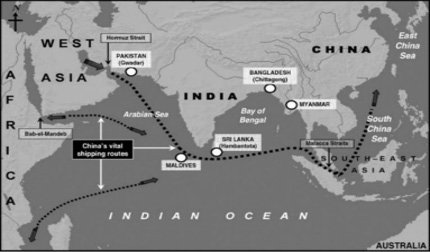
Anti-India sentiment and strategic diversification both produce an opening for China. China’s involvement in Bangladesh is best understood as a sequence of connected layers: geostrategy, economic connectivity, port presence, political positioning, and the debt debate. These elements are parts of one wider strategy through which Beijing seeks to secure influence in South Asia and the Indian Ocean. At the geostrategic level, Bangladesh matters because of its position near the Bay of Bengal and its proximity to the sea routes that connect China to global markets. China’s heavy reliance on the Strait of Malacca poses a significant economic security challenge known as the “Malacca Dilemma”. This strategic chokepoint handles approximately 3.5 trillion USD in global trade annually, with two-thirds of China’s maritime trade passing through it. Moreover, roughly 80% of China’s oil imports transit the Strait, accounting for 60% of the country’s total oil supply (Dent, 2023). In the event of a major conflict, China fears a potential naval blockade in the Indian Ocean, including the Strait of Malacca (Paszak, 2021). India’s Andaman and Nicobar Islands, situated at the entrance to the Strait, are undergoing a significant militarisation as part of a ten-year infrastructure development project. This includes extending runways, deploying fighter jets such as the Sukhoi Su-30MKI and Jaguar Maritime, and operating P-8I Poseidon submarine hunters from the islands (Sharma, 2024). In parallel, the Quadrilateral Security Dialogue (QUAD) – comprising India, Australia, Japan, and the United States – primarily aims to counter the Chinese influence in the Indian Ocean region.
Maritime vulnerability motivates Beijing to use connectivity projects in Bangladesh as a strategic response. This is where the Belt and Road Initiative (BRI) becomes important. The BRI is the economic instrument through which China translates geostrategic concerns into infrastructure, connectivity, and long-term influence. Bangladesh’s strategic location offers China potential access to the Bay of Bengal, which could serve as an alternative route to the congested Malacca Strait. Bangladesh formally joined China’s BRI in 2016 during the period of the BAL government. Since then, China has invested in several major infrastructure projects aimed at enhancing connectivity and promoting economic growth. These initiatives form part of a broader 40-billion-USD investment package under the BRI, with 26 billion USD allocated to the BRI-specific projects and 14 billion USD earmarked for joint ventures (Noyon, 2023). China’s investments in Bangladesh aim to establish connectivity that bypasses the traditional maritime chokepoints and ensure uninterrupted trade flows (Choudhary, 2023). The port dimension is the most visible expression of that strategy. In 2018, China undertook a modernisation project of the Chittagong port in Bangladesh to increase its cargo-handling capacity (He et al., 2018). In the same year, the China Harbour Engineering Company initiated the development of a 750-acre industrial park in Chittagong, with China holding a 70% stake in exchange for an investment of approximately 10 billion USD (Chow, Silva, 2024).
China’s political approach in Bangladesh supports this economic strategy. Unlike India, which has been widely viewed as supporting one single regime, China has generally presented itself as non-partisan and willing to work with whichever government is in power. Chinese media outlets have portrayed Beijing as a neutral party in Bangladesh, suggesting that collaboration with China would be advantageous for Dhaka irrespective of the party in power (Singh G., 2024). China’s perceived neutrality has allowed it to maintain positive relations with Bangladesh’s interim government, led by Muhammad Yunus. Analysts note that China’s non-partisan approach positions it favourably in the context of continuing its influence in Bangladesh, regardless of internal political changes (Grare, 2024).
China’s broader geopolitical objectives include establishing a sphere of influence in the Indian Ocean and limiting India’s regional ambitions (Wolf, 2014). The so-called String of Pearls strategy reflects China’s effort to develop a network of maritime facilities and strategic partnerships along key sea routes linked to the Maritime Silk Road. Within this framework, China has invested in the construction and modernisation of ports, harbours, and associated infrastructure at critical locations, including the Chittagong Port in Bangladesh. These projects are often presented as commercial and developmental initiatives. However, they also have dual-use capabilities that could serve strategic or military purposes. This dual-use dimension has raised concerns regarding the broader implications of such investments, since economic engagement can gradually evolve into an expanded strategic presence in the region.
Source: Khurana (2008).
There has been an ongoing debate over the potential risks of debt-trap diplomacy associated with China’s financial commitments. Concerns intensified following the bankruptcy of Sri Lanka in 2022 and the 2017 transfer of the strategic Hambantota Port to China Merchants Port Holdings Company Limited, which resulted from Sri Lanka’s inability to repay loans used for its construction. Economists have expressed concerns about Bangladesh’s economic stability, highlighting that the country’s overall economy is in a state of fragility and instability. They warn that the national budget risks pushing the country into a debt trap, emphasising the need for comprehensive reforms to address these challenges (Financial Express, 2024). As of 2025, Bangladesh’s total debt stands at 626.37 billion USD, representing 39.2% of GDP (World Economics, 2026). Although the country’s debt burden is currently manageable, the risk of falling into a debt trap remains real and conditional. Chinese investments have been concentrated in capital-intensive sectors such as energy, transport, and major connectivity projects, which require long development periods and high repayment commitments. These projects may underperform due to inefficiencies, the overestimation of demand, or poor implementation. If that happens, it is likely that the expected revenue needed to service the loans will not materialise. In such a scenario, Bangladesh could face mounting debt obligations without corresponding growth benefits, which would force it to rely on an additional borrowing to meet repayments, which, in turn, is a classic pathway towards debt dependency (Rahman, 2024). The Karnaphuli Tunnel – a high-cost infrastructure project developed under the BRI during the tenure of the BAL government – has been operating at a loss since its inauguration, with projected losses for the 2025–2026 fiscal year expected to reach approximately 1.7 billion BDT (Rahman, 2025).
Regional security implication
India’s foreign policy towards Bangladesh has increasingly been shaped by the BJP’s majoritarian ideological framework, which functions as the driver of the present regional security dilemma. India has increasingly shifted towards majoritarian and sectarian politics, particularly since 2014. The BJP promotes the Hindutva ideology that conceptualises India primarily as a Hindu nation and often frames religious minorities, particularly Muslims and Christians, as outsiders or potential threats (Kapur, Mohsina, 2020). This majoritarian approach combines pro-corporate economic policies with the privileging of upper-caste Hindu interests, alongside the normalisation of exclusionary rhetoric against minorities (Chatterji et al., 2019). Furthermore, the BJP has increasingly embedded this ideological orientation into India’s foreign policy, aligning strategic decisions with the broader Hindutva nationalist doctrine (Aryal, Bharti, 2022). Institutions such as the Vivekananda International Foundation, a Hindutva-aligned security think tank, have gained influence by attracting a lot of retired senior defence personnel and advising the government on security matters (Kanungo, 2019b). This assertive foreign policy, shaped by ideological indoctrination, often views Bangladesh through a communal lens, which, in turn, has contributed to rising anti-India sentiment within Bangladesh. In the post-Hasina period, Bangladesh’s interim government has sought to diversify its foreign relations, including efforts to strengthen ties with Pakistan. This shift was evident when a direct cargo vessel from Pakistan docked at the Chittagong Port on 13 November 2024, marking a significant development in bilateral connectivity (Marine Insight, 2024). Additionally, at the December 2024 D-8 Organisation for Economic Cooperation summit in Egypt, Bangladesh’s interim leader Yunus urged Pakistan’s prime minister to address unresolved issues stemming from 1971 (Dhaka Tribune, 2024). Within this causal chain, ideology produces the strategic mechanism of Bangladesh’s post-Hasina diversification towards China and Pakistan, which India interprets as the direct erosion of its regional leverage.
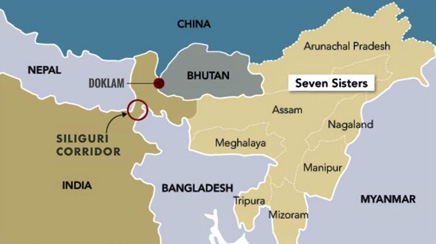
As Bangladesh increasingly moves closer to China and Pakistan, India’s security concerns have intensified. Bangladesh shares an extensive border with India’s Northeast, making bilateral tensions potentially destabilising for the broader region, where insurgent groups have historically operated. This perceived geopolitical shift is not abstract, as it translates into a concrete territorial vulnerability for India. The Indian mainland is connected to the northeastern states through the narrow Siliguri Corridor. The corridor is approximately 22 kilometres wide and is bordered by China, Bhutan, Nepal, and Bangladesh. This geographic vulnerability has long been a critical concern for India’s internal security (Rahmati et al., 2020) and is further intensified as a result of earlier ideological and diplomatic shifts. In other words, the ideological driver in New Delhi produces diplomatic realignment pressures in Dhaka, and those pressures culminate in heightened territorial insecurity for India’s Northeast.
Source: Das (2024).
Northeast India comprises seven states: Arunachal Pradesh, Assam, Manipur, Meghalaya, Mizoram, Nagaland, and Tripura, often referred to as the ‘Seven Sisters.’ Historically, the region had remained outside the political control of mainland India prior to British colonial expansion, with its integration beginning after the First Anglo-Burmese War (Dutta et al., 2024). For centuries, the region functioned as a buffer zone between the Bengal plains and the highlands of China and Burma (now Myanmar) during the pre-colonial period (Bhaumik, 2007). Under British rule, several areas were designated as “excluded” or “partially excluded,” where administrative control was limited (Doungel, 2021). Following the partition of the subcontinent, the Northeast came under the authority of the Indian state. Since then, the region has experienced prolonged political instability and separatist movements, many of which continue today (Minorities at Risk, N/A). Similar to the challenges faced during the colonial rule, the Indian government has struggled to fully consolidate control over certain areas, where ethnic insurgent groups continue to demand greater autonomy or independence. In response, the government enacted the Armed Forces Special Powers Act (AFSPA), which grants special powers to the armed forces in regions designated as “disturbed areas.” However, the implementation of the act has been widely criticised, with extensive reports documenting human rights violations, including extrajudicial killings, torture, abuse, and sexual violence by security forces in affected regions (Cheema, 2016).
The international boundary between Bangladesh and India extends for 4,096 kilometres, out of which 1,879 kilometres are shared with Northeast India (The Hindu, 2024). In contrast, China has annexed roughly 825 square kilometres of the Doklam Plateau, which had formerly been part of Bhutan, representing about 2% of Bhutan’s total territory. This annexation has involved the construction of at least 22 villages and settlements, with Chinese personnel – including border police and military units – reportedly stationed in the area (Laskar, 2024). The Doklam Plateau lies approximately 20 to 25 kilometres north of India’s Siliguri Corridor, i.e. the route that connects mainland India to its northeastern states (see Figure 2). In the event of a conflict, China’s strategic objective would be to disrupt the supply chain and logistics network between mainland India and its Northeast. Consequently, Bangladesh plays a critical role in maintaining stability in the region and remains a key partner in India’s efforts to secure its northeastern territories. Without fostering a balanced and mutually beneficial relationship with Bangladesh, India’s Northeast remains vulnerable to instability, potentially triggering a cycle of escalation through reinforcing feedback loops.
The main threat is identified as Indian hegemony in Bangladesh. The feedback loop is understood as originating from India’s interventionist and majoritarian foreign policy orientation under the BJP and the broader Hindutva framework as the initial cause. This orientation operates through several intervening mechanisms, including support for an autocratic regime, the normalisation of electoral irregularities, alleged intelligence involvement, persistent trade asymmetries, longstanding water-sharing disputes, and unfair transit arrangements. Collectively, these factors contribute to an immediate outcome, namely the rise of anti-India sentiment in Bangladesh and the corresponding effect of the erosion of public trust. As distrust deepens, Bangladesh appears to diversify its strategic partnerships, leading to closer alignment with China and, in some instances, Pakistan as a secondary geopolitical outcome. This shift, in turn, generates security concerns for India by increasing strategic pressure on its northeastern region and the Siliguri Corridor. Reacting to these developments, India can seek to reassert its influence in Bangladesh, which can reinforce perceptions of external interference and reproduce the initial grievances, thereby sustaining the cyclical pattern of tension and strategic competition.
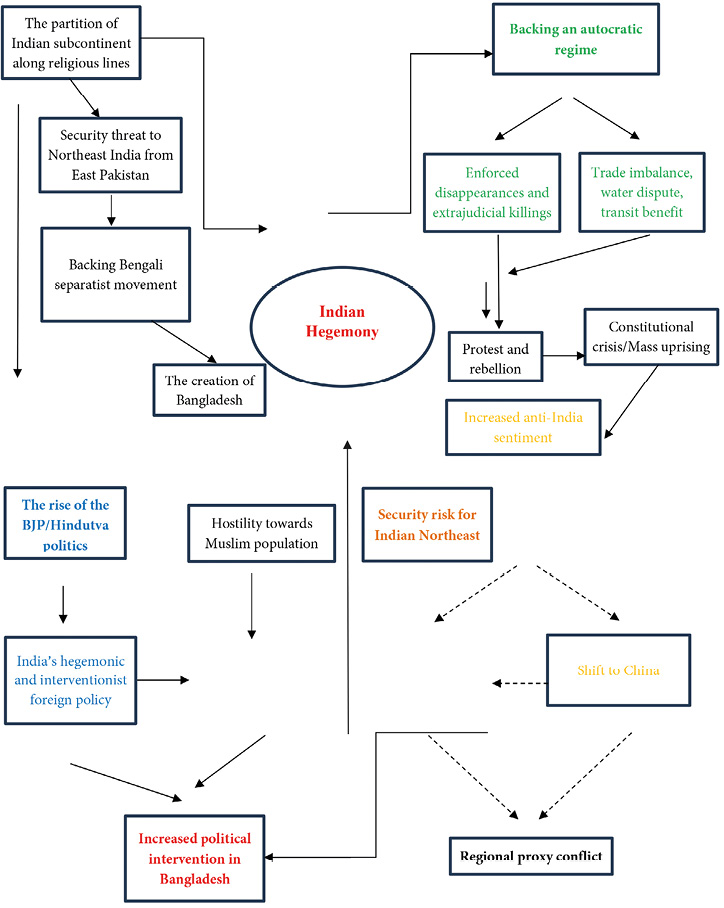
Note: The independent variable is indicated in blue, intervening variables are in green, the dependent variables are in yellow, the outcome variable is in orange, and the feedback loop is in red.
Source: own study.
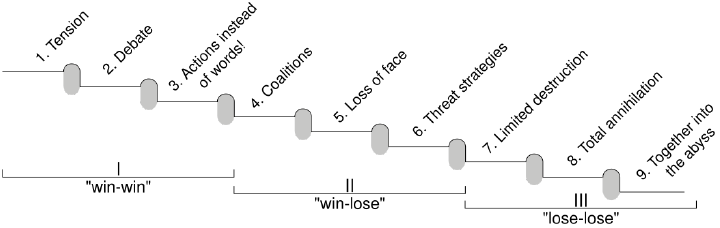
To break this cycle, India would need to prioritise the development of a more balanced and mutually beneficial relationship with Bangladesh. This requires sustained diplomatic engagement, mutual recognition of each party’s security concerns, equitable economic cooperation that produces shared gains, and the strengthening of cultural ties beyond religious divisions. Without such an approach, the region will remain vulnerable to continued instability. On the contrary, increased intervention or attempts to destabilise Bangladesh by India can push the country towards closer alignment with China and Pakistan, both of which are the strategic competitors of India. This dynamic is further complicated by China’s geostrategic interests in the region and Pakistan’s ability to leverage its historical ties with Bangladesh. At the same time, deeper alignment with China and Pakistan could also pose risks for Bangladesh, given its geographic dependence on and proximity to India. If Bangladesh becomes overly dependent on these external powers or enters into a strategic coalition with them, it could heighten regional tensions and potentially provoke stronger responses from India, including efforts to secure critical connectivity routes such as the Siliguri Corridor. In an extreme scenario, this could increase the likelihood of direct military confrontation between the two countries. Given Bangladesh’s strategic location and China’s broader ambitions in the Indian Ocean, any such conflict could expand beyond a bilateral dispute. This risk is heightened by the presence of the QUAD – comprising India, the United States, Japan, and Australia – which seeks to counterbalance China’s regional influence. Despite India’s position as one of the world’s leading military powers, Bangladesh’s geographic location provides it with strategic leverage in bilateral relations. To prevent escalation, India would need to adopt a cautious and measured approach that avoids further alienation of Bangladesh. Drawing on Glasl’s model of conflict escalation, there remains scope for de-escalation, as both countries retain the capacity to pursue outcomes that are mutually beneficial.
Source: own study.
Current trends indicate that the bilateral tension between India and Bangladesh can still be characterised as operating within a ‘win-win’ threshold, as both countries remain mutually dependent on each other for geographic and security considerations. Despite ongoing tensions and debates over incompatibilities, understanding the concerns of both parties is necessary to prevent the situation from deteriorating into a ‘win-lose’ outcome or a scenario of opposing coalitions where Bangladesh forms an alliance with China and Pakistan. However, India’s increasing far-right politics and the BJP’s aggressive policies towards Muslims in the region threaten this ‘win-win’ opportunity. This could provoke a reactionary response in Bangladesh, leading to alliances with India’s rivals. The result could be a continuous cycle of escalation, potentially culminating in a proxy between China and India in Bangladesh.
Conclusion
This study shows that the Bangladesh–India relations have been shaped by a reinforcing cycle of intervention, distrust, and strategic recalibration. India has supported preferred political actors in Bangladesh. At the same time, asymmetries in trade, water-sharing, and transit arrangements have persisted. Together, these factors have contributed to perceptions of unequal treatment and external interference. These perceptions have, in turn, intensified anti-India sentiment within Bangladesh and encouraged Dhaka to diversify its external partnerships, especially towards China and, to a more limited extent, Pakistan. This diversification has then heightened India’s security concerns, particularly in relation to the Northeast and the Siliguri Corridor, thereby sustaining the cycle of mistrust and renewed intervention. The result is not a series of isolated disputes, but a self-reinforcing loop in which each round of intervention and reaction deepens the next one.
Breaking this cycle requires a shift from a regime-oriented and interventionist policy towards a more balanced approach grounded in sovereignty, reciprocity, and institutional consistency. India would need to engage Bangladesh through durable state-to-state frameworks rather than selective political alignments. It must also address long-standing grievances related to trade asymmetry, water-sharing, and transit benefits. On the other hand, Bangladesh would benefit from diversifying its international partnerships in order to reduce reliance on any single country, while avoiding actions that could increase regional tensions. A more stable bilateral relationship will depend on mutual recognition of security concerns as well as on practical cooperation that produces shared gains rather than zero-sum rivalry. Without such a shift, the feedback loop identified in this study is likely to persist, with adverse consequences for regional stability in South Asia.
Authors
References
Abedin, M.Z. 1995. Raw and Bangladesh. Dhaka: Madina Printers.
Aryal, S.K., Bharti, S.S. 2022. Impact of Hindu Nationalism in India’s Foreign Policy Conduct. South Asian Democratic Forum 6.
Ashrat, S. 2023, 01 15. Bangladesh for India’s Act Fast for Northeast Policy. Eurasiareview, https://www.eurasiareview.com/15012023-bangladesh-for-indias-act-fast-for-northeast-policy-oped/
Bangladesh Bank. 2022. Annual Report. Bangladesh Bank, https://epb.gov.bd/
BBC. 2018, 31 12. Bangladesh Election: Opposition Demands New Vote. BBC, https://www.bbc.com/news/world-asia-46716605
Bhaumik, S. 2007. Insurgencies in India’s Northeast: Conflict, Co-option & Change. East-West Centre Washington Working Paper 4.
The Business Standard. 2024, 10 01. Hasina Stayed in Power with Aid from India’s RAW: Rizvi. The Business Standard, https://www.tbsnews.net/bangladesh/politics/hasina-stayed-power-aid-indias-raw-rizvi-955371
The Business Standard. 2025, 12 01. Did India Benefit from BDR Mutiny? What the Probe Commission Says. The Business Standard, https://www.tbsnews.net/bangladesh/did-india-benefit-bdr-mutiny-what-probe-commission-says-1299101
Chatterji, A.P., Hansen, T., Jaffrelot, C. 2019. Introduction. In: A.P. Chatterji, T. Hansen, C. Jaffrelot (eds), Majoritarian State: How Hindu Nationalism is Changing India. Oxford: Oxford University Press. https://doi.org/10.1093/oso/9780190078171.003.0001
Chaudhury, D.R. 2023, 04 30. Bangladesh Gives India Permanent Access to Chattogram, Mongla Ports. The Economic Times.
Cheema, P.I. 2016. State of HR Violations by Indian Security Forces in IHK: Background and Current Situation. NDU Journal 6.
Choudhary, M. 2023. The New US-China Flashpoint Threatens to Involve All Basin Counties; But Who Dominates World’s Largest Bay. Journal of Indo-Pacific Affairs, pp. 99–105.
Chow, M., Silva, S.D. 2024, 04 24. Sino-India Rivalry for Port Dominance in Bangladesh. 9Dashline, https://www.9dashline.com/article/sino-india-rivalry-for-port-dominance-in-bangladesh
Chowdhury, F.A. 2013. Geo-politics, Democratization and External Influence: The Bangladesh Case. BRAC Institute of Governance and Development 138.
Chowdhury, M.I., Shibli, M.A., Khan, M., Idris, N., Hussain, S. 2026. Unfolding the Truth: A Structural Diagnosis of Enforced Disappearence in Bangladesh. Dhaka: The Commission of Inquiry on Enforced Disappearences.
The Daily Inqilab. 2024, 11 08. Naufel Behind the Attempted Riots in Chittagong. The Daily Inqilab, https://dailyinqilab.com/national/article/701614
The Daily Ittefaq. 2025, 08 09. A Riot in Bangladesh is Necessary for Awami League and India: Gayeshwar. The Daily Ittefaq, https://www.ittefaq.com.bd/746052/%E0%A6%86%E0%A6%93%E0%A7%9F%E0%A6%BE%E0%A6%AE%E0%A7%80-%E0%A6%B2%E0%A7%80%E0%A6%97-%E0%A6%93-%E0%A6%AD%E0%A6%BE%E0%A6%B0%E0%A6%A4%E0%A7%87%E0%A6%B0-%E0%A6%9C%E0%A6%A8%E0%A7%8D%E0%A6%AF-%E0%A6%AC%E0%A6%BE%E0%A6%82%E0%A6%B2
The Daily Star. 2018, 12 06. Bangladesh’s Election ‘Internal Affair’: India. The Daily Star, https://www.thedailystar.net/bangladesh-national-election-2018/news/bangladeshs-election-internal-affair-india-1670017
The Daily Star. 2026, 02 10. Rab, DGFI Need to Be Disbanded. The Daily Star, https://www.thedailystar.net/news/bangladesh/crime-justice/news/rab-dgfi-need-be-disbanded-4102561
Das, B. 2024, 10 17. The Strategic Lifeline: Securing the Siliguri Corridor amid Escalating Chinese Expansion. Boder Lines, https://www.borderlens.com/2024/10/17/the-strategic-lifeline-securing-the-siliguri-corridor-amid-escalating-chinese-expansion/
Dent, T. 2023, 11 21. The Strait of Malacca’s Global Supply Chain Implications. Institute for Supply Management, https://www.ismworld.org/supply-management-news-and-reports/news-publications/inside-supply-management-magazine/blog/2023/2023-11/the-strait-of-malaccas-global-supply-chain-implications/
Dhaka Tribune. 2024, 12 19. Dr Yunus Urges Pakistan to Resolve 1971 Issues for Improved Ties. Dhaka Tribune, https://www.dhakatribune.com/bangladesh/foreign-affairs/368577/dr-yunus-urges-pakistan-to-resolve-1971-issues-for
Doungel, L. 2021. Colonial Administration in Excluded and Partially Excluded Areas of Undivided Assam with Special Reference to Lushai Hills. In: M.C. Behra (ed.), Tribe-British Relations in India. Singapore: Springer, pp. 307–320. https://doi.org/10.1007/978-981-16-3424-6_19
Dutta, S., Saikia, G., Gogoi, A., Pegu, P. 2024. Conflict and Consolidate: The British Colonial. Education Administration: Theory and Practice 30(6), pp. 672–676.
Financial Express. 2024, 06 11. Economy in a Shambles and Budget Risks Debt-trap. Financial Express, https://today.thefinancialexpress.com.bd/first-page/economy-in-a-shambles-and-budget-risks-debt-trap-1718043548
Firstpost, 2024, 12 17. PM Modi’s Vijay Diwas Post, with no Mention of Bangladesh, Rattles Yunus Govt. Firstpost, https://www.firstpost.com/world/pm-modis-vijay-diwas-post-with-no-mention-of-bangladesh-rattles-yunus-govt-13845069.html
Ganguly, M. 2014, 01 24. India Should Step in to Find a Way Out in Bangladesh. Human Rights Watch, https://www.hrw.org/news/2014/01/24/india-should-step-find-way-out-bangladesh
Grare, F. 2024, 08 13. Hasina’s Downfall May Create New Opportunities in Bangladesh for China. Australian Strategic Policy Institut, https://www.aspistrategist.org.au/hasinas-downfall-may-create-new-opportunities-in-bangladesh-for-china/
Haider, Z. 2009. A Revisit to the Indian Role in the Bangladesh Liberation War. Journal of Asian and African Studies 543. https://doi.org/10.1177/0021909609340062
He, H., Nie, J., Wang, Y. 2018, 06 26. China’s Assistance for Chittagong Port Development, Not a Military Conspiracy. The Daily Star, https://www.thedailystar.net/opinion/perspective/chinas-assistance-chittagong-port-development-not-military-conspiracy-1595092
The Hindu. 2024, 06 24. Northeastern States Step Up Vigil along Bangladesh Border. The Hindu, https://www.thehindu.com/news/national/northeast-states-step-up-vigil-along-bangladesh-border/article68492568.ece
Hindustan Times. 2024, 06 10. Sonia Gandhi, Rahul, and Priyanka Meet Bangladesh PM Sheikh Hasina in New Delhi. Hindustan Times, https://www.hindustantimes.com/india-news/sonia-gandhi-rahul-and-priyanka-meet-bangladesh-pm-sheikh-hasina-in-new-delhi-101718011519459.html
Inland Waterways Authority of India. 2024, 04 16. Cargo Potential of Waterways in North East. Inland Waterways Authority of India, https://iwai.nic.in/departments/north-east-region-cell/cargo-potential-of-waterways-in-north-east
Islam, A.T., Talukdar, S., Akhter, S., Eibek, K.U., Rahman, M., Pal, S., …, Mosavi, A. (2022). Assessing the Impact of the Farakka Barrage on Hydrological Alteration in the Padma River with Future Insight. Sustainability 14(9), 5233, pp. 2–26. https://doi.org/10.3390/su14095233
Kanungo, P. 2019a. Sangh and Sarkar: The RSS Power Centre Shifts from Nagur to New Delhi. In: A. Chatterji, T. Hansen, C. Jaffrelot (eds), Majoritarian State: How Hindu Nationalism is Changing India. Oxford: Oxford University Press. https://doi.org/10.1093/oso/9780190078171.003.0008
Kanungo, P. 2019b. The RSS Power Centre Shifts from Nagpur to New Delhi. In: A.P. Chatterji, T.B. Hansen, C. Jaffrelot (eds), Majoritarian State: How Hindu Nationalism is Changing India. Oxford: Oxford University Press.
Kapur, R., Mohsina, N. 2020, 03 03. The Shift to Majoritarian Politics and Sectarianism in India: Domestic and International Responses. Middle East Institute, https://www.mei.edu/publications/shift-majoritarian-politics-and-sectarianism-india-domestic-and-international
Khurana, G.S. 2008. String of Pearls’ in the Indian Ocean and Its Security Implications. Strategic Analysis 18. https://doi.org/10.1080/09700160801886314
Krishnan, M. 2024, 11 01. Why India Welcomes Bangladesh Election Result. Deutsche Welle, https://www.dw.com/en/why-india-welcomes-bangladesh-election-result/a-67950471
Laskar, R.H. 2024, 12 18. China Building Villages Near Doklam in Bhutan: Satellite Data. Hindustan Times, https://www.hindustantimes.com/india-news/china-building-villages-near-doklam-in-bhutan-satellite-data-101734489589437.html
Light Castle Analytics Wing. 2020, 11 21. India Bangladesh Transit Treaty (Part I): The Costs and the Opportunities. Light Castle Partners, https://lightcastlepartners.com/insights/2020/11/india-bangladesh-transit-treaty-part-i-the-costs-and-the-opportunities/
Mahmud, A.A. 2009, 03 04. 4-party Bigwigs Were in Plot, Accused Say. The Daily Star, https://www.thedailystar.net/news-detail-78433
Mahmud, F., Sarker, S. 2024, 08 08. ‘Islamophobic, Alarmist’: How Some India Outlets Covered Bangladesh Crisis. Al Jazeera, https://www.aljazeera.com/news/2024/8/8/islamophobic-alarmist-how-some-india-outlets-covered-bangladesh-crisis
Marine Insight. 2024, 11 20. Bangladesh Welcomes First-ever Direct Cargo Shipment from Pakistan. Marine Insight, https://www.marineinsight.com/bangladesh-welcomes-first-ever-direct-cargo-shipment-from-pakistan/
Mehta, P.B. 2011. Do New Democracies Support Democracy? Reluctant India. Journal of Democracy 104. https://doi.org/10.1353/jod.2011.0074
Minorities at Risk. N/A. Minority Group Assessments for Asia. Minorities at Risk, http://www.mar.umd.edu/assessments.asp?regionId=3
Mushahary, J., Daimary, B., Baglari, J., Basumatary, K., Medhi, M., Narzary, P.K., Basumatari, S. 2025. The Exit of Sheikh Hasina and the Future of Geo-Political Dynamics of Indo-Bangladesh Relations. Open Access Library Journal, pp. 1–19. https://doi.org/10.4236/oalib.1114345
Noyon, A.U. 2023, 10 01. How China’s Belt and Road Changing Bangladesh’s Economy and Infrastructures. The Business Standard, https://www.tbsnews.net/economy/how-chinas-belt-and-road-changing-bangladeshs-infrastructures-709826
Parven, A., Hasan, M. 2018. Transboundary Water Conflict between Bangladesh and India: Water Governance Practice for Conflict Resolution. International Journal of Agricultural Research, Innovation and Technology 80. https://doi.org/10.3329/ijarit.v8i1.38233
Paszak, P. 2021, 02 28. China and the “Malacca Dilemma”. Warsaw Institute, https://warsawinstitute.org/china-malacca-dilemma/
Patnaik, J.K. 2008. Mizoram: Dimensions and Perspectives: The Society Economy and Polity. New Delhi: Concept Publishing Company.
Pawlak, C. 2024. Cause-effect-loop. Lodz: University of Lodz.
Rahman, M.M. 2024. China’s Investment in Bangladesh: Backdrop of Debt Trap. International Journal of Applied Research and Sustainable Sciences 2(10), pp. 841–854. https://doi.org/10.59890/ijarss.v2i10.2637
Rahman, S. 2025, 07 17. Karnaphuli Tunnel Expects Financial Losses Approx BDT 1.7 Billion. Boinik Barta, https://en.bonikbarta.com/business/qNJHxjJwPY0utb2h
Rahman, S.A. 2024, 09 07. Fearing Reprisals, Hasina’s Supporters Flee Bangladesh. Voice of America, https://www.voanews.com/a/fearing-reprisals-hasina-s-supporters-flee-bangladesh-/7775116.html
Rahman, S.A. 2024, 11 28. Tensions Peak as Bangladesh Blames India for ‘Spreading Misinformation’. Voice of America, https://www.voanews.com/a/tensions-peak-as-bangladesh-blames-india-for-spreading-misinformation-/7895753.html
Rahmati, F., Ali, M.A., Kamraju, M. 2020. A Study on Strategic Location of Siliguri Corridor and Its Issues. International Journal of All Research Education and Scientific Methods 8(7), pp. 5–9.
Riaz, A. 2014. Shifting Tides in South Asia: Bangladesh’s Failed Election. Journal of Democracy 119. https://doi.org/10.1353/jod.2014.0034
Rushd, A. 2024. Raw in Bangladesh. Dhaka: The Mavericks Studio.
Sharma, R. 2024, 06 30. India’s Plan to Develop “China Chokepoint” at Strategic Andaman & Nicobar Islands, in the Eye of Storm. The Eurasian Times, https://www.eurasiantimes.com/indias-plan-to-develop-china-chokepoint-at-strategic-andaman-nicobar-islands-in-the-eye-of-storm/
Shih, G., Nakashima, E., Hudson, J. 2024, 08 15. India Pressed U.S. to Go Easy on Bangladeshi Leader before Her Ouster, Officials Say. The Washington Post, https://www.washingtonpost.com/world/2024/08/15/india-bangladesh-sheikh-hasina/
Singh, G. 2024, 08 12. Chinese Media Is Pushing Beijing as a Neutral Party in Bangladesh. Deccan Herald, https://www.deccanherald.com/opinion/chinese-media-is-pushing-beijing-as-a-neutral-party-in-bangladesh-3146845
Singh, R.P. 2021, 05 23. How the Mukti Bahini Was Trained. The Daily Star, https://www.thedailystar.net/in-focus/news/how-the-mukti-bahini-was-trained-2097481
TRT World. 2025, 11 30. Bangladesh Blames India, ex-PM Hasina for 2009 Massacre of Army Officers. TRT World, https://www.trtworld.com/article/d79dbc98ee48
Uprati, K., Salman, S. 2011. Legal Aspects of Sharing and Management of Transboundary Waters in South Asia: Preventing Conflicts and Promoting Cooperation. Hydrological Science Journal 56(4), pp. 641–661. https://doi.org/10.1080/02626667.2011.576252
Wolf, S.O. 2014. China’s Strategic Interests and Its Impacts on Bangladesh. Heidelberg: Institute of South Asian Studies.
World Economics. 2026. Bangladesh Debt-to-GDP Ratio. World Economics, https://www.worldeconomics.com/GrossDomesticProduct/Debt-to-GDP-Ratio/Bangladesh.aspx